Rubber Hex vs Urethane: Budget Guide for Dumbbell Serratus Punch
Compare rubber hex and urethane dumbbells for dynamic moves like the dumbbell serratus punch. We break down 2026 pricing, durability, and long-term value.

The Biomechanics of the Dumbbell Serratus Punch and Equipment Demands
When building a home or commercial gym on a strict budget, every dollar must be justified by performance and longevity. This is especially true when selecting free weights for dynamic, high-velocity isolation movements like the dumbbell serratus punch. The serratus anterior, often called the 'boxer's muscle,' is responsible for scapular protraction and upward rotation. According to research published in the Journal of Orthopaedic & Sports Physical Therapy, activating this muscle effectively requires controlled acceleration and sudden, forceful deceleration at the end range of motion.
This biomechanical reality places unique stress on your equipment. During a standing or supine dumbbell serratus punch, your grip must remain locked to prevent the dumbbell from slipping during the explosive concentric phase. Furthermore, the dumbbell head must withstand repeated micro-impacts if you are performing plyometric variations or setting the weights down aggressively between high-rep sets. This brings us to the ultimate budget breakdown: do you invest in premium urethane dumbbells, or can standard rubber hex dumbbells handle the mechanical load without degrading?
Material Science: Rubber Hex vs. Polyurethane (Urethane)
To understand the true value proposition in 2026, we must look past the marketing and examine the polymer science governing these two dominant dumbbell materials.
Recycled and Virgin Rubber Hex Dumbbells
Most budget-friendly rubber hex dumbbells (such as the widely popular REP Fitness Rubber Hex line) are manufactured using a blend of recycled tire rubber and virgin synthetic rubber binders. These typically register between 60 and 70 on the Shore A durometer scale, giving them a slightly softer, more forgiving feel. The hexagonal head design prevents rolling, which is a safety necessity when performing floor-based variations of the serratus punch.
- Pros: Low initial cost per pound, excellent shock absorption, anti-roll geometry.
- Cons: Prone to UV degradation, off-gassing (strong odor), and edge-flattening over time.
Polyurethane (Urethane) Dumbbells
Urethane is a high-grade elastomer that dominates the commercial fitness space. Premium options like the Rogue Urethane Dumbbells boast a Shore A durometer rating of 85 to 90. This makes them significantly harder and more resistant to abrasion. Unlike rubber, urethane is virtually odorless, UV-resistant, and impervious to the corrosive effects of sweat and gym cleaning chemicals.
- Pros: Extreme longevity, zero off-gassing, maintains crisp edges and aesthetic integrity for decades.
- Cons: High initial capital expenditure, harder surface transmits more impact force to the floor.
The 'Sweat & Grip' Factor During Punches
When executing high-rep sets of the dumbbell serratus punch, palmar sweating is inevitable. Urethane dumbbells often feature premium CNC-machined steel handles with aggressive, multi-directional knurling and hard chrome or Cerakote finishes. Budget rubber hex dumbbells frequently use basic cast-iron handles with shallow knurling and standard chrome plating. If your grip fails during the deceleration phase of a serratus punch, you risk wrist hyperextension. Therefore, the handle quality—often tied to the premium tier of urethane sets—is a hidden variable in your budget analysis.
5-Year Budget Breakdown & Value Analysis
Let's run a concrete financial analysis based on 2026 market pricing for a standard 50-pound pair, factoring in the total cost of ownership over a 5-year lifecycle.
| Metric | Rubber Hex (e.g., REP Fitness) | Urethane (e.g., Rogue Fitness) |
|---|---|---|
| Initial Cost (50lb Pair) | $85.00 ($1.70/lb) | $215.00 ($4.30/lb) |
| Estimated 5-Year Lifespan | 3-4 Years (Garage/Outdoor) | 10-15+ Years (Indoor) |
| Maintenance Required | Wire brushing handle rust, UV protectant | Wipe down with neutral cleaner |
| Replacement Cost at Year 5 | $85.00 (Total: $170.00) | $0.00 (Total: $215.00) |
| Cost Per Year (Amortized) | $34.00 / year | $21.50 / year |
As the table illustrates, the 'budget' option actually costs more on an annualized basis if the equipment is subjected to harsh environments or heavy daily use. However, if the rubber hex dumbbells are kept in a climate-controlled, UV-free spare bedroom, their lifespan can easily stretch to 7+ years, swinging the value proposition back in their favor.
Real-World Failure Modes & Edge Cases
When analyzing value, you must account for how these dumbbells actually fail. The failure modes for rubber and urethane are vastly different, and understanding them will dictate which is right for your specific training environment.
1. Core Separation in Rubber Hex Dumbbells
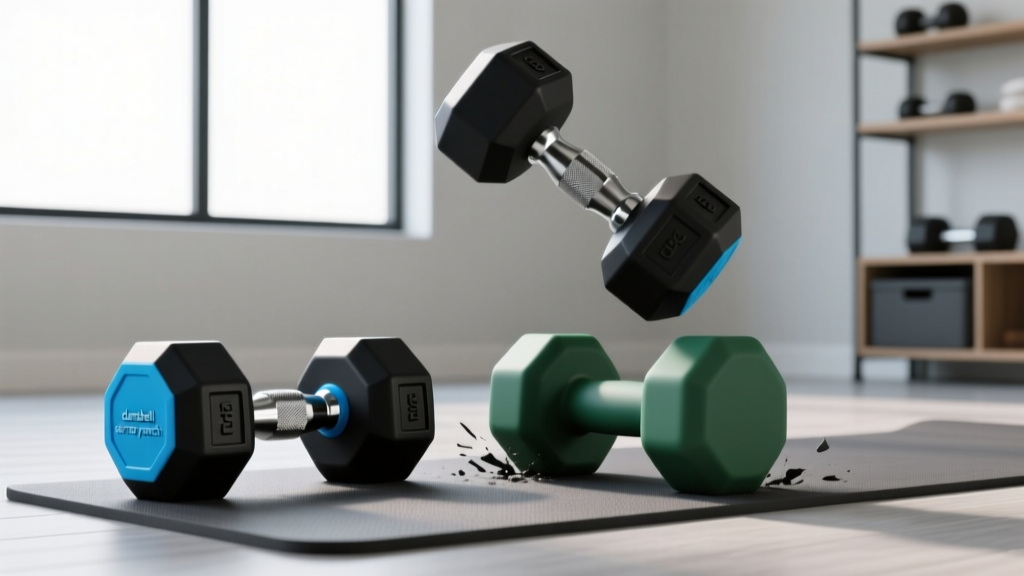
Budget rubber dumbbells are typically made by inserting a steel core into a mold and injecting liquid rubber around it. Over time, especially when subjected to the repetitive dropping or aggressive racking common in CrossFit or high-intensity interval training, the bond between the steel and rubber can weaken. If the rubber head loosens, the dumbbell becomes unbalanced. Performing a strict dumbbell serratus punch with an unbalanced weight alters the torque on your radioulnar joint, increasing the risk of lateral epicondylitis (tennis elbow).
2. Edge Flattening and Aesthetic Degradation
Rubber is susceptible to 'compression set'—a permanent deformation after prolonged stress. If you store your rubber hex dumbbells stacked on top of one another rather than on a proper rack, the bottom edges will flatten. Urethane, with its higher durometer rating, resists compression set almost entirely, maintaining its crisp hexagonal geometry for decades.
3. The Handle Rust Vector
Ironically, the most common failure point for premium urethane dumbbells isn't the urethane head; it's the handle. If you sweat heavily during serratus anterior circuits and fail to wipe down the handles, the standard chrome plating on budget models will pit and rust within months. High-end urethane sets often utilize stainless steel or Cerakote-coated handles, entirely eliminating this failure mode but driving the price up an additional 15-20%.
'The true cost of gym equipment is never just the sticker price. It is the sum of the initial purchase, the maintenance time, the replacement frequency, and the biomechanical compromise you accept when the gear degrades.'
The Final Verdict: Where Should Your Money Go?
Choosing between rubber hex and urethane dumbbells ultimately comes down to your training environment, your budget liquidity, and your tolerance for equipment maintenance.
Buy Rubber Hex If:
- You are outfitting a climate-controlled home gym on a strict sub-$500 budget. The initial savings will allow you to purchase a wider range of weight increments, which is crucial for properly progressing the dumbbell serratus punch without overloading the rotator cuff.
- You prioritize floor safety. The softer rubber compound absorbs more acoustic and physical impact if you drop them on standard garage epoxy or laminate flooring.
Buy Urethane If:
- You are opening a commercial facility or a high-traffic garage gym. The 15-year lifespan and zero-maintenance profile make urethane the undisputed king of long-term ROI.
- You train in environments with high UV exposure or extreme temperature fluctuations. Urethane will not dry-rot, crack, or emit noxious fumes when the summer heat hits your un-air-conditioned workout space.
For the dedicated lifter focusing on scapular health and dynamic isolation movements, investing in a high-quality set of dumbbells is an investment in your joint longevity. While the rubber hex dumbbell wins the short-term cash flow battle, urethane remains the undisputed champion of generational fitness value.
More gear to consider
All reviews
Rack Storage & Maintenance After the Best Dumbbell Arm Exercises

Olympic Barbell Guide: Weight, Knurling & the Dumbbell Hang Snatch
Olympic vs Standard Weight Plates: Upgrading Past Plastic Dumbbells

Power Rack, Squat Rack or Stand for Back Lifts With Dumbbells

Optimizing Space With an American Dumbbell Loadable System