
Perfecting the Dumbbell Row for Lats: Rubber Hex vs Urethane
Optimize your home gym layout for the dumbbell row for lats. We compare rubber hex vs urethane dumbbells for space efficiency, clearance, and durability.

The Spatial Mechanics of the Dumbbell Row for Lats
When designing a home gym, space optimization is rarely just about square footage; it is about the functional geometry of your primary movements. The dumbbell row for lats is a cornerstone exercise for posterior chain development, but it demands a surprising amount of spatial awareness. According to biomechanical analyses by ACE Fitness, maximizing latissimus dorsi activation requires a deep, unobstructed eccentric stretch at the bottom of the movement, followed by a sweeping concentric elbow path that clears the torso and bench.
Space Optimization Insight: The physical dimensions of your dumbbell heads directly dictate your bench placement and floor clearance. A bulky dumbbell head forces you to either raise your bench height (altering your biomechanical leverage) or accept a truncated range of motion (ROM) when the weight strikes the floor prematurely.This brings us to a critical equipment decision for your layout: rubber hex dumbbells vs. urethane dumbbells. While both protect your flooring, their material density, head geometry, and storage requirements drastically alter how you configure your lat row station. Let us break down the spatial and functional realities of each option in 2026.
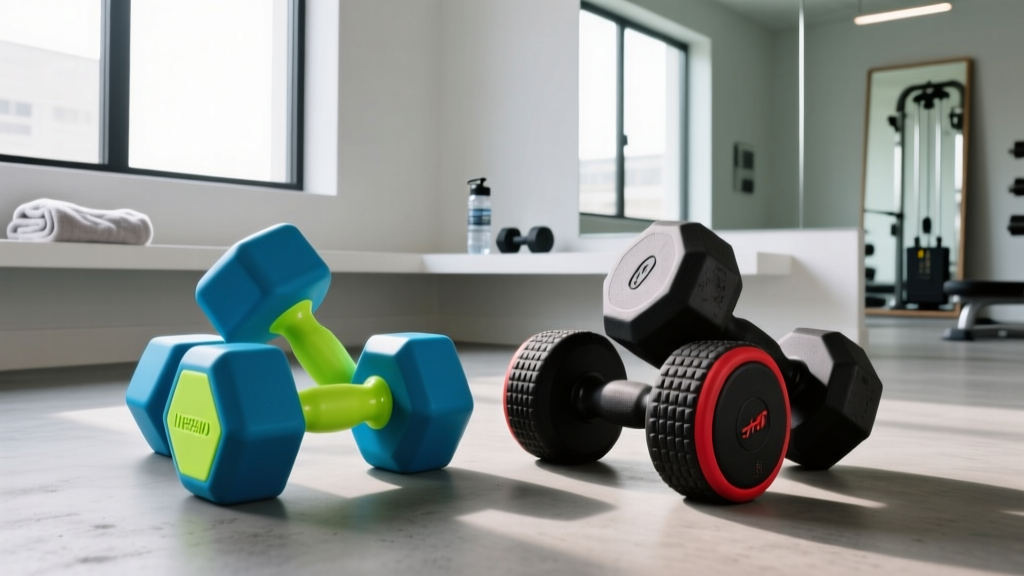
Rubber Hex Dumbbells: The High-Volume Layout Choice
Rubber hex dumbbells have long been the default for commercial and garage gyms. Their flat, six-sided heads prevent rolling, which theoretically makes them ideal for tight spaces where chasing a rogue round dumbbell could result in damaged drywall or interrupted workflows.
Clearance and ROM Limitations
The primary drawback of rubber hex dumbbells for the dumbbell row for lats is their volumetric footprint. Because recycled rubber and standard cast-iron cores are less dense than polyurethane alternatives, the physical size of the dumbbell head scales up aggressively past the 70-pound mark.
- The 100lb Problem: A standard 100lb rubber hex dumbbell features a head width of approximately 7.5 to 8.0 inches. When performing single-arm rows on a standard 17-inch high flat bench, a user with average arm length will find the bulky hex head striking the floor before the lat reaches full extension.
- The Concentric Snag: The sharp 120-degree corners of the hex shape can graze the thigh or the edge of the bench during the sweeping elbow path of the row, especially if your gym layout forces you to stand in a narrow corridor between a power rack and a wall.
Storage and Environmental Footprint
From a layout perspective, hex dumbbells require horizontal, flat-shelving racks. A standard 5-50lb set (10 pairs) on a 3-tier A-frame rack consumes a footprint of roughly 48 inches wide by 28 inches deep. Furthermore, rubber hex dumbbells are notorious for off-gassing. If your space optimization involves converting a small, poorly ventilated spare bedroom or basement into a gym, the persistent chemical odor can make the space environmentally unusable without installing active exhaust ventilation.
Urethane Dumbbells: Density, Compactness, and Vertical Storage
Urethane (polyurethane) dumbbells represent the premium tier of free weights. As of 2026, the average cost of imported urethane has stabilized, making high-quality sets from brands like Rogue and Rep Fitness more accessible, typically ranging from $3.50 to $4.50 per pound.
"The true value of urethane in a space-constrained gym is not just its drop-silencing capability; it is its volumetric density. You are buying physical space back in your range of motion." — FitGearPulse Equipment Analysis Team
The Density Advantage for Lat Rows
Because urethane is exceptionally durable and can be molded tightly around a precision steel core without the need for thick, shock-absorbing rubber buffers, the heads are significantly more compact. A 100lb 12-sided urethane dumbbell measures roughly 5.8 inches in head width. That nearly 2-inch reduction in width compared to a rubber hex means your hand can travel closer to the floor, allowing for a maximal lat stretch without requiring you to elevate your bench on risers or plyo boxes.
Vertical Storage Optimization
Unlike hex dumbbells that mandate wide horizontal shelving, rounded or 12-sided urethane dumbbells can be stored on vertical cradle racks. A vertical 5-50lb urethane rack occupies a footprint of just 31 inches wide by 20 inches deep. In a tight home gym layout, reclaiming those extra 17 inches of depth and 12 inches of width can be the difference between fitting a dedicated lat row bench and having to fold it away after every session.
Head-to-Head Comparison Matrix
| Feature | Rubber Hex Dumbbells | Urethane Dumbbells |
|---|---|---|
| Avg. Cost (2026) | $1.20 - $1.80 / lb | $3.50 - $4.50 / lb |
| Head Width (100lb pair) | ~7.5 - 8.0 inches | ~5.5 - 6.0 inches |
| Lat Row Floor Clearance | Poor (Premature floor strike) | Excellent (Deep stretch) |
| Ideal Rack Type | Horizontal 3-Tier / A-Frame | Vertical Cradle / Tiered |
| Odor / Off-Gassing | High (Requires ventilation) | None (Indoor safe) |
| Durability / Failure Mode | Rubber chipping, UV dry-rot | Virtually indestructible |
Designing Your Lat Row Station: Layout & Storage
To truly optimize your space for heavy back training, follow this step-by-step layout protocol to ensure your equipment complements the biomechanics of the dumbbell row for lats:
- Anchor the Bench: Position a flat utility bench (17 to 18 inches high) parallel to your dumbbell rack, leaving exactly 24 inches of lateral clearance. This allows you to grab the weight, pivot, and assume the rowing stance without taking unnecessary steps backward.
- Calculate the Drop Zone: When finishing a heavy set of lat rows, you will need to drop the dumbbells. If using rubber hex dumbbells, ensure your flooring is at least 3/4-inch thick vulcanized rubber matting, as the concentrated corners of heavy hex weights can crack standard interlocking EVA foam tiles. Urethane dumbbells distribute impact more evenly and are safe on 1/2-inch horse stall mats.
- Implement Vertical Storage: If you opt for urethane, invest in a vertical rack and place it in the corner of your room at a 45-degree angle to the bench. This creates a triangular workflow (Rack -> Bench -> Drop Zone) that minimizes foot traffic and keeps the center of the gym open for compound barbell movements.
- Mirror Placement: Mount a large gym mirror on the wall directly facing the lateral side of your bench. Because the dumbbell row for lats requires strict torso stability to isolate the back (preventing rotational cheating), visual feedback is crucial. Placing the mirror here eliminates the need for open floor space to record your form with a phone tripod.
Expert Verdict: Which Should Anchor Your Gym?
If your primary goal is strict space optimization and maximizing the biomechanical effectiveness of the dumbbell row for lats, urethane dumbbells are the undisputed winner. The premium upfront cost is offset by the spatial dividends they pay: a smaller storage footprint via vertical racks, zero environmental odor, and a compact head profile that guarantees an unobstructed, full-length lat stretch regardless of your ceiling height or bench configuration.
However, if you are outfitting a large, well-ventilated garage gym on a strict budget and prioritize anti-roll floor storage over vertical rack aesthetics, rubber hex dumbbells remain a highly functional, cost-effective workhorse. Just be prepared to elevate your bench slightly with risers once you start rowing the 80lb+ pairs to maintain your hard-earned range of motion.
More gear to consider
All reviews
Rack Storage & Care for Your Dumbbell Workout Routine Full Body

Globe Dumbbells & Barbell Collars: Clamp Types & Safety Compared

Dumbbell Sumo Deadlift Zones: Rack & Storage Layouts

Hex vs Urethane: Gear for a 4 Week Dumbbell Workout Plan PDF
Arm Workouts With Dumbbells: Urethane vs Rubber Hex 2026 Trends
