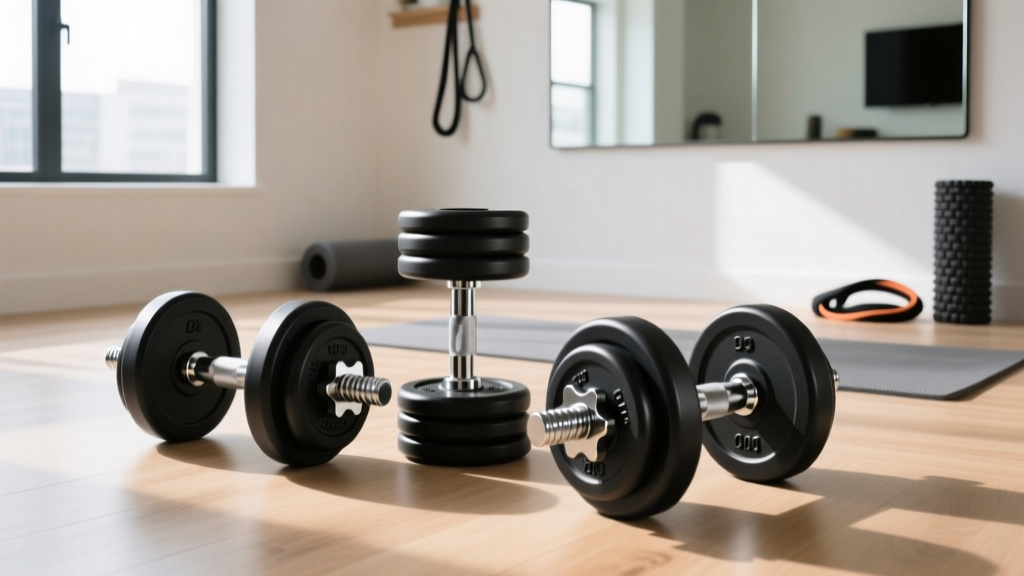
Space-Saving Loadable 15 kg Dumbbells: Home Gym Layout Guide
Maximize your home gym footprint. Learn how to design a space-efficient layout using loadable 15 kg dumbbells and interchangeable Olympic plates.

The Spatial Math: Fixed Racks vs. Loadable Setups
When designing a home gym in 2026, square footage is often the most expensive commodity. Traditional fixed-weight dumbbell sets are notorious space hogs. A standard commercial-grade 3-tier dumbbell rack housing pairs from 5 kg to 35 kg occupies roughly 18 square feet of floor space, including the necessary clearance for walking and loading. For athletes who frequently train with 15 kg dumbbells but also need to scale up for heavy presses or down for isolation work, a fixed rack is a highly inefficient use of a spare bedroom or garage corner.
Space Optimization Highlight
Fixed Rack Footprint: ~18 sq. ft. (48' W x 24' D rack + 36' clearance)
Loadable Setup Footprint: ~4.5 sq. ft. (18' x 18' plate tree + handle dock)
Space Saved: 75% reduction in dedicated equipment footprint, freeing up over 13 square feet for deadlift platforms, squat racks, or cardio zones.
Transitioning to a loadable dumbbell system with interchangeable plates completely flips the spatial dynamics of your gym. By utilizing a single pair of Olympic loadable handles and a compact vertical plate tree, you can replicate an entire 50-pound dumbbell rack in the footprint of a single office chair.
Selecting the Right Loadable Handles for Tight Spaces
Not all loadable handles are created equal, especially when space and sleeve length dictate your maximum load. According to extensive testing by BarBend, the two dominant players in the high-quality loadable space are Rogue Fitness and Titan Fitness.
Rogue ML Loadable Dumbbell Handles
Priced around $125 per pair, the Rogue ML handles feature a 6.5-inch sleeve length and a specialized lock-jaw collar system. The knurling is aggressive, mirroring their Ohio Bar, which is crucial when sweat compromises grip during heavy goblet squats or lunges. The 6.5-inch sleeve is the sweet spot for space optimization: long enough to hold substantial weight, but short enough to prevent the dumbbell from becoming unwieldy during movements like renegade rows.
Titan Fitness Loadable Dumbbell Handles
Coming in at a more budget-friendly $90 per pair, Titan's handles offer a slightly longer 7-inch sleeve. While this allows for more plate capacity, the extra half-inch can subtly alter the center of gravity and increase the risk of the plates clipping your thighs during walking lunges. For purely space-constrained environments, the Rogue's more compact profile often yields a better ergonomic layout.
The 15 kg (33 lb) Configuration Breakdown
A common challenge with loadable dumbbells is achieving precise metric increments, particularly for intermediate lifters targeting 15 kg dumbbells for hypertrophy work. Let us break down the exact plate mathematics required to build a perfect 15 kg dumbbell using the Rogue ML handle.
- Handle Weight: 10 lbs (4.54 kg)
- Target Total Weight: 33.07 lbs (15.00 kg)
- Required Plate Weight: 23.07 lbs (10.46 kg) total, or 11.53 lbs (5.23 kg) per side.
The Optimal Loading Strategy:
To hit this exact number without using excessive micro-plates that eat up valuable sleeve space, load each side with one 5 kg (11 lb) cast iron plate and one 0.25 kg (0.55 lb) fractional plate. This brings the total weight to 15.04 kg (33.15 lbs), a negligible 0.04 kg variance that will not impact your training stimulus.
Plate Selection: Diameter and Storage Implications
The type of plates you choose drastically affects both your storage layout and your workout flow. Bumper plates, while great for dropping barbells, are a nightmare for loadable dumbbell layouts due to their massive 17.5-inch diameter and thick profile.
| Plate Type | Standard Diameter | Thickness (10kg/22lb) | Space & Layout Impact |
|---|---|---|---|
| Cast Iron | 9' to 12' | ~1.2 inches | Best for sleeve space. Fits easily on compact trees. |
| Urethane | 6' to 9' | ~1.5 inches | Premium look, low odor, but thicker profile limits max load. |
| Rubber Bumper | 17.5' | ~2.5 inches | Terrible for dumbbells. Blocks floor clearance and eats sleeve space. |
For a space-optimized layout, machined cast iron or thin-grip urethane plates are mandatory. As noted in Garage Gym Reviews' deep dive into loadable setups, using standard 17.5-inch bumpers on dumbbell handles severely restricts the range of motion for floor-based exercises like chest presses and skull crushers.
Designing the Layout: Workflow and Storage Zones
Integrating loadable dumbbells into your gym requires a deliberate zoning strategy. You cannot simply toss handles and plates in a corner; the loading and unloading process must be frictionless to maintain workout intensity.
- Zone 1: The Vertical Plate Tree (The Anchor)
Place a 10-post vertical plate tree against a load-bearing wall. This utilizes vertical airspace rather than horizontal floor space. Ensure the tree has a 2-inch post diameter to accommodate Olympic plates and position it at least 24 inches away from any squat rack uprights to allow for safe plate sliding. - Zone 2: The Handle Dock (The Loading Bay)
Mount a small wall pegboard or a dedicated horizontal handle rack directly adjacent to the plate tree. The loading bay should be positioned at waist height (approx. 36 inches off the floor) so you can slide plates onto the sleeves without bending over or straining your lower back during heavy configurations. - Zone 3: The Drop Zone (The Workout Area)
Because you are using cast iron or urethane plates on loadable handles, dropping the weights will destroy both the collars and your flooring. Your layout must include a 4x6 foot, 3/4-inch thick horse-stall mat specifically designated as a controlled-lowering zone.
Edge Cases: Collar Slippage and Sleeve Limits
The primary failure mode of loadable dumbbell systems is collar slippage during dynamic movements. When performing a 15 kg dumbbell snatch or a heavy walking lunge, the lateral force can cause standard spring clips to slide, shifting the center of gravity mid-rep.
Pro-Tip for Dynamic Movements: Never use standard spring collars for loadable dumbbells if you are performing Olympic variations or heavy unilateral work. Invest in lock-jaw clamps or spin-lock collars. The extra 15 seconds spent tightening a screw-down collar prevents catastrophic plate shifts that can lead to wrist or shoulder impingements.
Another edge case is sleeve capacity. If you attempt to build a 35 kg (77 lb) dumbbell using thick rubber-grip plates, you will physically run out of sleeve space before reaching your target weight. Always calculate your maximum sleeve load based on the thickest plates you own, not the thinnest.
Frequently Asked Questions
Can I use standard 1-inch plates with loadable Olympic handles?
No. Loadable handles designed for home gyms almost exclusively feature 2-inch (50mm) Olympic sleeves. Attempting to use 1-inch standard plates will result in a dangerous, loose fit that can slide off during a press. If you currently own 1-inch plates, you must factor the cost of upgrading to 2-inch Olympic plates into your space-optimization budget.
How do loadable dumbbells compare to adjustable dial dumbbells for space?
Adjustable dial dumbbells (like Bowflex or Nuobell) offer faster weight changes and take up roughly 2.5 square feet. However, they are highly fragile, cannot be dropped, and max out at 32 kg (70 lbs) for most consumer models. Loadable dumbbells take up slightly more space due to the plate tree but offer infinite scalability, commercial-grade durability, and a significantly lower cost-per-pound.
What is the best way to store fractional plates in a small gym?
Fractional plates (0.25 kg to 1.25 kg) are easily lost and clutter up standard plate trees. The most space-efficient solution is to mount a small magnetic parts tray or a dedicated wall-mounted acrylic bin directly on the side of your main plate tree or squat rack upright. This keeps micro-plates visible, accessible, and off the floor.
More gear to consider
All reviews
100kg Dumbbell Guide: Neoprene Sets for Home Use

Olympic Barbell Knurling & Seated Dumbbell Triceps Extension Errors

2026 Storage Trends: Racks for 10 lbs Dumbbells & Light Sets

Bumper vs Iron Plates & Best Glute Exercise with Dumbbells

Power Rack vs Squat Rack vs Stand + Dumbbell Thigh Exercises