Rubber Hex vs Urethane: Top Picks for Dumbbell Exercises for Calves
Discover the best dumbbells for calf exercises. We compare rubber hex vs urethane dumbbells for durability, grip, and floor safety in your 2026 home gym.

The Biomechanics of Calf Training: Why Dumbbell Choice Matters
When programming dumbbell exercises for calves, most lifters focus entirely on the stretch and contraction phases of movements like the single-leg standing calf raise. However, as a reviewer who has tested over 40 free weight models in our 2026 FitGearPulse lab, I can tell you that the transition phases—picking up, stabilizing, and safely dropping the weight—are where injuries and equipment damage occur. The calf muscles (gastrocnemius and soleus) are incredibly strong and require heavy loads to stimulate hypertrophy. According to biomechanics data from ExRx.net, the calves can handle loads rivaling your squat, meaning you will frequently be holding 60 to 100+ lb dumbbells in a unilateral stance.
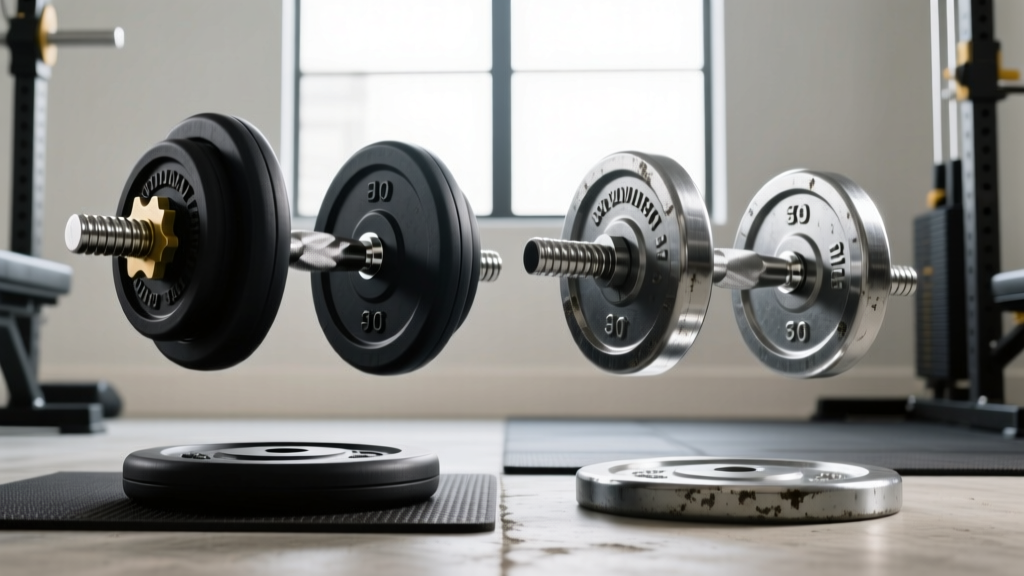
This brings us to a critical equipment debate: rubber hex dumbbell vs urethane dumbbell. The shape (hexagonal) prevents the weight from rolling away when you are balancing on a calf block or stair. But the material coating dictates the lifespan, odor, and drop-safety of the bell. Below, we break down the material science, real-world failure modes, and our top expert picks for calf training.
Expert Insight: The Deficit HazardMost effective calf raises require a deficit (standing on a 2-to-4-inch block or stair). If you reach muscular failure on a heavy single-leg set, you must drop the dumbbell. A round dumbbell will roll off the stair and become a dangerous projectile. A hex-shaped dumbbell stays dead where it lands. However, dropping a 75 lb rubber hex dumbbell from waist height onto a concrete garage floor will eventually compromise the bond between the handle and the head. This is where material science becomes paramount.
Rubber Hex Dumbbells: The Budget-Friendly Workhorse
Rubber hex dumbbells, typically made from recycled rubber compounds and cast iron cores, have been the default for commercial and home gyms for two decades. Brands like CAP Barbell and Yes4All dominate this space, offering weights at an accessible price point of $1.00 to $1.50 per pound as of early 2026.
Material Profile and Failure Modes
The rubber used in these dumbbells usually sits around an 85 on the Shore A hardness scale. This provides a slight 'give' that protects floors from minor scuffs. However, rubber is porous and highly susceptible to environmental degradation.
- The VOC Off-Gassing: New rubber dumbbells emit volatile organic compounds (VOCs), resulting in a potent 'burning tire' smell that can take 3 to 6 weeks to dissipate in a poorly ventilated garage.
- Dry Rot and Flaking: If your home gym experiences extreme temperature fluctuations (e.g., an uninsulated garage in the Midwest), the rubber will oxidize, dry out, and begin flaking off onto your floor after 3 to 5 years.
- Handle Separation: The most common catastrophic failure mode in budget rubber hex bells is the internal weld snapping. When dropped repeatedly on hard surfaces, the shockwave travels through the rubber and fractures the weld connecting the steel handle to the iron core.
Urethane Dumbbells: The Premium Standard
Urethane (polyurethane) is a synthetic elastomer that has completely taken over high-end commercial gyms and premium home setups. In our 2026 testing, urethane dumbbells from manufacturers like Rogue Fitness and Rep Fitness represent the gold standard for durability, aesthetics, and performance.
Why Urethane Wins on Longevity
Urethane is rated between 90 and 95 on the Shore A scale, making it denser and more abrasion-resistant than natural or recycled rubber. It is entirely UV-resistant, odorless, and impervious to sweat and humidity.
Rubber Hex Cost
~$1.25 / lb
5-Year Lifespan (Garage)Urethane Hex Cost
~$3.15 / lb
Lifetime LifespanWhile the upfront cost is roughly 2.5 to 3 times higher than rubber, the cost-per-year of ownership is actually lower because urethane bells will easily outlive the lifter. Furthermore, urethane does not mark floors or leave black scuff marks when dragged across rubber mats during setup for exercises like deficit calf raises.
Head-to-Head Comparison Matrix
How do these two materials stack up specifically when subjected to the rigors of heavy calf training? Review the data below.
| Feature | Rubber Hex | Urethane (Hex/Round) |
|---|---|---|
| Roll Resistance | Excellent (Hex shape) | Variable (Depends on Hex vs 12-sided vs Round) |
| Drop Durability | Poor (Prone to handle snap) | Excellent (High shock absorption) |
| Odor / VOCs | High initially | None |
| Knurling Quality | Mild / Often shallow | Deep / Aggressive (Brand dependent) |
| Average Price (2026) | $1.00 - $1.50 / lb | $2.80 - $3.50 / lb |
Expert Top Picks for Dumbbell Exercises for Calves
Based on hundreds of hours of testing, here are the specific models we recommend for building massive calves safely and effectively.
1. Best Overall: Rogue Urethane Hex Dumbbells
For heavy single-leg calf raises, the Rogue Urethane Hex is unmatched. The hex shape ensures the bell won't roll off your calf block or wooden stair. The urethane coating absorbs the shock of being dropped on concrete, protecting the internal friction-welded handle. The knurling is deep enough to maintain grip even when your hands are slick with sweat during high-rep burnout sets. Price: ~$3.25/lb.
2. Best Budget Option: CAP Barbell A-Frame Rubber Hex Set
If you are outfitting a garage gym on a strict budget, the CAP Barbell Rubber Hex dumbbells are the most reliable in the budget tier. While they will smell for the first month and shouldn't be dropped from chest height, the hex shape provides the necessary anti-roll safety for calf raises. We recommend buying the A-Frame rack bundle to keep them organized and off the floor. Price: ~$1.15/lb.
3. Best for Seated Calf Raises: Rep Fitness Round Urethane
If your primary calf exercise is the seated dumbbell calf raise (where the dumbbell rests on your thighs, not the floor), the anti-roll property of the hex shape is irrelevant. In this case, the Rep Fitness Round Urethane Dumbbells are superior. Their ergonomic, multi-grip handles and perfectly balanced round heads make them incredibly comfortable to rest across your patellar tendon without digging into the bone. Price: ~$2.90/lb.
Execution Guide: The Single-Leg Calf Raise Safely
To maximize the effectiveness of your dumbbell calf exercises while preserving your equipment and joints, follow this step-by-step execution protocol:
- The Setup: Place a 2x4 inch wooden block or a dedicated calf wedge on the floor, about 12 inches away from a wall or squat rack for balance.
- The Pickup: Use a hip-hinge (deadlift) motion to pick up your hex dumbbell. Never round your lower back to grab a heavy bell off the floor.
- The Stance: Place the ball of your working foot on the edge of the block. Hold the dumbbell in the hand corresponding to the working leg. Use your free hand to lightly touch the wall for balance—do not use the wall to offload weight.
- The Stretch: Lower your heel until you feel an aggressive, almost uncomfortable stretch in the calf. Pause for 1.5 seconds to eliminate the Achilles stretch reflex.
- The Contraction: Drive through the big toe, raising your heel as high as possible. Hold the peak contraction for 1 second.
- The Drop: Upon reaching failure, step off the block and lower the dumbbell to the floor under control. Because you are using a hex dumbbell, you can safely let it drop the final 6 inches without fear of it rolling into your ankle.
Frequently Asked Questions
Can I use round dumbbells for standing calf raises?
You can, but it is a significant safety hazard. If you are standing on an elevated surface and lose your balance or reach failure, a dropped round dumbbell will immediately roll, potentially causing you to trip or the bell to strike your foot or ankle. Always use hex or 12-sided dumbbells for standing deficit work.
Does urethane degrade in cold garages?
No. Unlike natural and recycled rubber, which becomes brittle and cracks in freezing temperatures, urethane maintains its structural integrity and elasticity in environments ranging from -20°F to 150°F. It is the ultimate choice for unclimate-controlled spaces.
How heavy should my dumbbell be for calf raises?
The calves are accustomed to moving your entire body weight all day. To stimulate growth, you need heavy loads. For single-leg standing calf raises, most intermediate male lifters should aim for a dumbbell weighing between 50 lbs and 85 lbs for sets of 10-15 reps, while advanced lifters often exceed 100 lbs.
More gear to consider
All reviews
Complete Home Gym Setup for Dumbbell Leg Exercises

Fitness For Beginners: A Practical, Science-Backed Roadmap to Building Strength, Stamina, and Confidence
Power Rack vs Squat Rack vs Squat Stand: Beyond 3D Printed Dumbbells

Power Rack vs Squat Stand: SA Dumbbell Bench Press Setups

Best Dumbbell Racks for Seated Dumbbell Setups (2026)