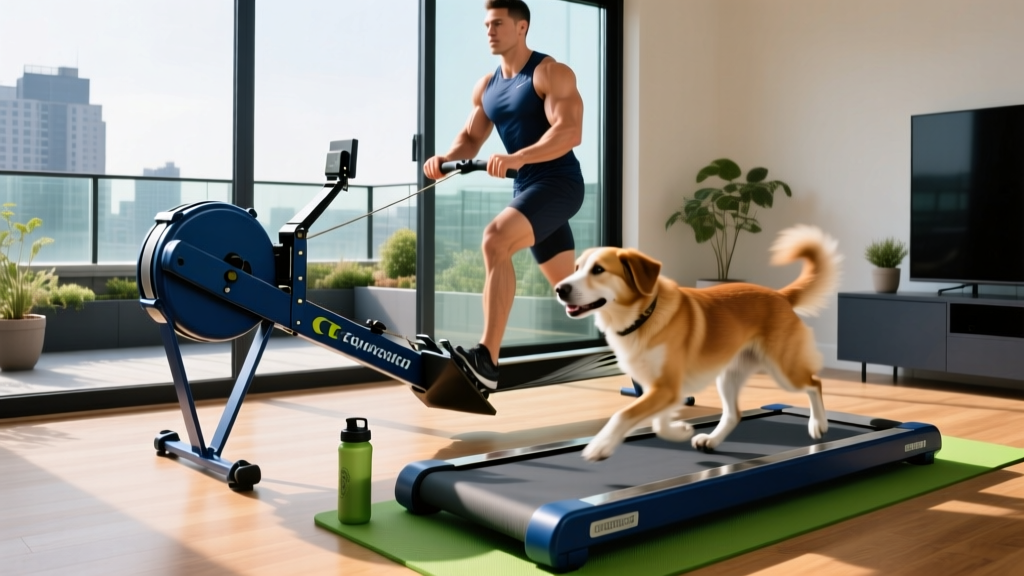
Rowing Machine Buying Guide & Technique vs Canine Treadmill Training
Compare the ROI of human rowing machine technique and buying guides against canine treadmill training. Discover which home cardio investment wins.

The Home Cardio Dilemma: Human Ergometer vs. Hound Treadmill
When allocating a $1,500 home fitness budget in 2026, multi-pet households often face a unique crossroads. Do you invest in a premium rowing machine to optimize your own cardiovascular health, or do you purchase a high-end canine treadmill to manage the explosive energy of a working-breed dog? While human fitness and pet care might seem like entirely separate categories, they compete for the same finite household resources: floor space, disposable income, and daily time commitments.
This comprehensive head-to-head comparison merges a rigorous rowing machine buying guide and technique breakdown with an in-depth look at canine treadmill training. By analyzing market leaders like the Concept2 RowErg and the dogPACER LF 3.1, we will help you determine which piece of specialized cardio equipment delivers the highest return on investment for your specific household dynamics.
Rowing Machine Buying Guide: 2026 Market Leaders
The indoor rowing market has bifurcated into two distinct camps: traditional air-resistance ergometers and smart magnetic rowers. Understanding the mechanical differences is critical before dropping over a thousand dollars.
Air vs. Magnetic Resistance
Air rowers use a flywheel with fan blades; the harder you pull, the more resistance is generated. This provides an infinite, dynamic resistance curve that perfectly mimics water drag. Magnetic rowers use electromagnets to brake the flywheel, offering whisper-quiet operation and exact, repeatable resistance levels, though they lack the visceral "catch" feel of air.
- Concept2 RowErg ($1,000 - $1,150): The undisputed gold standard for competitive rowers and CrossFit athletes. According to Concept2 Official, the RowErg features a nickel-plated chain and a PM5 monitor that tracks exact wattage and split times. It separates into two pieces for storage.
- Hydrow Arc ($1,495): A compact, magnetic smart rower designed for living spaces. Its 109 cm x 53 cm footprint is significantly smaller than traditional rail rowers, but it requires a $44/month subscription for full interactive value.
- NordicTrack RW900 ($1,199): Features a 22-inch pivoting touchscreen and 26 levels of magnetic resistance. Best for users who prioritize guided studio classes over raw ergometric data.
Mastering Rowing Machine Technique: The 4-Phase Stroke
Buying the machine is only 10% of the battle; the remaining 90% is biomechanical execution. Proper rowing machine technique is a sequential transfer of power, not a simultaneous full-body yank. British Rowing outlines the stroke in four distinct phases:
- The Catch: Shins are vertical, torso is hinged forward at 11 o'clock, and arms are fully extended. The lats are engaged to "hang" off the handle.
- The Drive: The power phase. Initiate with the legs (60% of power), swing the torso back to 1 o'clock (30% of power), and finally draw the arms to the sternum (10% of power).
- The Finish: Legs are fully extended, torso is slightly reclined, and the handle rests just below the pecs. Elbows are drawn back, wrists flat.
- The Recovery: The exact reverse of the drive. Arms extend, torso hinges forward, and knees bend only after the handle clears the knees. The recovery should take twice as long as the drive (a 2:1 ratio).
Common Failure Mode: "Shooting the Slide"
The most frequent technical error among beginners is "shooting the slide." This occurs when the legs drive forward, but the handle and torso do not move simultaneously. The hips rise first, transferring the entire load to the lumbar spine rather than the latissimus dorsi and quadriceps. This not only bleeds wattage but is a primary catalyst for L4-L5 disc herniations in amateur rowers.
Head-to-Head Comparison Matrix
How does a premier human rowing machine stack up against top-tier canine cardio equipment? Let us look at the raw data.
| Feature | Concept2 RowErg | dogPACER LF 3.1 | Firepaw Standard |
|---|---|---|---|
| Target User | Human (up to 500 lbs) | Dogs (1 to 80 lbs) | Working/Sport Dogs |
| Approx. Cost | $1,000 - $1,150 | $650 | $1,200+ |
| Max Speed / Output | Infinite (Air Drag) | 7.5 MPH | 15 MPH (Custom) |
| Caloric Burn (Per Hr) | 600 - 900 kcal (Human) | Varies by breed/weight | High-intensity sprint |
| Maintenance | Weekly chain oiling | Belt alignment checks | Track lubrication |
The Case for Canine Treadmill Training
While human cardio is a personal choice, canine cardio is often a behavioral necessity. High-drive working breeds—such as Belgian Malinois, Siberian Huskies, and Border Collies—require 90 to 120 minutes of vigorous aerobic activity daily to prevent destructive neuroses and leash reactivity. When extreme weather, urban environments, or owner mobility issues prevent outdoor running, a canine treadmill becomes a vital behavioral tool.
Canine Technique and Desensitization
Unlike humans, dogs cannot be verbally coached through biomechanical adjustments. Preventive Vet emphasizes that canine treadmill training is entirely rooted in operant conditioning and desensitization.
Warning: Never leave a dog tethered to a treadmill unattended. If the dog slips or the machine malfunctions, a fixed tether can lead to severe strangulation or limb avulsion. Always use a quick-release safety harness and maintain physical proximity to the emergency stop key.
The 3-Step Canine Onboarding Protocol:
- Static Desensitization (Days 1-3): Power the machine off. Feed high-value treats (e.g., boiled chicken) on the stationary belt to build positive spatial association.
- Micro-Pacing (Days 4-7): Set the speed to 0.5 MPH. Walk alongside the dog, using a lure to keep their head forward. Reward continuous forward movement.
- Gait Transitioning (Weeks 2+): Gradually increase speed to match the dog's natural trot (usually 3.0 to 4.5 MPH for medium breeds). Avoid pushing into a gallop unless using a specialized sprinting rig like the Firepaw.
Common Canine Failure Mode: "Pacing Out"
If a dog repeatedly steps off the back of the belt or breaks into a lateral "pace" gait rather than a diagonal trot, the belt speed has exceeded their biomechanical comfort zone. This causes panic and joint strain. Immediately drop the speed by 1.5 MPH and reset the dog's position using a verbal marker and reward.
The Verdict: Allocating Your Fitness Budget
Choosing between a rowing machine and a canine treadmill is not a matter of which machine is objectively "better," but rather which solves your household's most critical bottleneck.
Invest in the Rowing Machine If:
- You require measurable, progressive overload for human cardiovascular health.
- You have limited space (the Concept2 RowErg splits and stands vertically, taking up only 25 x 33 inches of floor space).
- You want an equipment piece with a proven 20-year lifespan and high resale value.
Invest in Canine Treadmill Training If:
- You own a working or herding breed that exhibits anxiety, destruction, or reactivity due to unmet exercise quotas.
- You live in a climate with extreme heat or freezing temperatures that make daily outdoor runs unsafe for your pet.
- You are recovering from an injury and cannot physically run or bike alongside your high-energy dog.
Ultimately, if the budget allows, the ultimate 2026 home gym setup incorporates both. The human achieves peak VO2 max on the ergometer, while the canine achieves behavioral equilibrium on the treadmill—creating a balanced, exhausted, and happy household.
More gear to consider
All reviews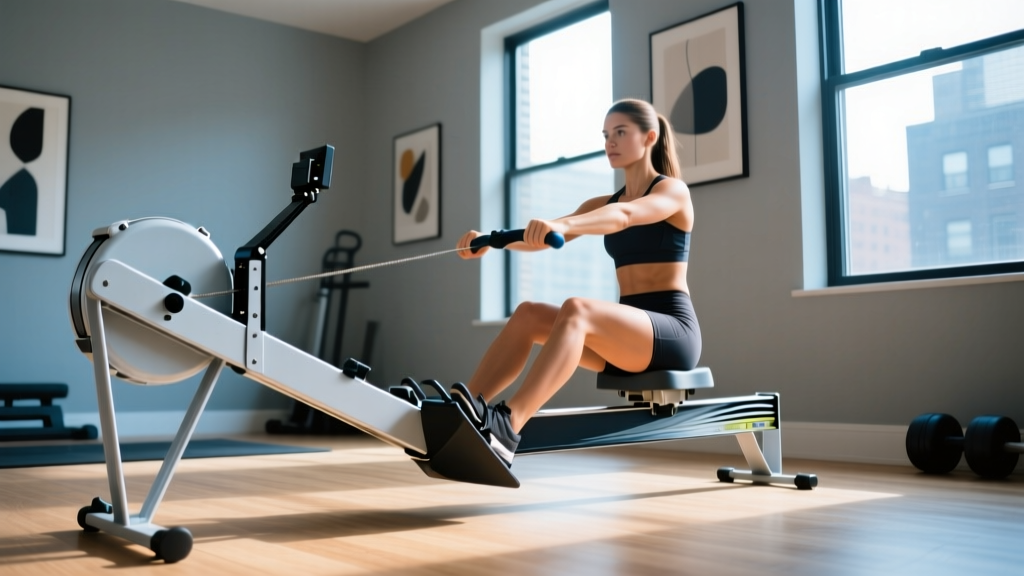
Rowing Machine Guide: What Does the Treadmill Target vs. Rowing?
Elliptical vs High Interval Training Treadmill: Maintenance

Air Bike vs Assault Bike: Is Upkeep Easier Than Treadmill Maintenance?

Air Bike vs Assault Bike Guide: Plus What is Speed 4 on a Treadmill
WalkingPad C2 Folding Treadmill: Setup, Install & Feature Comparison
