
What Motor Size Do You Need to Run 8mph on a Treadmill?
Learn exactly what treadmill motor size and CHP you need to safely sustain 8mph. A beginner-friendly step-by-step guide to horsepower and belt physics.

The 8mph Benchmark: Why Motor Size Dictates Your Run
Hitting 8mph on a treadmill translates to a brisk 7:30 per mile pace. For many home gym enthusiasts, this is the sweet spot for tempo runs, interval training, and serious cardiovascular conditioning. However, sustaining this speed places a massive, continuous mechanical load on the machine's drivetrain. If you purchase an underpowered treadmill, you will quickly encounter belt stuttering, thermal shutdowns, and premature motor burnout.
As a beginner navigating the fitness equipment market, decoding motor specifications can feel like learning a foreign language. Manufacturers frequently use misleading marketing jargon to mask weak components. In this step-by-step guide, we will break down exactly how to evaluate treadmill motor size, horsepower, and physical engineering to ensure your machine can effortlessly handle 8mph runs in 2026 and beyond.
Step 1: Decode the Horsepower Marketing Trap
The first mistake most buyers make is looking at the largest number on the box. To choose the right motor, you must understand the critical difference between Peak Horsepower and Continuous Horsepower.
⚠️ The Peak HP Trap: 'Peak Horsepower' measures the absolute maximum output the motor can achieve for a fraction of a second before failing. It is a marketing gimmick. You must exclusively look for CHP (Continuous Horsepower), which measures the power the motor can sustain indefinitely during an active workout.When you are running at 8mph, the motor never gets a break. According to equipment testing standards outlined by Consumer Reports, a motor must maintain a steady torque output to keep the belt moving smoothly under the impact of your footstrikes. For walking, a 2.0 CHP motor might suffice. But the moment you transition to a run—specifically crossing the 6mph to 8mph threshold—the continuous amperage draw spikes dramatically. If the CHP rating is too low, the motor controller will struggle to supply adequate voltage, resulting in a sluggish, jerky belt feel.
Step 2: Match Your Body Weight to the 8mph Requirement
Motor size requirements are not one-size-fits-all. The physics of treadmill running dictate that the motor must overcome both the friction of the deck and the downward force of your body weight. A 140-pound runner and a 230-pound runner place vastly different continuous loads on a motor when both are traveling at 8mph.
Use the following matrix to determine the absolute minimum Continuous Horsepower (CHP) required for your specific body weight to sustain an 8mph pace without overheating the system.
| User Weight | Minimum CHP for 8mph | Recommended 2026 Models | Estimated Price Range |
|---|---|---|---|
| Under 150 lbs | 2.75 CHP | Horizon 7.4, ProForm Carbon TLX | $899 - $1,099 |
| 150 - 200 lbs | 3.25 CHP | NordicTrack T Series 10, Sole F63 | $1,099 - $1,399 |
| 200 - 250 lbs | 3.5 to 4.0 CHP | Sole F80, NordicTrack Commercial 1750 | $1,199 - $1,999 |
| Over 250 lbs | 4.0+ CHP | Matrix T7xe, Sole F85 | $2,299 - $3,499 |
Note: If you plan on doing high-incline interval training at 8mph, add 0.5 CHP to your minimum requirement, as gravity exponentially increases the torque demand on the motor.
Step 3: Analyze the Motor's Physical Mass and Cooling
Horsepower is only half the equation. The physical size of the motor housing and the mass of the flywheel dictate how well the machine manages heat. Running at 8mph generates significant internal friction and electrical resistance.
The Flywheel Factor
The flywheel is the heavy metal disc attached to the motor that helps maintain momentum. A larger, heavier flywheel requires less continuous electrical input from the motor to keep the belt moving at 8mph. When shopping, look for treadmills that advertise a 'heavy-duty' or 'oversized' flywheel. A cheap 3.0 CHP motor with a lightweight plastic or small aluminum flywheel will work much harder—and run much hotter—than a premium 3.0 CHP motor paired with a massive steel flywheel.
Thermal Cutoffs and Airflow
High-quality treadmill motors feature internal cooling fans and advanced heat sinks. If a motor lacks adequate physical mass to dissipate heat, it will trigger a thermal cutoff switch. This is a safety mechanism that abruptly cuts power to the belt when internal temperatures reach critical levels (usually around 212°F / 100°C). Experiencing a thermal shutdown mid-stride at 8mph is not just frustrating; it is a severe fall hazard. Always check user reviews for mentions of 'overheating' or 'thermal shutoff' during sustained runs.
Step 4: Use the Warranty as a Quality Proxy
Manufacturers know exactly how long their motors will last under continuous running loads. The motor warranty is the most reliable indicator of the component's true quality and durability.
- 1-Year to 5-Year Motor Warranty: Avoid for 8mph running. These motors are typically built with lower-grade copper windings and inferior bearings that will degrade quickly under high-speed, high-torque conditions.
- 10-Year Motor Warranty: Acceptable for moderate runners. Brands like Horizon often provide this on their mid-tier models, indicating confidence in the motor's lifespan for users under 200 lbs.
- Lifetime Motor Warranty: The gold standard. Premium brands like Sole Fitness and Matrix offer lifetime motor warranties. This guarantees the manufacturer has used high-grade, oversized internal components designed to survive years of 8mph+ tempo runs without burning out.
Expert Insight: According to biomechanics and fitness equipment guidelines referenced by the Mayo Clinic, investing in a machine with a robust motor and a strong warranty is crucial not just for machine longevity, but for maintaining a consistent, safe running gait without mechanical interruptions.
Troubleshooting: The '8mph Stutter' Phenomenon
Many beginners assume that if their treadmill belt jerks or stutters when they hit 8mph, the motor is too small. While an underpowered motor is a common culprit, there is a secondary, non-obvious failure mode you must understand: Deck Friction Overload.
When the Motor is Fine, but the Deck is Failing
Treadmill belts require a layer of silicone lubrication between the belt and the wooden deck. Over time, this lubrication dries up. When you run at 8mph, the friction between a dry belt and the deck generates massive heat and resistance. The motor controller detects this resistance and spikes the amperage to compensate. If the amp draw exceeds the controller's safety threshold (often around 15-18 amps), the system will momentarily cut power to prevent a fire, causing the belt to 'stutter' or jerk beneath your feet.
The Step-by-Step Fix
- Perform the Amp Draw Test: Many modern treadmills have a hidden engineering menu (consult your manual) that displays real-time amp draw. If your treadmill pulls less than 6 amps at 3mph, but spikes to 14+ amps at 8mph, your motor isn't too small—your deck is dry.
- Lubricate the Deck: Apply 100% silicone treadmill lubricant under the belt. This single $15 maintenance step can reduce amp draw by up to 40%, instantly curing the 8mph stutter on machines with adequate CHP.
- Check Belt Tension: A belt that is too tight will also choke the motor at high speeds. You should be able to lift the belt roughly 2 to 3 inches off the deck at the midpoint.
Final Verdict: Sizing Your Motor for Success
Reaching 8mph on a treadmill is a fantastic fitness milestone that demands respect for the physics of your equipment. Do not compromise on Continuous Horsepower. For the vast majority of home runners weighing between 150 and 200 pounds, a 3.25 CHP motor is the absolute baseline for a smooth, safe, and enduring 8mph experience. Pair that continuous power with a heavy flywheel, a well-lubricated deck, and a minimum 10-year motor warranty, and your treadmill will support your tempo runs for years to come.
More gear to consider
All reviews
Horizon T 101 Treadmill vs Under Desk Treadmills: 2026 Office Trends

Beyond Barry's Treadmills: 2026 Stationary Bike Market Trends
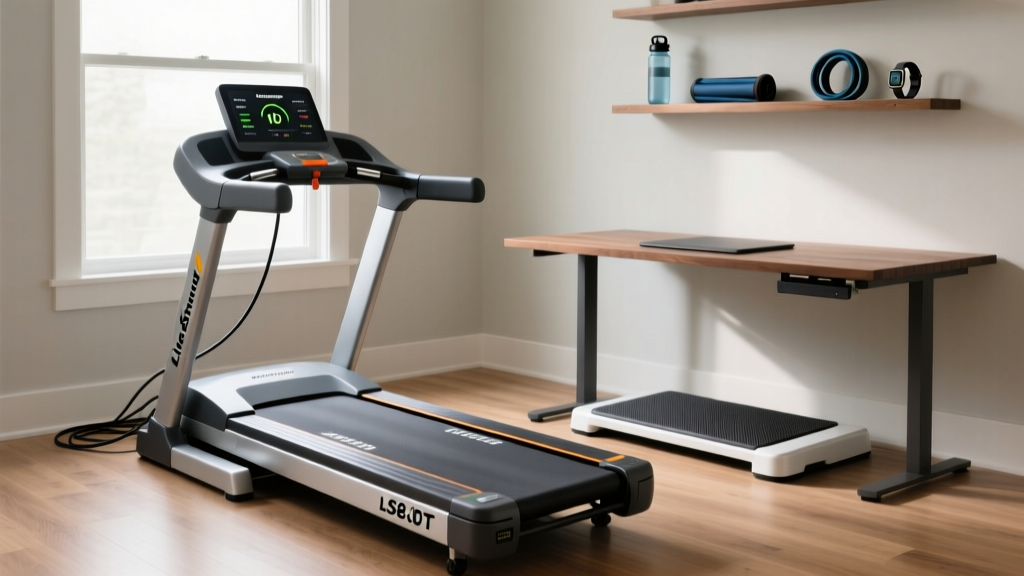
LiveStrong LS8.0T Treadmill Setup & Walking Pad Comparison

Maintaining the Treadmill Shock Absorber in Compact Portable Models

Farmers Walk on Treadmill & Stationary Bike Types: 2026 Review
