
Rowing Machine Buying Guide: Beating the Treadmill MET Score
Compare the treadmill MET to rowing machine output. Our buying guide covers Concept2 vs. Horizon, biomechanics, and technique for maximum calorie burn.

When building a home gym in 2026, the debate between running and rowing remains one of the most contested topics in fitness. Many buyers default to treadmills because they intuitively understand the treadmill MET (Metabolic Equivalent of Task) score, assuming that pounding the pavement or a motorized belt is the undisputed king of calorie expenditure. However, this assumption often ignores the profound biomechanical advantages and full-body muscular engagement of the rowing ergometer. If you are searching for a definitive rowing machine buying guide and technique breakdown to see if an oar-pulling machine can outperform your favorite runner, you are in the right place.
In this head-to-head comparison, we will decode the science of METs, compare two industry-leading machines, and break down the exact rowing technique required to maximize your metabolic output without destroying your joints.
Decoding the Treadmill MET vs. Rowing Ergometer Output
The Metabolic Equivalent of Task (MET) is a physiological measure expressing the energy cost of physical activities. One MET is defined as the amount of oxygen consumed while sitting at rest, which is roughly 3.5 milliliters of oxygen per kilogram of body weight per minute. Understanding how a treadmill MET compares to a rowing machine MET is crucial for optimizing weight loss and cardiovascular conditioning.
According to data published by Harvard Health Publishing, running at a 10-minute-per-mile pace (6 mph) yields a MET score of approximately 9.8. This is the benchmark most consumers use when shopping for cardio equipment. However, vigorous rowing (at a sustained 150-watt output) generates a MET score of 8.5 to 9.0, and elite-level rowing sprints can push past 12.0 METs. The critical difference? Rowing recruits roughly 86% of the body's musculature, whereas treadmill running primarily isolates the lower body and core.
| Activity & Intensity | Estimated MET Score | Muscle Recruitment | Joint Impact |
|---|---|---|---|
| Treadmill Walking (3.5 mph) | 4.3 | Lower Body (40%) | Low |
| Treadmill Running (6.0 mph) | 9.8 | Lower Body & Core (60%) | High |
| Rowing (Moderate, 100 Watts) | 7.0 | Full Body (86%) | None (Seated) |
| Rowing (Vigorous, 150+ Watts) | 8.5 - 12.0 | Full Body (86%) | None (Seated) |
Head-to-Head: Concept2 RowErg vs. Horizon T101 Treadmill
To understand how these MET scores translate to real-world purchasing decisions, we must look at the hardware. We are pitting the gold standard of rowing, the Concept2 RowErg, against one of the most popular home treadmills, the Horizon T101.
The Concept2 RowErg (Standard PM5)
Priced at $995, the Concept2 RowErg (featuring the advanced PM5 performance monitor) is the undisputed champion of indoor rowing. It utilizes air resistance, meaning the harder you pull, the more drag is generated. This infinite resistance curve is exactly what allows athletes to push their MET scores into the double digits during sprint intervals. The nickel-plated steel chain and polycarbonate sprockets ensure that the machine will easily survive a decade of daily, high-wattage abuse with minimal maintenance.
The Horizon T101 Treadmill
Retailing around $799, the Horizon T101 features a 3.0 CHP motor, a 20-inch by 55-inch running belt, and Bluetooth connectivity. It is a fantastic machine for steady-state cardio and walking pad alternatives. However, to achieve a high treadmill MET score, users must regularly utilize the 15% incline or push speeds past 7 mph, which significantly increases the mechanical wear on the motor and the compressive forces on the user's knees and lumbar spine.
Expert Buying Insight
If your primary goal is maximizing caloric expenditure per minute while preserving joint cartilage for the long term, the $995 investment in the Concept2 RowErg offers a vastly superior return on investment compared to replacing treadmill motors and dealing with shin splints. The rowing machine's non-impact nature allows for daily, high-MET training without the central nervous system fatigue associated with running.
The Biomechanical Edge: Why Technique Dictates Your MET
Here is the catch: a treadmill forces your pace. If you set the belt to 6 mph, you must run at 6 mph, guaranteeing your treadmill MET score. A rowing machine, conversely, requires internal drive and proper biomechanics. If your technique is flawed, your wattage drops, and your metabolic output plummets. According to the Cleveland Clinic, proper form on a rowing machine is essential to prevent lower back pain and ensure you are actually engaging the large muscle groups required for high calorie burn.
To beat the treadmill MET score on a rower, you must master the four phases of the stroke. The power distribution should always follow the 60-20-20 rule: 60% legs, 20% core, and 20% arms.
- The Catch: Shins are vertical, torso is leaning forward at roughly 11 o'clock, and arms are fully extended. You should feel tension in your hamstrings and lats, not your lower back.
- The Drive: This is where the MET score is generated. Push explosively with your legs while keeping your arms straight and core braced. Do not open your back until your legs are 80% extended.
- The Finish: Once the legs are flat, hinge the torso back to 1 o'clock, and finally draw the handle to your lower sternum. Keep your wrists flat and elbows tucked.
- The Recovery: Reverse the sequence smoothly. Arms extend, torso hinges forward, and then the knees bend. The recovery should take twice as long as the drive (a 1:2 ratio).
'The most common mistake beginners make is pulling with their arms too early in the drive phase. This not only slashes your wattage output by up to 40% but also shifts the load to the biceps and lower back, completely defeating the full-body metabolic advantage of the ergometer.'
Space, Acoustics, and Long-Term Maintenance
Beyond MET scores and biomechanics, the reality of integrating these machines into a 2026 home gym environment often dictates the final purchase. Let us break down the practicalities.
- Footprint & Storage: The Horizon T101 requires a dedicated 70" x 30" floor space and weighs 148 lbs. While it folds, the hydraulic lift mechanism can be cumbersome. The Concept2 RowErg is 95" long during use but separates into two pieces in under 30 seconds, allowing it to be stored vertically in a closet or corner, taking up just a 25" x 25" footprint.
- Acoustics: Treadmills generate a continuous low-frequency hum from the motor, compounded by the high-decibel impact of footstrikes. If you live in an apartment or have sleeping family members, early morning high-MET treadmill runs will cause noise complaints. The RowErg produces a 'whoosh' of air resistance. While not silent, the rhythmic white noise is generally less disruptive through floorboards than treadmill impacts.
- Maintenance: Treadmills require regular belt lubrication, tension adjustments, and eventual motor or roller replacements. The Concept2 requires nothing more than wiping down the monorail with a non-abrasive cleaner and occasionally oiling the chain. The PM5 monitor is practically indestructible.
Final Verdict: Which Machine Earns Your Floor Space?
If your fitness journey relies on the psychological ease of stepping on a belt and letting the machine dictate your pace, the Horizon T101 remains a solid, budget-friendly choice for steady-state cardiovascular health. The treadmill MET is a reliable metric for lower-body endurance and bone-density loading.
However, if you are willing to invest the time into mastering the 60-20-20 technique, the rowing machine offers a superior, full-body metabolic stimulus. By utilizing the Concept2 RowErg, you can match or exceed the caloric burn of a vigorous treadmill run while entirely eliminating the compressive joint forces that sideline runners. For the data-driven home gym owner looking to maximize efficiency, preserve joint health, and conquer high-intensity interval training, the rowing ergometer is the ultimate 2026 cardio investment.
More gear to consider
All reviews
Is Running on a Treadmill Easier Than Rowing? Beginner Guide

Best Treadmill on 2nd Floor: Horizon 7.4 vs Sole F80 (2026)

NordicTrack Treadmill with TV & Stationary Bike Types Maintenance
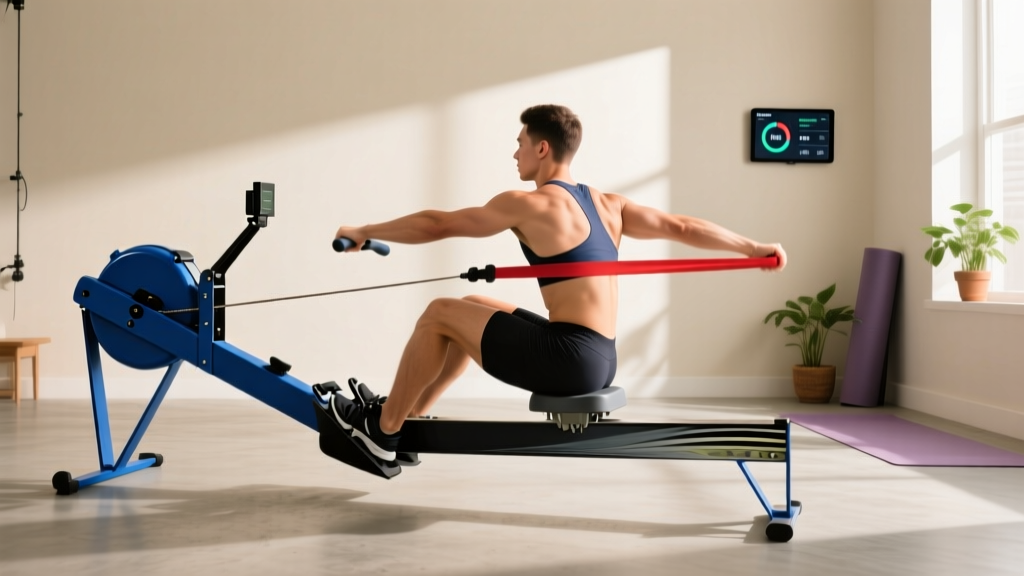
Rowing Machine Buying Guide: Technique vs Running on a Manual Treadmill

Elliptical vs Treadmill Longevity: A Complete Treadmill Routine Guide
