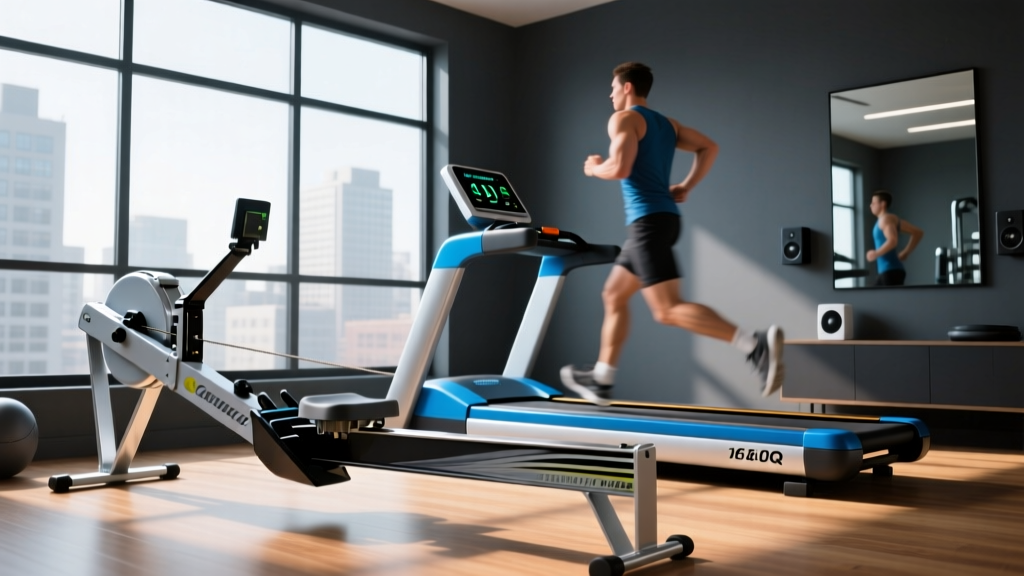
Rowing Machine Buying Guide & Technique vs Image 16.0Q Treadmill
Master rowing machine technique and buying choices in 2026. We compare top ergometers against the Image 16.0Q treadmill for ultimate home cardio.

The Evolution of Home Cardio: Beyond the Treadmill
For years, the Image 16.0Q treadmill has been a reliable staple in home gyms, prized for its 2.0 CHP motor, 16% maximum incline, and quick-select console controls. It is an excellent tool for steady-state jogging and incline walking. However, as we move through 2026, fitness science and home gym enthusiasts are increasingly pivoting toward the rowing machine (ergometer) for superior full-body conditioning. If you are considering upgrading or cross-training, this in-depth buying guide and technique breakdown will help you transition from the treadmill belt to the rowing monorail with confidence.
Expert Insight: While the Image 16.0Q treadmill excels at lower-body endurance and bone-density loading through impact, it leaves the posterior chain and upper body largely unengaged. A rowing machine recruits up to 86% of your musculature per stroke, offering a higher metabolic demand with zero impact on the patellofemoral joint.Biomechanical Showdown: Image 16.0Q Treadmill vs. Rowing Ergometer
Before investing in a rower, it is crucial to understand how the biomechanics compare to your current treadmill routine. Below is a direct comparison matrix detailing the physiological and practical differences between the two modalities.
| Feature | Image 16.0Q Treadmill | Rowing Ergometer |
|---|---|---|
| Muscle Recruitment | ~40% (Primarily quads, calves, glutes) | ~86% (Legs, core, lats, biceps) |
| Joint Impact | High (Running) / Low (Walking) | Zero Impact (Seated, closed-chain) |
| Caloric Expenditure (30 min) | 250 - 400 kcal (varies by incline/speed) | 350 - 550 kcal (highly effort-dependent) |
| Spatial Footprint | ~75" L x 30" W (Vertical fold available) | ~95" L x 22" W (Stores vertically on end) |
| Acoustic Profile | Motor hum + footstrike impact (65-75 dB) | Air whoosh or water swoosh (50-65 dB) |
According to data published by Harvard Health Publishing, vigorous rowing consistently outpaces moderate treadmill jogging in caloric burn due to the simultaneous demand placed on both the upper and lower body cardiovascular systems.
The 2026 Rowing Machine Buying Matrix
Not all rowers are created equal. The market is segmented by resistance type, each with distinct price points, maintenance requirements, and failure modes. Here is what you need to know before purchasing.
1. Air Resistance (The Gold Standard)
Air rowers use a flywheel with fan blades. The harder you pull, the more resistance is generated. This provides an infinite, dynamic drag curve that perfectly mimics on-water rowing.
- Top Model: Concept2 RowErg (Standard Legs)
- 2026 Pricing: ~$1,100 USD
- Edge Cases & Failure Modes: The internal elastic shock cord can lose tension after 4-5 years of heavy use, requiring a $20 replacement. The nickel-plated steel chain requires periodic oiling to prevent surface rust and elongation.
2. Magnetic & Electromagnetic Resistance (The Smart Choice)
Magnetic rowers use eddy currents to create resistance. They are nearly silent and heavily integrated with interactive programming, making them ideal for apartment living.
- Top Model: Hydrow
- 2026 Pricing: ~$2,495 USD (plus $44/mo subscription)
- Edge Cases & Failure Modes: Proprietary electromagnetic belts can slip or snap if subjected to extreme, uncalibrated lateral torque. Monitor software updates occasionally require hard resets via the manufacturer's app.
3. Water Resistance (The Aesthetic & Auditory Experience)
Water rowers use a polycarbonate tank with internal paddles. Resistance scales with stroke rate and paddle surface area. The sound of rushing water provides incredible auditory feedback.
- Top Model: WaterRower Natural (Oak)
- 2026 Pricing: ~$1,600 USD
- Edge Cases & Failure Modes: If placed in direct sunlight, UV rays will degrade the polycarbonate tank and promote algae growth. Users must drop chlorine purification tablets into the tank every 6 months. Bungee cord return mechanisms can snap if the Kevlar core frays.
4. Hydraulic Resistance (The Budget Trap)
Hydraulic rowers use dual or single pistons. While cheap and compact, they are generally not recommended for serious cardiovascular conditioning.
- Top Model: Various generic Amazon brands (e.g., Sunny Health SF-RW1205)
- 2026 Pricing: $100 - $180 USD
- Edge Cases & Failure Modes: Piston seals degrade rapidly under friction heat, leading to fluid leaks and total resistance failure within 6 to 12 months. The stroke path is often arched rather than linear, promoting poor lumbar mechanics.
Mastering the Ergometer: Step-by-Step Technique
Transitioning from the Image 16.0Q treadmill to a rower requires a complete neurological rewiring. On a treadmill, the belt dictates your pace. On a rower, you are the engine. According to the official Concept2 Technique Guide, a proper stroke is divided into four distinct phases.
- The Catch: Shins are vertical (or as close as ankle mobility allows), torso is hinged forward at roughly 11 o'clock, and arms are fully extended. You should feel tension in your hamstrings and lats.
- The Drive: This is where the power happens. The sequence is strictly Legs, Core, Arms. Push explosively through the heels. As the legs approach full extension, hinge the torso back to 1 o'clock, and finally draw the handle to your lower sternum. Power distribution should be 60% legs, 20% core, 20% arms.
- The Finish: Legs are fully extended, torso is slightly reclined, and the handle is hovering just below the pectoral line. Wrists must remain perfectly flat to prevent extensor tendonitis.
- The Recovery: The exact reverse of the drive. Arms away, torso hinge, knee bend. The recovery should take twice as long as the drive (a 1:2 ratio), allowing your heart rate to micro-recover between strokes.
Demystifying the Damper Setting
A massive misconception among former treadmill users is that a higher damper setting (1-10) equals a better workout. This is false. The damper simply alters the drag factor—how quickly the flywheel slows down between strokes. For 90% of indoor rowing workouts, a drag factor between 100 and 130 (usually a damper setting of 3 to 5) is optimal. Setting the damper to 10 is akin to riding a bicycle in the heaviest gear; it will fatigue your muscles before your cardiovascular system reaches its threshold.
Maintenance Protocols for Longevity
Unlike the Image 16.0Q treadmill, which requires belt lubrication and motor deck dusting, rowing machine maintenance is highly specific to the resistance type.
- Air Rower Chain Care: Wipe the chain with a paper towel and apply 3-in-One oil or purified mineral oil every 40 hours of use. Never use WD-40, as it strips existing lubricants and attracts abrasive dust.
- Monorail Cleaning: The seat wheels will pick up skin cells and dust, creating a gritty track. Wipe the stainless steel or aluminum monorail with a damp microfiber cloth and mild glass cleaner weekly to prevent flat-spotting the polyurethane wheels.
- Water Tank Purification: For water rowers, add one purification tablet every 6 months. Never use bleach, as it will corrode the internal rubber seals and polycarbonate housing.
Frequently Asked Questions
Can I use a rower if I have knee issues from treadmill running?
Yes. The Cleveland Clinic notes that rowing is a closed-chain, zero-impact exercise. Because your feet never leave the footplates, there is no repetitive ground-reaction force traveling up the tibia to the knee joint. However, ensure your foot strap is placed across the ball of the foot, not the toes, to maintain proper ankle dorsiflexion and protect the patellar tendon.
How does the 16% incline on the Image 16.0Q compare to rowing drag?
Walking at a 16% incline on the Image 16.0Q heavily isolates the glutes and calves, simulating a steep hill climb. In rowing, you simulate this "heavy" feeling not by changing an incline, but by increasing your stroke power (watts) and lowering your stroke rate (18-22 strokes per minute). This creates high-tension, strength-endurance intervals that mimic the muscular burn of steep incline walking without the Achilles tendon strain.
What is the minimum ceiling height required for vertical storage?
Most air and magnetic rowers, including the Concept2 and Hydrow, can be stored vertically on their front casters. You will need a minimum ceiling clearance of 85 inches (approx. 215 cm). Always secure the top of the machine to a wall stud with a safety tether to prevent accidental tipping, especially in households with children or pets.
Final Verdict: Making the Switch
The Image 16.0Q treadmill remains a fantastic piece of equipment for Zone 2 steady-state walking and specific running mechanics. However, if your goal in 2026 is to maximize caloric expenditure, build a bulletproof posterior chain, and eliminate joint degradation, the rowing machine is the undisputed champion of home cardio. Invest in an air or magnetic ergometer, master the 60/20/20 power sequence, and treat your form with the same respect you would a heavy barbell lift. Your cardiovascular engine—and your joints—will thank you.
More gear to consider
All reviews
NordicTrack Treadmill Parts Diagram & 2026 Under Desk Office Trends

Curved Manual vs Motorized: Is the Wahoo KICKR Treadmill Right for You?

Stair Climber vs. Treadmill and Belly Fat: 2026 Home Cardio Guide

Air Bike vs Assault Bike: The Best Treadmill Outdoor Alternative for Compact Gyms

Can Running on a Treadmill Help Lose Weight? Rower vs Treadmill 2026
