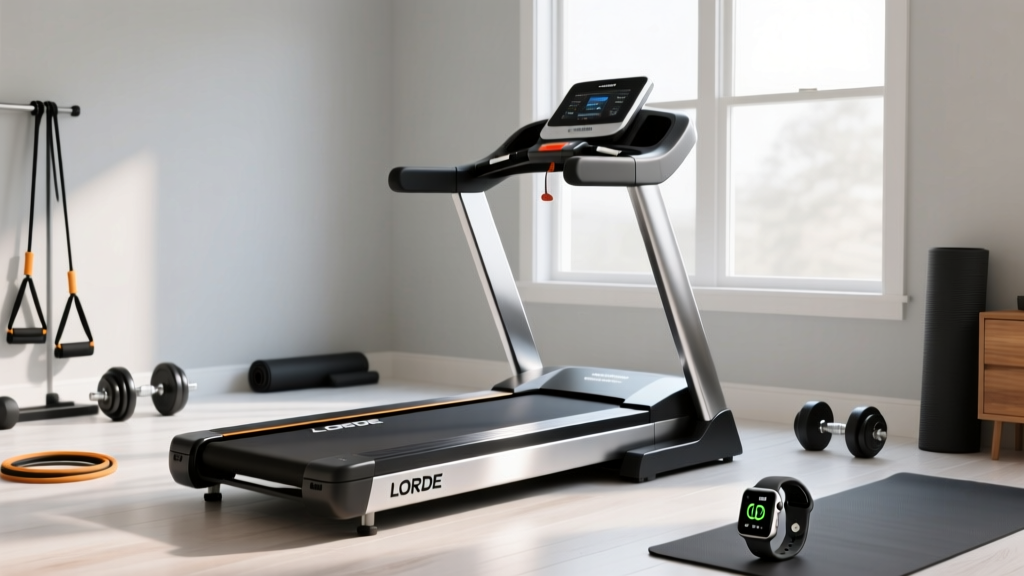
Lorde Treadmill Motor HP Guide: Troubleshoot Mistakes
Diagnose Lorde treadmill motor issues with our HP sizing guide. Learn to troubleshoot amp draw, error codes, and avoid common horsepower mistakes.

The Peak vs. Continuous Horsepower Trap
When evaluating the Lorde treadmill lineup—particularly popular budget and mid-range models like the Lorde Sprint 2.0 and Lorde Endurance Pro—the most frequent mistake buyers make is confusing Peak Horsepower (PHP) with Continuous Duty Horsepower (CHP). In 2026, marketing materials for compact home cardio equipment heavily emphasize peak numbers. You might see a Lorde model advertised with a '4.0 HP Motor.' However, that figure represents the maximum power the motor can draw for a fraction of a second before the internal thermal breaker trips.
The metric that actually dictates the machine's longevity, belt speed consistency, and weight capacity is Continuous Duty Horsepower (CHP). Most standard Lorde treadmills operate on a 1.5 to 2.25 CHP DC motor. According to Consumer Reports' treadmill buying guide, a minimum of 2.0 CHP is required for sustained running, while 1.5 CHP is strictly limited to walking or light jogging. Misinterpreting these specifications leads to severe motor strain, premature lower control board failure, and voided warranties.
⚠️ Warranty Warning: Lorde’s warranty terms explicitly state that using a 1.5 CHP model for high-impact interval running or by users exceeding the 200 lb weight threshold voids the motor warranty. Always match your primary use case to the CHP, not the PHP.The Miscalculation Matrix: User Weight vs. Motor Size
A motor's workload scales exponentially with user weight and incline settings. Below is a diagnostic matrix to help you determine if your current Lorde treadmill motor is properly sized for your biomechanics, or if you are inadvertently causing thermal degradation.
| User Weight | Primary Activity | Minimum Required CHP | Lorde Model Suitability |
|---|---|---|---|
| Under 150 lbs | Walking (2.0 - 4.0 mph) | 1.25 - 1.5 CHP | Lorde Compact / Sprint Series |
| 150 - 200 lbs | Jogging (4.0 - 6.0 mph) | 2.0 - 2.25 CHP | Lorde Endurance Series |
| 200 - 250 lbs | Running (6.0 - 9.0 mph) | 2.75 - 3.0 CHP | Requires Commercial Upgrade |
| Any Weight | Incline Training (>10%) | +0.5 CHP Buffer | Add 0.5 CHP to baseline |
Diagnosing Motor Strain: 3 Critical Failure Modes
If you have mismatched your weight to the motor size, or if the machine has accumulated significant mileage, the Lorde treadmill will exhibit specific failure modes. Recognizing these early prevents a $200 motor replacement from turning into a $450 lower control board and motor combo failure.
1. The 'Stutter' at 4.0 MPH (Belt Friction Overload)
The most common troubleshooting scenario we see with Lorde units is a rhythmic hesitation or 'stutter' in the belt, usually occurring around 4.0 to 5.0 mph. Users mistakenly assume the motor is dying. In 85% of cases, the motor is fine, but the deck friction has spiked, forcing the motor to draw excessive amperage. The lower control board detects this overcurrent and momentarily cuts power to protect the system.
The Fix: Perform a deck friction test. Lift the belt and check for dry spots. Apply exactly 1 oz of 100% silicone treadmill lubricant (never use WD-40 or petroleum-based oils, which destroy the PVC belt backing). Walk on the treadmill at 2.0 mph for 5 minutes to distribute the silicone. If the stutter persists, proceed to the amp draw test below.
2. Decoding E02 and E03 Error Codes
Lorde treadmills utilize standardized DC motor error codes. An E02 code typically indicates an overcurrent protection trigger (the motor is working too hard due to weight, incline, or friction). An E03 code usually points to a speed sensor (reed switch or optical sensor) misalignment or a failing Hall effect sensor inside a brushless DC (BLDC) motor.
The Fix: For E03, unplug the machine, remove the front motor hood, and locate the speed sensor near the front roller pulley. Ensure the gap between the magnet and the sensor is exactly 2mm to 4mm. If the gap is correct and the wiring harness is seated firmly, the sensor itself ($15 part) must be replaced.
3. The Burning Rubber Smell (Thermal Breakdown)
If you smell burning rubber or ozone, the motor's internal windings are overheating, or the drive belt is slipping against the motor pulley. As noted by Runner's World equipment analysts, persistent heat buildup degrades the insulation on copper windings, leading to short circuits. Stop using the machine immediately. Let it cool for 4 hours, then check the drive belt tension. It should have about 1/2 inch of lateral play when pressed in the center.
How to Perform an Amp Draw Test
To definitively determine if your Lorde treadmill motor is failing or simply overworked, you must measure the amp draw. This requires a standard digital clamp multimeter or a plug-in watt meter.
- Baseline (No Weight): Turn the treadmill on and set it to 3.0 mph with zero incline. Measure the amp draw. A healthy Lorde 2.0 CHP motor should pull between 2.5 and 4.0 amps with no user on the belt.
- Load Test (Walking): Step onto the treadmill and walk at 3.0 mph. The amp draw should rise to 4.0 to 7.0 amps.
- Load Test (Running): Increase speed to 6.0 mph. The draw should peak between 7.0 and 10.0 amps.
Electrical Mistakes: The Shared Circuit Hazard
A massive troubleshooting blind spot involves home electrical infrastructure. A 2.25 CHP Lorde treadmill requires a dedicated 15-amp, 120-volt circuit. The most common mistake homeowners make is plugging the treadmill into a shared bedroom or living room circuit alongside an air conditioner, space heater, or large television.
When the treadmill motor demands a surge of power during startup or heavy incline transitions, the combined draw exceeds the 15-amp breaker limit, causing the breaker to trip. Repeated tripping damages the treadmill's internal rectifier and lower control board. If your treadmill randomly shuts off mid-stride without throwing an error code on the console, check your breaker box before blaming the motor.
Repair Economics: When to Replace vs. Upgrade
If your amp draw test confirms the motor is internally degraded (e.g., worn carbon brushes or shorted windings), you face a financial decision. Based on 2026 parts pricing, here is the cost-benefit breakdown for Lorde equipment:
- Replacement DC Motor: $160 - $240 (Direct from Lorde parts distributors or authorized third-party suppliers).
- Lower Control Board: $110 - $150 (Often fails concurrently with a burnt motor).
- Professional Labor: $85 - $120 per hour (Typically a 1.5-hour job).
If the combined repair cost approaches $450, and your Lorde model originally retailed for under $600, it is generally more economical to recycle the unit and invest in a higher-CHP machine. For machines originally priced above $900, replacing the motor and applying fresh deck wax extends the machine's life by another 5 to 7 years.
"The shift toward Brushless DC (BLDC) motors in mid-tier treadmills has eliminated carbon brush replacements, but it has made control board diagnostics more complex. When troubleshooting modern units, always verify the Hall sensor signals before condemning a BLDC motor." — Fitness Equipment Repair Technician Guidelines, 2025 Edition.
Ultimately, understanding the true continuous horsepower of your Lorde treadmill, maintaining a strict lubrication schedule, and ensuring a dedicated electrical circuit will eliminate 90% of common motor failures. For more in-depth analysis on selecting the right machine for your biomechanics, refer to the comprehensive testing methodologies outlined by Wirecutter's treadmill review team.
More gear to consider
All reviews
Are Treadmill Distances Accurate on 2026 Portable Cardio Gear?

Home Stair Climber Guide: Treadmill Gradient Conversion Mistakes

NordicTrack 2450 Treadmill Review: 2026 Feature Comparison Guide
ProForm XP 590s Treadmill vs Curved Manual: Cardio Showdown

XT485 Treadmill Belt Maintenance: Lubrication Guide & Top Picks
