Troubleshooting the Reverse Dumbbell Press with Neoprene Dumbbells
Master the reverse dumbbell press at home. Troubleshoot grip slip, wrist strain, and ROM issues using neoprene coated dumbbells with our expert guide.

The Biomechanics of the Reverse Dumbbell Press
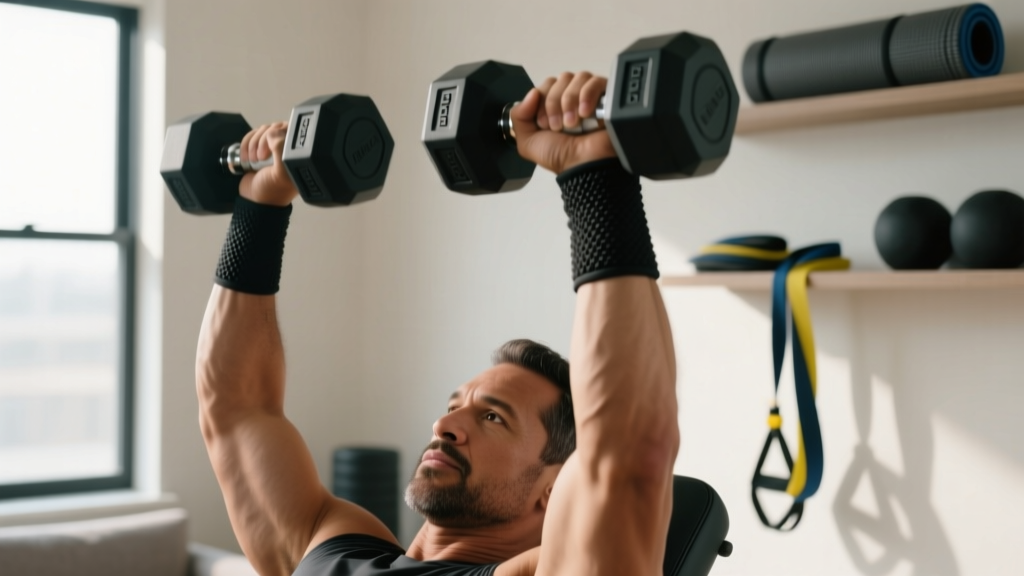
The reverse dumbbell press—executed with a supinated (underhand) grip—is a highly effective but frequently misunderstood variation of the traditional chest press. By rotating the palms to face your face, you shift the primary load onto the clavicular head (upper chest) and the anterior deltoids, while heavily recruiting the biceps brachii as dynamic stabilizers. According to ExRx.net's biomechanical breakdown of the reverse grip press, this supinated position also limits the involvement of the triceps compared to a neutral or pronated grip, making it an excellent movement for isolating the upper pecs.
However, performing this movement at home using neoprene coated dumbbells introduces a unique set of mechanical and material challenges. Neoprene (polychloroprene) is a fantastic, budget-friendly coating for protecting home gym floors and reducing noise. Yet, its smooth surface and the often-overlooked handle ergonomics of budget-friendly fixed-weight sets can turn this joint-friendly exercise into a recipe for wrist strain and dropped weights.
Data Highlight: The Neoprene Friction Drop
Material science tests on gym equipment coatings reveal that while bare steel knurling maintains a friction coefficient of roughly 0.65 even when damp, smooth neoprene's friction coefficient can drop below 0.30 when exposed to a micro-layer of sweat. This hydroplaning effect is the leading cause of grip failure during supinated pressing movements in non-climate-controlled home gyms.
4 Critical Mistakes When Using Neoprene Dumbbells at Home
1. The "Sweat Slip" Grip Failure
Unlike urethane or raw cast iron, neoprene is slightly porous but lacks any textural channeling (like knurling) to wick away moisture. When you perform a reverse dumbbell press, gravity is actively trying to pull the dumbbell out of your supinated hand. If your palms sweat even slightly, the neoprene coating becomes dangerously slick.
The Fix: Stop using bare hands or standard cotton gym gloves, which only absorb and trap sweat. Use a liquid chalk (magnesium carbonate suspended in an alcohol base). The alcohol evaporates instantly, leaving a microscopic, high-friction chalk layer that binds to the neoprene, increasing grip security by up to 40%.
2. Wrist Hyperextension on Thick Handles
This is the most common hidden failure mode in home gyms. Budget neoprene dumbbells (such as standard 10 lb to 25 lb sets found on Amazon) are often manufactured by dipping a cast-iron core into liquid neoprene. This process can swell the handle diameter from a standard 32mm up to 40mm or even 45mm. When you supinate your wrist for a reverse press, a thick handle forces extreme wrist extension and ulnar deviation. As noted by the Cleveland Clinic's guide on wrist tendonitis and grip ergonomics, pressing heavy loads with an extended wrist compresses the carpal tunnel and strains the extensor carpi radialis tendons, leading to lateral epicondylitis (tennis elbow).
The Fix: Measure your dumbbell handles with digital calipers. If the diameter exceeds 35mm, you must wear 18-inch stiff cotton or neoprene wrist wraps, applied tightly directly over the radiocarpal joint, to artificially limit extension to a safe 0-10 degrees.
3. Flaring Elbows in a Supinated Position
Because the reverse grip naturally externally rotates the humerus, many lifters mistakenly flare their elbows out to 90 degrees (perpendicular to the torso) to mimic a standard bench press. This places immense shearing force on the AC joint and rotator cuff. A 2011 study published in the Journal of Strength and Conditioning Research demonstrated that altering grip and elbow path drastically changes muscle activation and joint stress.
The Fix: Tuck your elbows to roughly a 45-degree angle relative to your torso. The supinated grip already biases the upper chest; you do not need to flare the elbows to achieve a deep stretch.
4. Floor-Press Range of Motion (ROM) Limitations
Home gym users frequently perform the reverse dumbbell press lying on a yoga mat or carpeted floor. The issue? Your triceps hit the floor before your pectorals reach a full stretch, effectively turning the movement into a partial-rep triceps extension rather than a chest builder.
The Fix: Utilize the hexagonal shape of your neoprene dumbbells to your advantage. Place two heavy, flat-sided hex dumbbells on the floor, spaced shoulder-width apart. Lie back so your upper back is supported on a firm foam roller or a stack of yoga blocks placed between the dumbbells. This elevates your torso by 3-4 inches, allowing your elbows to travel past your torso for a full pec stretch without needing a full weight bench.
Troubleshooting Matrix: Symptom vs. Neoprene Gear Fix
| Symptom During Press | Root Cause (Neoprene Specific) | Immediate Troubleshooting Fix |
|---|---|---|
| Dumbbell slips backward out of hand | Neoprene hydroplaning from palm sweat | Apply liquid chalk; wipe dumbbell handle with a microfiber towel between sets. |
| Sharp pain on the outside of the elbow/wrist | Handle diameter >35mm forcing wrist extension | Wrap wrists tightly; switch to a brand with contoured handles (e.g., CAP Barbell). |
| Dumbbells roll away when resting on the floor | Using round neoprene dumbbells instead of hex | Upgrade to Hex-shaped neoprene bells to ensure a stable, flat resting base. |
| Lack of chest stretch / triceps fatigue first | Floor surface halting elbow descent prematurely | Elevate upper back on a foam roller or yoga blocks to increase ROM by 3 inches. |
Step-by-Step Setup for the Home Gym Floor
To execute the reverse dumbbell press safely with neoprene equipment, follow this precise setup protocol:
- Inspect the Coating: Check the neoprene handles for any peeling or bubbling. Degraded neoprene creates uneven pressure points on the palm. Discard damaged pairs.
- Apply Friction Aid: Rub a dime-sized drop of liquid chalk into your palms and the dumbbell handles. Allow 15 seconds for the alcohol carrier to evaporate.
- Elevate the Torso: Place a high-density foam roller horizontally on your mat. Lie back so the roller sits between your shoulder blades.
- The Grip: Grab the dumbbells with a supinated grip (palms facing your feet). Ensure the dumbbell rests diagonally across the heel of your palm, directly over the radius bone, not in the center of the fingers.
- The Press: Lower the weights until your triceps lightly graze the floor (or until you feel a deep stretch in the upper chest if elevated). Press up and slightly inward, stopping just short of locking the elbows to maintain tension on the clavicular pecs.
Choosing the Right Neoprene Dumbbell for Reverse Pressing
Not all neoprene dumbbells are created equal. When buying specifically for pressing movements where grip security and wrist alignment are paramount, avoid ultra-budget "dipped" sets. Instead, look for cast-core neoprene dumbbells with ergonomically contoured handles.
- CAP Barbell Neoprene Hex Dumbbells: These maintain a relatively consistent 34mm handle diameter across most weight increments and feature a slight hourglass contour that locks the hand in place during supinated presses. (Approx. $1.50 - $2.00 per pound).
- Yes4All Neoprene Coated Cast Iron: A solid mid-tier option, though the handles can be slightly thicker on the heavier sets (30+ lbs). Use wrist wraps if you exceed 30 lbs per hand with these.
- Avoid: Generic "dipped vinyl" or ultra-cheap neoprene sets where the handle is merely a straight steel rod coated in thick rubber. These offer zero ergonomic support for the reverse grip.
Frequently Asked Questions
Can I use lifting straps for the reverse dumbbell press?
No. Lifting straps are designed for pulling movements (like deadlifts or rows) where the weight is hanging from the grip. In a pressing movement, if you fail a rep, you need to be able to instantly open your hand and drop the dumbbell safely to the floor. Straps will tether the weight to your wrist, creating a massive hazard.
Why does my bicep cramp during this exercise?
In a supinated press, the biceps brachii acts as an isometric stabilizer to prevent the wrist from flexing backward under the load. If your biceps are cramping, it is usually a sign of grip fatigue or using a handle diameter that is too thick, forcing the bicep to over-contract to maintain the supinated position.
Is the reverse dumbbell press better than a barbell reverse bench press?
For home gym users, yes. Dumbbells allow your wrists and elbows to rotate and adjust naturally to your unique biomechanics. A fixed barbell locks your wrists into a rigid supinated position, which can place severe torque on the radioulnar joints, especially if you lack elite-level wrist mobility.
More gear to consider
All reviews
Kettlebell Buying & Care: Full Arm Workout with Dumbbells
Olympic vs Standard Plates for Lower Pec Exercises Dumbbells
Hamstring Curls with Dumbbells: Beginner Neoprene Guide

EZ Curl Bar vs Straight Bar & Dumbbell Calf Exercises: 2026 Trends

Olympic Barbell Weight & Knurling: Standing Dumbbell Upright Row Guide