
Back Muscles Workout with Dumbbells: Neoprene Mistakes & Fixes
Troubleshoot your back muscles workout with dumbbells. Discover common neoprene dumbbell mistakes, grip issues, and expert fixes for home gyms.

The Hidden Biomechanical Flaw: Handle Thickness and Grip Fatigue
Walk into almost any home gym built over the last few years, and you will spot them immediately: brightly colored, hex-shaped, neoprene-coated dumbbells. Brands like CAP Barbell, Yes4All, and Amazon Basics have dominated the budget-friendly fixed-weight market. They are quiet, they protect hardwood floors, and they look great on a rack. However, when you attempt a rigorous back muscles workout with dumbbells using these specific tools, you quickly run into a biomechanical wall that has nothing to do with your latissimus dorsi and everything to do with material engineering.
The primary issue lies in the handle diameter. A standard Olympic barbell or a high-quality commercial rubber dumbbell features a handle diameter of roughly 28mm to 29mm. This thickness is optimal for wrapping the fingers and thumb securely, allowing force transfer directly into the pulling muscles of the back. Neoprene coating, however, is essentially a thick synthetic rubber sleeve molded over a cast iron core. This process adds anywhere from 3mm to 5mm of padding to the handle, pushing the grip diameter up to 32mm or even 35mm on heavier pairs.
Expert Insight: According to exercise biomechanics principles outlined by resources like ExRx.net, an increased grip diameter forces the forearm flexors to work at a mechanical disadvantage. During heavy single-arm dumbbell rows, your grip will fail long before your rhomboids or lats reach mechanical tension failure, effectively short-circuiting your back development.
4 Critical Mistakes in Your Neoprene Back Routine
If you are relying exclusively on neoprene dumbbells for your posterior chain development, you are likely making one or more of the following troubleshooting errors.
1. Trusting the 'Hex' Anti-Roll Feature on Uneven Surfaces
The 'hex' (hexagonal) shape is marketed as an anti-roll feature, allowing you to set the dumbbell down safely between sets or use it as a stabilizing base for renegade rows. The mistake? Neoprene molding rounds off the sharp, 120-degree angles of the bare cast iron hex head. When placed on a slightly uneven floor or a thick rubber gym mat, a 40lb neoprene hex bell will absolutely roll. Attempting a renegade row or a plank-to-row transition with these bells introduces severe rotational instability, shifting the focus away from your back muscles and placing dangerous torque on your lumbar spine and rotator cuffs.
2. Hitting the 'Neoprene Ceiling' Too Early
Back muscles are large, dense, and highly resilient. They require progressive overload to grow. Most fixed-weight neoprene sets cap out at 25, 35, or occasionally 50 pounds per dumbbell. As of 2026, finding a neoprene-coated dumbbell heavier than 50 lbs is incredibly rare due to the sheer volume and cost of the coating material. If your back muscles workout with dumbbells never exceeds 50 lbs, you will quickly hit a hypertrophy plateau. You cannot effectively overload the lats using only high-repetition, low-weight sets with these specific bells.
3. Ignoring Sweat-Induced Slippage
Unlike virgin rubber, which maintains a tacky surface texture, or urethane, which is often paired with aggressive steel knurling, neoprene has a smooth, almost fabric-like finish when dry. However, once exposed to sweat, neoprene becomes remarkably slick. During high-volume pulling movements like chest-supported rows or dumbbell pullovers, this loss of friction forces you to squeeze the handle with excessive crushing force, accelerating the aforementioned grip fatigue.
4. Using Harsh Cleaners That Destroy the Coating
Many home gym owners wipe down their neoprene dumbbells with alkaline household cleaners (like bleach solutions or heavy-duty degreasers) after a sweaty back session. These chemicals break down the plasticizers in the neoprene. Within a few months, the coating begins to delaminate, crack, and peel, exposing the raw cast iron underneath to humidity, leading to rust that will literally tear the calluses off your hands during heavy rows.
Material Matrix: Neoprene vs. Rubber vs. Urethane for Pulling
To understand why your back workout might be stalling, it helps to compare the material properties of the dumbbells you are using against industry standards. The table below outlines the critical differences for pulling movements based on current 2026 market data.
| Material | Avg. Handle Diameter | Grip Friction (Sweaty) | 2026 Price / lb | Best Application for Back |
|---|---|---|---|---|
| Neoprene | 32mm - 35mm | Low (Slick when wet) | $1.60 - $2.20 | Light isolation, straight-arm pullovers |
| Virgin Rubber | 28mm - 30mm | Medium (Textured grip) | $2.80 - $3.50 | Heavy single-arm rows, general use |
| Urethane | 28mm - 29mm | High (Knurled steel core) | $4.50 - $6.00+ | Max effort pulling, commercial gyms |
As the National Strength and Conditioning Association (NSCA) frequently notes in their literature regarding grip and pulling mechanics, the limiting factor in back development is almost always grip endurance. Transitioning from a 34mm neoprene handle to a 29mm knurled urethane handle can instantly increase your rowing working weight by 15% to 20% simply by removing the grip bottleneck.
Troubleshooting & Protocol Adjustments
If you are currently locked into a home gym setup featuring only neoprene dumbbells and cannot immediately upgrade to bare-steel or urethane options, you must adjust your training protocols to bypass the equipment's limitations.
- Implement Figure-8 Lifting Straps: For any back muscles workout with dumbbells where the load exceeds 30 lbs per hand, use cotton or nylon figure-8 straps. Unlike traditional lasso straps, figure-8 straps eliminate the need for grip crushing force entirely, allowing you to hook the neoprene handle and pull purely with your elbows and lats, bypassing the slick, thick handle issue.
- Modify Your Row Angles: Because neoprene hex bells can roll on inclined surfaces, avoid setting them on the floor for single-arm rows if your floor is not perfectly level. Instead, use a flat utility bench. Rest your non-working hand and knee on the bench, and let the working dumbbell hang dead center. This removes the anti-roll requirement entirely.
- Pre-Exhaust the Lats: To ensure your back muscles reach failure before your forearms give out on thick neoprene handles, utilize a pre-exhaustion technique. Perform 15 reps of straight-arm cable or band pulldowns immediately before picking up your heavy neoprene dumbbells for chest-supported rows. The lats will already be fatigued, matching the failure timeline of your grip.
- Chalk the Handles: While liquid chalk is great for bare steel, it tends to cake and clump on neoprene. If you must use chalk, apply a very light dusting of magnesium carbonate block chalk to your palms, not the dumbbell handle itself, to preserve the coating while restoring friction.
Maintenance: Preventing Neoprene Degradation
To keep your equipment safe for heavy pulling, proper maintenance is non-negotiable. Never use Simple Green, bleach, or alcohol-based wipes on neoprene. These solvents extract the moisture and plasticizers from the synthetic rubber, leading to micro-tears in the coating where the handle meets the hex head. When you perform a heavy dumbbell deadlift or a low row, the sheer lateral force can cause a degraded handle sleeve to twist or slip over the iron core, resulting in a dropped weight or a torn bicep.
Instead, wipe your dumbbells down with a microfiber cloth dampened with a pH-neutral soap and water solution. Dry them immediately with a separate towel to prevent moisture from seeping into the microscopic pores of the neoprene. Inspect the seam where the handle meets the weight head monthly; if you see the iron core separating from the rubber sleeve by more than 1 millimeter, it is time to retire that specific pair from heavy rotational movements.
Final Thoughts on Equipment Selection
Neoprene-coated dumbbells are an excellent, budget-friendly entry point for home fitness, perfect for lateral raises, bicep curls, and goblet squats. However, treating them as the ultimate tool for a heavy back muscles workout with dumbbells is a fundamental programming error. By understanding the biomechanical limitations of thick, slick handles and the structural vulnerabilities of molded hex heads, you can troubleshoot your routine, implement strategic workarounds like lifting straps and pre-exhaustion, and continue to build a dense, powerful back until you are ready to invest in commercial-grade rubber or urethane iron.
More gear to consider
All reviews
Master the Dumbbell Bench Press with Neoprene Home Weights

Bumper vs Iron Plates & Gear for Chest Supported Dumbbell Rows

Maintaining Loadable Dumbbells for a Safe 90 lb Dumbbell Bench Press
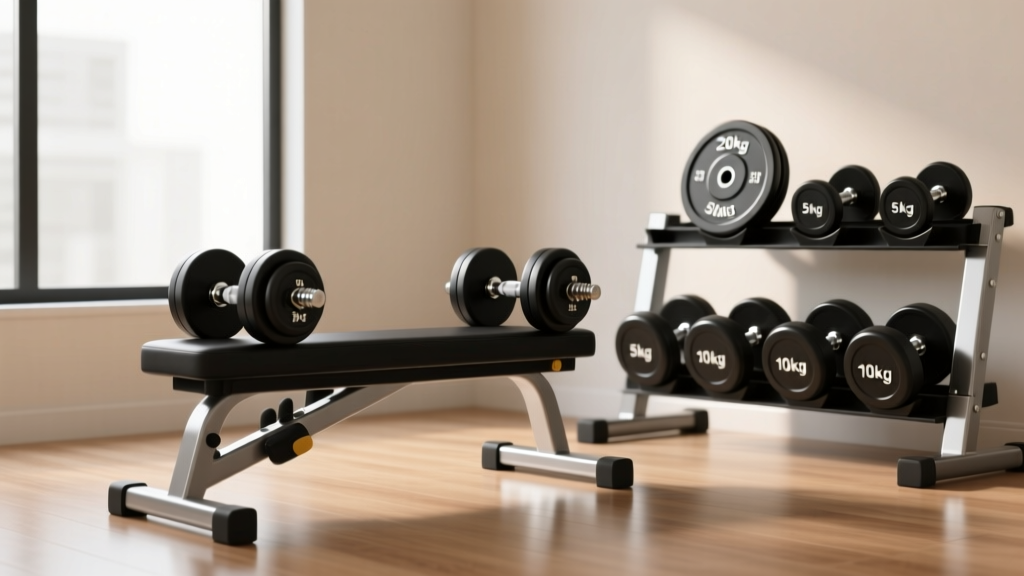
Setup: Dumbbell Bench Press for Beginners & Olympic vs Standard Plates

Incline Dumbbell Kickback: Urethane vs Rubber Hex 2026 Market Trends
