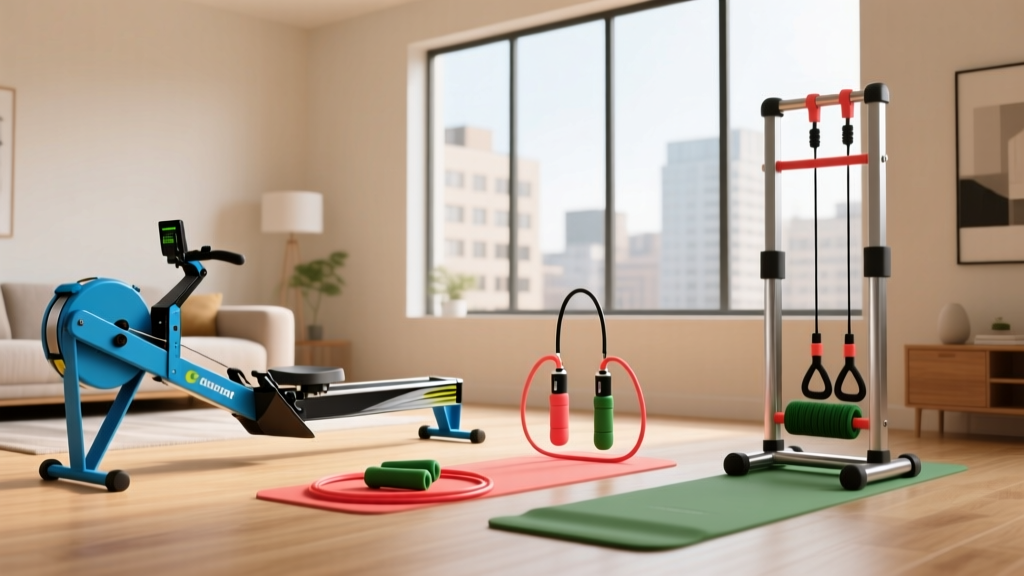
Remove Treadmill From Home: Best Compact Cardio Swaps
Ready to remove treadmill from home? Discover the best compact, portable cardio equipment options to maximize your layout and maintain fitness in 2026.

For over a decade, the treadmill has been the undisputed centerpiece of the home gym. However, as urban living spaces shrink and interior design trends shift toward multi-functional, minimalist environments, a growing number of fitness enthusiasts are making a radical spatial decision: they are choosing to remove treadmill from home setups entirely. The motivation is rarely about abandoning cardiovascular health; rather, it is about reclaiming massive amounts of square footage without sacrificing daily calorie expenditure.
According to the American Heart Association, maintaining cardiovascular health requires just 150 minutes of moderate-intensity aerobic activity per week. You do not need a 300-pound, 80-inch-long motorized belt to achieve this. By pivoting to compact, portable cardio equipment, you can transform a cluttered, single-purpose spare room into a dynamic, multi-use living space. This guide breaks down the spatial mathematics of downsizing your cardio footprint and details the best portable replacements available in 2026.
The Spatial Math: Why You Should Remove Treadmill From Home
Before evaluating replacements, we must quantify the actual space a treadmill consumes. A standard high-quality home treadmill, such as the Sole F80 or NordicTrack T Series, measures roughly 35 inches wide by 82 inches long. However, the physical footprint is only half the story.
The Clearance Zone Rule: The U.S. Consumer Product Safety Commission (CPSC) and major manufacturers mandate a minimum safety clearance of 20 inches on both sides and at least 78 inches behind the treadmill to prevent severe friction-burn injuries in the event of a fall.
When you factor in the mandatory safety perimeters, a single treadmill effectively monopolizes a 75 to 90 square foot zone in your home. Furthermore, even when folded vertically, the machine's base still occupies a 35" x 40" floor footprint and creates a massive visual weight that dominates the room's sightlines. Removing this monolith instantly opens up architectural possibilities for layout redesign.
Top Compact Cardio Replacements for 2026
When you remove treadmill from home environments, the replacement equipment must meet three criteria: high cardiovascular output, sub-40-inch stored footprints, and aesthetic neutrality. Here are the top tier options dominating the 2026 market.
1. The Under-Sofa Solution: Foldable Walking Pads
Walking pads have evolved from flimsy novelties into robust, daily-driver cardio machines. The KingSmith WalkingPad R2 remains the gold standard for spatial optimization. When unfolded, it offers a 47" x 17" running surface. When folded in half, it shrinks to an astonishing 27.2" x 20.4" x 6.1".
- Layout Advantage: At just 6.1 inches thick, it slides completely out of sight under standard 7-inch clearance sofas, bed frames, or into a shallow closet.
- Performance Specs: Features a 1.25 HP motor capable of speeds up to 6.2 mph, supporting a 240 lb weight capacity.
- Price Range: $450 - $550.
2. The Vertical Storage King: Modular Rowing Machines
Rowing provides a superior full-body cardiovascular stimulus compared to walking, engaging 86% of the body's musculature. The Concept2 RowErg (formerly Model D) is the industry benchmark. While its active length is 95 inches, its modular design allows it to separate into two pieces in seconds without tools.
- Layout Advantage: Separated, it stores in a 24" x 45" footprint. Alternatively, it can be stood vertically on its tail end, occupying just a 25" x 25" floor square in the corner of a room.
- Performance Specs: Air resistance with a nickel-plated steel chain; virtually indestructible with a 500 lb capacity.
- Price Range: $990 - $1,100.
3. The High-Intensity Footprint: Compact Air & Spin Bikes
For those who prefer High-Intensity Interval Training (HIIT) over steady-state cardio, compact bikes are the answer. The Rogue Echo Bike or the more apartment-friendly Echelon Smart Cycle EX-3 deliver massive metabolic demands in a tiny footprint.
- Layout Advantage: Most compact spin bikes occupy a mere 45" x 18" active footprint and do not require rear safety clearances, allowing them to be pushed flush against a wall or tucked into a home office nook.
- Performance Specs: Magnetic resistance systems on modern 2026 models offer whisper-quiet operation, making them ideal for shared walls and multi-family housing.
- Price Range: $800 - $1,400.
Spatial Footprint & Cost Comparison Matrix
To visualize the spatial reclamation, review the comparison matrix below detailing the transition from traditional treadmills to portable alternatives.
| Equipment Type | Active Footprint (L x W) | Stored Footprint | Safety Clearance Needed | Avg. Price (2026) |
|---|---|---|---|---|
| Standard Treadmill | 82" x 35" | 40" x 35" (Folded) | 78" Rear / 20" Sides | $1,200 - $2,500 |
| Foldable Walking Pad | 57" x 20" | 27" x 20" (Under-bed) | None (Low profile) | $350 - $600 |
| Modular Rower | 95" x 24" | 25" x 25" (Vertical) | 12" Rear | $990 - $1,500 |
| Compact Spin Bike | 45" x 18" | 45" x 18" (Wall-flush) | None | $800 - $1,400 |
Layout Design Framework: The 3-Zone Micro-Gym
Once you remove treadmill from home layouts, you are left with a blank canvas. Interior design and fitness ergonomics intersect in the 3-Zone Micro-Gym Framework, designed to keep portable equipment accessible without ruining your home's aesthetic.
The 3-Zone Micro-Gym Concept
Zone 1: The Active Deployment Zone. A 5x5 foot area with high-density EVA foam interlocking mats (minimum 8mm thick) where the equipment is actually used. This protects hardwood and dampens acoustic vibration.
Zone 2: The Stealth Storage Zone. Utilizing dead space—under beds, behind doors, or inside shallow closet systems—where foldable equipment lives when inactive.
Zone 3: The Anchor Point. A dedicated wall section for mounting accessories (resistance bands, yoga blocks, heart rate monitors) that visually signals the room's dual-purpose nature without requiring bulky floor racks.
- Audit your dead space: Measure the clearance under your largest furniture pieces. If you have 6+ inches, a walking pad is your most space-efficient choice.
- Map vertical real estate: Identify an unused 25" x 25" corner. This is the exact footprint needed to store a Concept2 rower vertically or hang a foldable elliptical.
- Install acoustic dampening: Portable equipment often has smaller, harder wheels or feet than heavy treadmills. Place a 3/4-inch horse stall mat under your deployment zone to prevent structural vibration transfer to neighbors below.
Real-World Failure Modes When Downsizing
Transitioning to compact cardio is not without pitfalls. As a domain expert, I frequently see consumers make critical errors when optimizing for space over durability. Avoid these specific failure modes:
- Walking Pad Motor Burnout: Most walking pads feature 1.0 to 1.5 HP motors. If a user weighing over 220 lbs attempts to jog at 5.0+ mph for 45+ continuous minutes, the internal thermal limits will trip, or the belt will stutter and degrade. Solution: Strictly use walking pads for steady-state walking (2.0 - 4.0 mph) and interval training on a bike or rower.
- Apartment Vibration Complaints: Compact air bikes and rowers generate sharp, high-frequency kinetic energy spikes during HIIT sprints. Because they lack the massive 200-lb steel frame of a treadmill to absorb this energy, the vibration travels directly through the floor joists. Solution: Always use a layered dampening system (a rubber mat topped with a high-density yoga mat).
- Visual Clutter Trap: Buying three different pieces of 'compact' equipment (a mini-stepper, a walking pad, and a jump rope board) often results in more visual clutter than a single, elegantly stored rower. Solution: Stick to one primary, high-quality portable machine.
Frequently Asked Questions
Can I get the same cardiovascular benefits from a walking pad as a treadmill?
Yes, provided you utilize incline variations or increase your step cadence. While walking pads lack the 15% incline motors of premium treadmills, wearing a 10-20 lb weighted vest while walking at 3.5 mph on a pad will yield an identical heart-rate response and caloric burn to an unweighted treadmill jog, according to American Council on Exercise (ACE) metabolic equivalent (MET) calculations.
How do I safely move a heavy treadmill out of my home to make space?
Do not attempt to fold and carry a 250+ lb treadmill down stairs with a partner. The center of gravity shifts dangerously when folded. Hire professional fitness equipment movers or use an appliance dolly with ratchet straps, securing the folding deck to the uprights with bungee cords to prevent it from snapping open during transit.
Are portable rowers stable enough for aggressive sprinting?
Air and water rowers rely on the user's body weight and foot-strap tension for stability. During high-drag-factor sprints, the machine may 'walk' slightly across smooth floors. Placing the rower on a textured rubber mat will eliminate this micro-movement entirely without requiring permanent floor anchors.
More gear to consider
All reviews
LifeSpan TR1200 DT Treadmill Belt Maintenance & 2026 Care Trends
Cardio Machine Noise Levels & pawg on treadmill Troubleshooting

Air Bike vs Assault Bike: Space Layouts & Weslo Cadence Treadmill

Elliptical vs Treadmill: Treadmill Drive Belt Slipping & 2026 Trends

Sole F63 Treadmill Manual: Belt Care & Space Optimization
