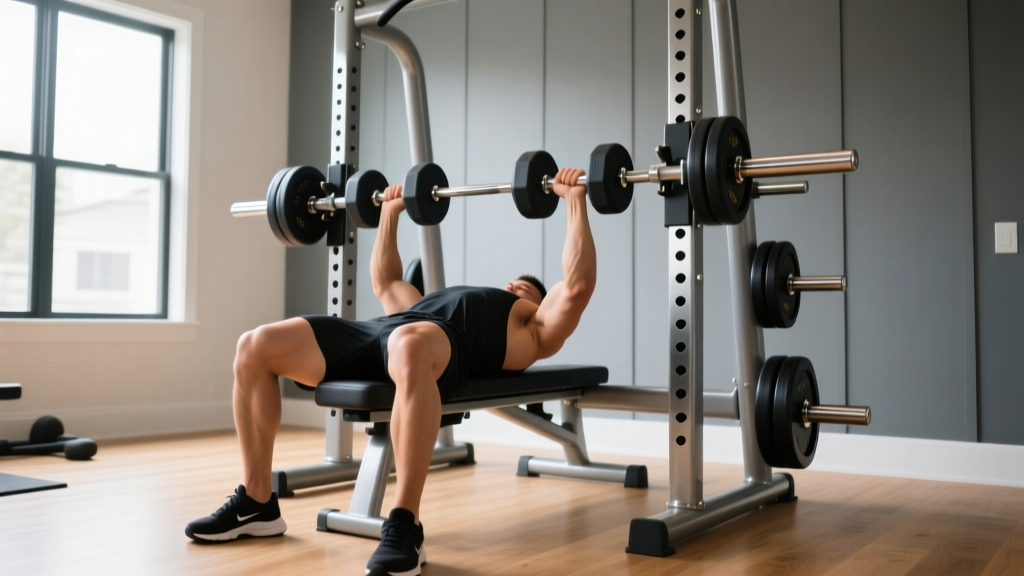
Power Rack vs Squat Rack vs Squat Stand: Total Body Workout with Dumbbells
Compare power racks, squat racks, and squat stands to find the safest, most versatile rig for your total body workout with dumbbells at home.

Why Your Rack Choice Dictates Dumbbell Progression
When most lifters think of power racks, squat racks, and squat stands, they immediately picture heavy barbell back squats and bench presses. However, as you advance in your home gym journey, executing a progressive total body workout with dumbbells requires serious structural support. According to the Centers for Disease Control and Prevention (CDC), adults need muscle-strengthening activities of moderate or greater intensity at least two days a week to maintain optimal health. To achieve this with dumbbells, you eventually hit a wall where hoisting 90-pound dumbbells into position for a chest press or goblet squat becomes a logistical nightmare—and a safety hazard—without a proper rig.
Choosing between a full power rack, a half squat rack, and a minimalist squat stand isn't just about your barbell ambitions; it is about interior clearance, spotter arm compatibility, and tipping hazards during heavy dumbbell movements. In this 2026 buying guide, we break down the exact specifications, pricing, and real-world failure modes of each rig type to help you build the ultimate dumbbell-centric home gym.
The Contenders: At a Glance
Before diving into the biomechanics and spatial requirements, let's look at the raw data comparing the three primary rig categories on the market today.
| Feature | Power Rack (Full Cage) | Half Rack (Squat Rack) | Squat Stand |
|---|---|---|---|
| Average Footprint | 48" x 48" to 49" x 43" | 48" x 48" (Open front) | 48" x 48" (Minimalist base) |
| 2026 Price Range | $999 - $1,600 | $699 - $1,100 | $249 - $495 |
| DB Bench Safety | Excellent (Enclosed) | Good (Open egress) | Poor (Tipping risk) |
| Interior Width | 43" or 49" options | Usually 43" to 49" | Usually 48" exterior |
| Best For | Heavy DB presses, rack pulls | DB lunges, dynamic movements | Light DB work, tight spaces |
Deep Dive: Power Racks (Full Cages)
A full power rack, like the Rep Fitness PR-4000 or the Rogue R-3, consists of four main uprights connected by crossmembers, creating an enclosed cage. For a total body workout with dumbbells, this is the gold standard for one specific reason: heavy dumbbell bench pressing.
The Interior Width Dilemma: 43" vs. 49"
When pressing heavy dumbbells, your arms naturally track outward. If you buy a rack with a 43-inch interior width (the distance between the inside of the left and right uprights), taller lifters or those with broad shoulders will frequently strike the metal uprights with the dumbbell heads at the bottom of the press.
- 43-inch Interior: Best for shorter lifters or those who strictly use a barbell. Dumbbell flyes and wide-grip DB presses will feel claustrophobic.
- 49-inch Interior: The mandatory upgrade for serious dumbbell training. Models like the Rogue R-3 offer this wider configuration, ensuring your 120-lb hex dumbbells never clip the steel uprights during a max-effort set.
Deep Dive: Half Racks (Squat Racks)
Half racks, such as the Titan Fitness T-3 Half Rack (retailing around $749 in 2026), feature two main uprights in the front and a larger storage footprint in the back.
Why Choose a Half Rack for Dumbbells?
The primary advantage of a half rack for dumbbell training is spatial freedom. When performing walking lunges, dumbbell step-ups, or dynamic total body movements, you often need to step forward or backward out of the rack. A full cage restricts your egress. A half rack allows you to unrack heavy dumbbells from the safety arms or J-cups and immediately walk forward into your living space or garage floor to complete the movement.
Failure Mode Warning: Half racks rely on rear weight storage for stability. If you are using them strictly for dumbbells and do not own 300+ lbs of Olympic plates to load onto the rear weight horns, the rack can become front-heavy and tip if you accidentally dump a heavy dumbbell forward onto the safety spotter arms.
Deep Dive: Squat Stands
Squat stands, like the legendary Rogue SML-1 Monster Lite Squat Stands (~$445) or the budget-friendly Rep Fitness PR-1100 (~$249), are essentially two independent uprights. They are incredibly popular for apartment dwellers and garage gyms with low ceilings.
The Tipping Hazard with Heavy Dumbbells
While squat stands are perfectly adequate for barbell squats (where the bar moves in a controlled vertical plane), they introduce severe edge-case risks for dumbbell training. When you finish a heavy set of dumbbell floor presses or goblet squats and toss the dumbbells to the sides, the asymmetrical force or accidental bumping of the stand's base plate can cause the upright to tip over.
If your total body workout with dumbbells involves high-rep, fatiguing sets where form breaks down, squat stands are the least safe option unless they are bolted directly into a concrete floor or a reinforced wooden platform."When utilizing free weights like heavy dumbbells in a non-enclosed environment, the lifter must account for the center of gravity shifting outside the base of support, which is a common mechanism of injury in minimalist home gym setups."
Safety Spotter Arms: The Non-Negotiable Accessory
Regardless of which rig you choose, the type of safety spotter arms you use will make or break your dumbbell experience. According to the Mayo Clinic, proper spotting and safety mechanisms are crucial to prevent joint and muscle trauma when training to failure.
Pin-Pipe vs. Strap Safeties
| Safety Type | Material | Impact on Dumbbells | Verdict for DB Work |
|---|---|---|---|
| Pin-Pipe | Steel pipe with a pin | High. Metal-on-metal impact can bend DB handles or chip knurling. | Avoid for heavy DB benching. |
| Flip-Down | Steel bracket with UHMW plastic | Moderate. Better than bare steel, but still rigid. | Acceptable for moderate weights. |
| Strap Safeties | Heavy-duty nylon with UHMW guards | Zero. The nylon absorbs the drop, protecting the DB and your wrists. | Mandatory for heavy DB work. |
For a true total body workout with dumbbells that includes heavy chest and shoulder presses, invest the extra $100-$150 in nylon strap safeties. When you fail a rep with 100-lb dumbbells, dropping them onto a steel pin-pipe can cause the dumbbell to bounce unpredictably or bend the handle, ruining the equipment. Strap safeties cradle the dumbbell head and absorb the kinetic energy safely.
Final Verdict: Which Rig Should You Buy?
Your decision ultimately comes down to your budget, ceiling height, and the specific dumbbell movements in your programming.
- Buy the Power Rack (e.g., Rep PR-4000, 49" width) if you have the space, the budget ($1,000+), and prioritize heavy, isolated dumbbell pressing and rack pulls. The enclosed cage and strap safeties offer unmatched peace of mind.
- Buy the Half Rack (e.g., Titan T-3) if your total body workout with dumbbells is highly dynamic—involving walking lunges, step-ups, and movements that require you to walk away from the rig. Just ensure you have enough weight plates to anchor the rear base.
- Buy the Squat Stands (e.g., Rogue SML-1) only if you are severely limited by space or budget, and your dumbbell training consists mostly of lighter, controlled movements like goblet squats and Romanian deadlifts where the dumbbells never leave the floor or your body.
By matching your rig to your actual training mechanics, you ensure that your home gym remains a safe, progressive environment for years to come.
More gear to consider
All reviews
What Do Dumbbell Shrugs Work? Heavy Dumbbell Rack Value Analysis

Squat Rack vs Stand: Troubleshooting Rigs and Workouts for Dumbbells

Olympic Dumbbell Handles vs Neoprene: Beginner Home Gym Guide

2026 Trends: Bumper vs Iron Plates & Bench Press Workout With Dumbbells
Home Setup: Arm Workout Routine With Dumbbells & Neoprene Gear