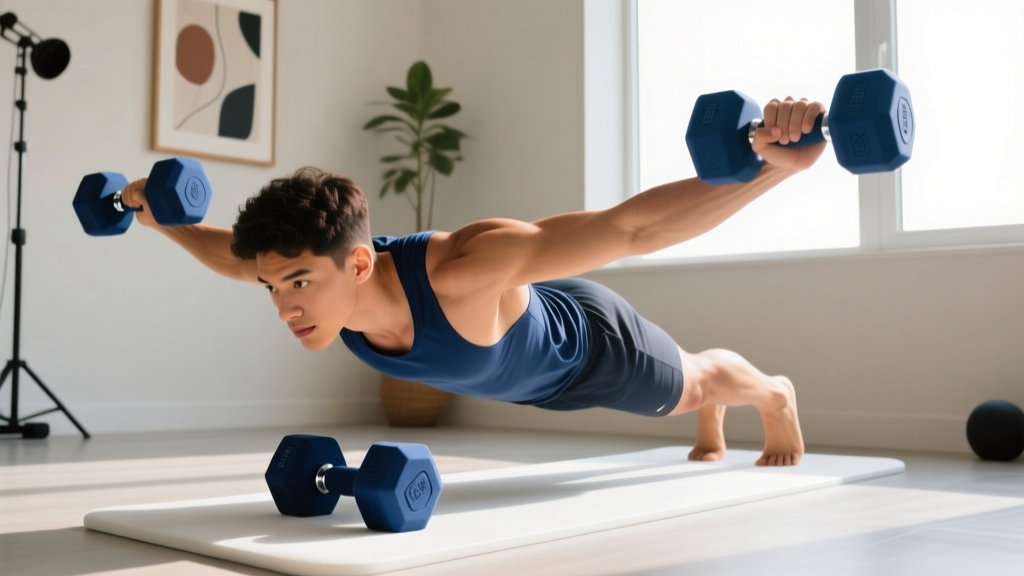
Good Tricep Workouts With Dumbbells: Neoprene Home Guide
Master good tricep workouts with dumbbells at home. Our beginner step-by-step guide uses neoprene-coated weights for safe, effective arm toning.

The Case for Neoprene: Why It Is the Ultimate Beginner Material
When building a home gym on a budget or starting your fitness journey, selecting the right equipment is critical for both safety and consistency. If you are searching for good tricep workouts with dumbbells, you have likely noticed the sheer variety of coatings available: cast iron, rubber, urethane, and neoprene. For beginners focusing on isolation movements like tricep extensions and kickbacks in a home environment, neoprene-coated dumbbells offer a distinct set of advantages that make them the superior starting point.
Neoprene (polychloroprene) is a synthetic rubber that features a closed-cell foam exterior over a solid cast-iron core. Unlike hard rubber or bare iron, neoprene provides a slightly porous, tactile grip that remains secure even when your hands begin to sweat during high-repetition arm isolation sets. Furthermore, the soft exterior protects hardwood floors and baseboards from the inevitable drops that occur when beginners reach muscular failure.
Material Comparison: Neoprene vs. Urethane vs. Rubber
- Neoprene: Best for light-to-medium weights (1-20 lbs). Excellent grip, floor-safe, budget-friendly ($1.50-$2.50 per lb). Degrades if exposed to prolonged UV light or harsh chemicals.
- Urethane: The commercial gym standard. Extremely durable, odorless, and handles heavy loads (up to 150 lbs), but costs upwards of $4.00+ per lb. Overkill for beginner tricep isolation.
- Virgin Rubber: Durable and heavy-duty, but often carries a strong off-gassing odor that is unpleasant for small, unventilated home gyms.
Step-by-Step: Good Tricep Workouts With Dumbbells
The triceps brachii is a three-headed muscle (long, lateral, and medial heads). To fully develop the arm, your routine must manipulate the angle of the shoulder joint. According to the ACE Fitness Exercise Library, changing the position of the elbow relative to the torso shifts the mechanical tension across these different heads. Here is a beginner-friendly, step-by-step routine designed specifically for the weight ranges typically found in neoprene dumbbell sets.
1. Seated Overhead Tricep Extension (Focus: Long Head)
The long head of the triceps crosses the shoulder joint, meaning it is only fully stretched and activated when your arms are raised overhead.
- The Setup: Sit on a sturdy chair or bench with back support. Select a single neoprene dumbbell (beginners should start with 8-12 lbs). Grasp the inner plate of the dumbbell with both hands, forming a diamond shape with your thumbs and index fingers.
- The Ascent: Press the weight straight up over your chest. Your biceps should be close to your ears.
- The Eccentric (Lowering) Phase: Slowly lower the weight behind your head by bending only at the elbows. Take a full 3 seconds to descend. Stop when you feel a deep stretch in the back of your arms (roughly 90 to 110 degrees of elbow flexion).
- The Concentric (Lifting) Phase: Press the weight back up to the starting position in 1 second, stopping just short of locking out the elbows to maintain constant tension on the muscle.
- Prescription: 3 sets of 12-15 reps. Rest 60 seconds between sets.
2. Bent-Over Tricep Kickbacks (Focus: Lateral & Medial Heads)
Kickbacks place the shoulder in extension, which biases the lateral and medial heads. The tactile grip of neoprene is highly beneficial here, as your hands will be pointing toward the floor, making a secure grip essential.
- The Setup: Hold a neoprene dumbbell in each hand (5-10 lbs each). Hinge at the hips until your torso is nearly parallel to the floor. Keep your back flat and core braced.
- The Anchor: Pin your upper arms tightly against your ribcage. This is the most common failure point; your upper arms must remain completely stationary.
- The Execution: Exhale and extend your elbows until your arms are straight back. Squeeze the triceps hard at the top for a full 1-second pause.
- The Return: Inhale and slowly return to the 90-degree bent position. Do not let the weights swing forward.
- Prescription: 3 sets of 10-12 reps per arm.
3. Floor-Based Skull Crushers (Focus: Overall Mass & Medial Head)
While traditionally done on a bench, doing skull crushers on the floor is a fantastic beginner hack. The floor naturally limits your range of motion, preventing you from over-stretching the triceps tendon, and the neoprene coating ensures you will not damage your flooring when you set the weights down or gently tap them to the floor at the bottom of the movement.
- The Setup: Lie flat on your back on a yoga mat. Hold a dumbbell in each hand (8-15 lbs) and extend your arms straight up toward the ceiling, palms facing each other (neutral grip).
- The Descent: Keeping your upper arms pointing straight up, bend your elbows to lower the weights down beside your ears. The neoprene coating allows you to lightly 'kiss' the floor beside your head to reset your control if needed.
- The Ascent: Drive the weights back up to the ceiling, focusing on squeezing the back of the arms.
- Prescription: 3 sets of 10-12 reps.
Progressive Overload: The Neoprene Weight Ceiling
One crucial concept in strength training is progressive overload—the gradual increase of stress placed upon the body during training. As noted in research published by the National Institutes of Health (NIH), muscle hypertrophy requires consistent mechanical tension that challenges the muscle fibers near failure. Neoprene dumbbells are generally manufactured in lighter increments, capping out around 15 to 20 pounds. This makes them perfect for the first 6 to 12 months of tricep isolation work, but you will eventually outgrow them.
| Brand / Model | Weight Range | 2026 Pricing (Est.) | Best Use Case |
|---|---|---|---|
| Yes4All Neoprene Coated | 2 lbs - 15 lbs | $18 - $35 / pair | Absolute beginners, rehab, high-rep kickbacks |
| CAP Barbell Neoprene | 5 lbs - 20 lbs | $25 - $48 / pair | Intermediate home users, overhead extensions |
| Amazon Basics Neoprene | 1 lb - 15 lbs | $20 - $38 / pair | Budget toning, travel, light floor crushers |
Pro-Tip: Once you can comfortably perform 3 sets of 15 reps of overhead extensions with 15 lb neoprene dumbbells using strict 3-second eccentrics, it is time to invest in a pair of adjustable dumbbells (like the Bowflex SelectTech or PowerBlock) to continue your progressive overload journey.
Form Failures & Elbow Health
Because neoprene dumbbells are relatively light, beginners often fall into the trap of using momentum rather than muscle contraction. Swinging the weights during kickbacks or flaring the elbows out excessively during skull crushers shifts the load away from the triceps and directly onto the elbow joint.
Warning on Elbow Tendonitis: The triceps tendon attaches to the olecranon (the bony tip of the elbow). Repeatedly locking out the elbow joint with explosive force, or flaring the elbows outward during extensions, can cause micro-tears in this tendon. Always maintain a slight 'soft bend' at the top of the movement to keep the tension on the muscle belly, not the connective tissue. For more on joint safety during resistance training, refer to the Mayo Clinic's Guide to Strength Training.
The 'Elbow Tuck' Rule
During all three exercises listed above, imagine a string connecting your elbows to your hips. Your elbows should track straight back or straight up, never bowing outward to the sides. If you find your elbows flaring, the weight is too heavy, or your latissimus dorsi muscles are overly tight. Drop down to the next neoprene weight increment (usually a 2 or 3 lb drop) and correct the path of motion.
Maintenance: Preventing Neoprene Degradation
While neoprene is highly durable against impacts, it is surprisingly vulnerable to the oils, salts, and acids found in human sweat, as well as harsh household cleaning chemicals. Over time, neglected neoprene will begin to peel, crack, and emit a sour odor.
- Post-Workout Wipe: After your tricep routine, wipe the handles and heads down with a damp microfiber cloth. If you sweat heavily, use a drop of mild dish soap (like Dawn) diluted in water.
- Avoid Bleach and Alcohol: Never use Lysol, bleach, or rubbing alcohol on neoprene. These solvents break down the chloroprene polymer chains, causing the coating to dry out and flake off onto your carpets.
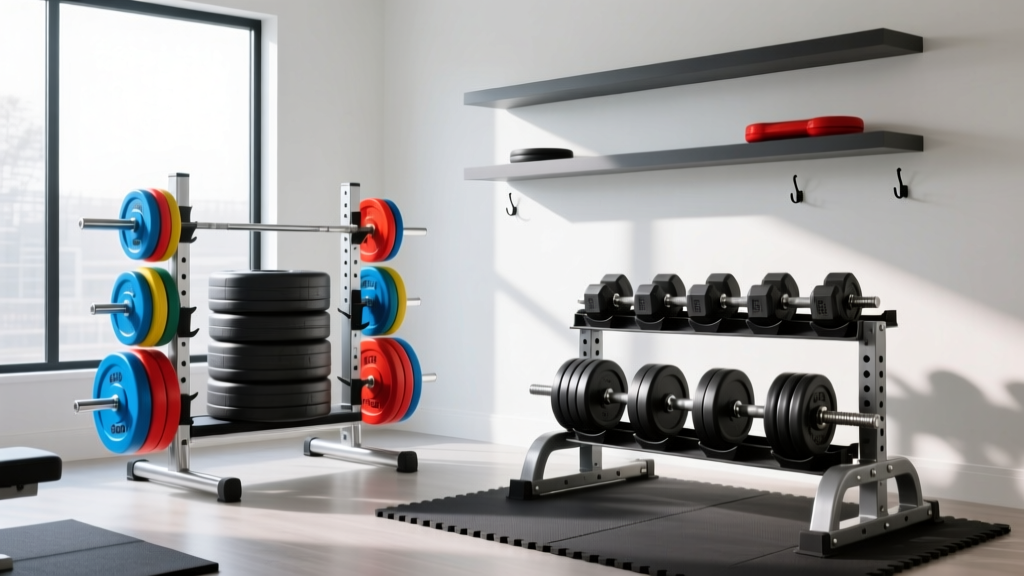
- Storage: Keep your dumbbells on a rack or mat away from direct sunlight. UV radiation accelerates the oxidation of the synthetic rubber, leading to premature fading and structural brittleness.
By respecting the material properties of your equipment and adhering to strict, slow-tempo isolation mechanics, neoprene dumbbells will serve as an incredibly effective, joint-friendly tool for mastering your foundational tricep development at home.
More gear to consider
All reviews
What Do Dumbbell Rows Target? Best Loadable Dumbbells
How to Build Pectoral Muscles with Dumbbells & Barbells: Clamp Setup

Hitting the Average Dumbbell Bench Press kg? Avoid These Adjustable Dumbbell Mistakes
Rubber vs Urethane Dumbbells: Best Value for the Dumbbell Bench Row
150kg Dumbbell Set Storage: Bumper vs Iron Plates
