Olympic Barbell Buying Guide: Weight, Knurling & Press Muscles Worked
Master your overhead press. Explore our 2026 Olympic barbell buying guide covering weight and knurling, plus the standing dumbbell shoulder press muscles worked.

The Ultimate Overhead Pressing Arsenal: Hardware Meets Biomechanics
Building a complete, injury-resilient overhead pressing routine requires more than just picking up heavy things and pushing them over your head. It demands a deep understanding of both the equipment you are gripping and the anatomical engines driving the movement. As we navigate the 2026 home gym and commercial facility landscape, two critical questions dominate the programming of serious lifters: How do you select the right Olympic barbell based on weight, tensile strength, and knurling? And how do the biomechanics shift when you transition to dumbbells?
This comprehensive guide bridges the gap between metallurgy and anatomy. We will dissect the nuances of Olympic barbell manufacturing and then transition into a clinical breakdown of the standing dumbbell shoulder press muscles worked, ensuring your equipment purchases directly support your physiological goals.
2026 Olympic Barbell Buying Guide: Weight and Knurling
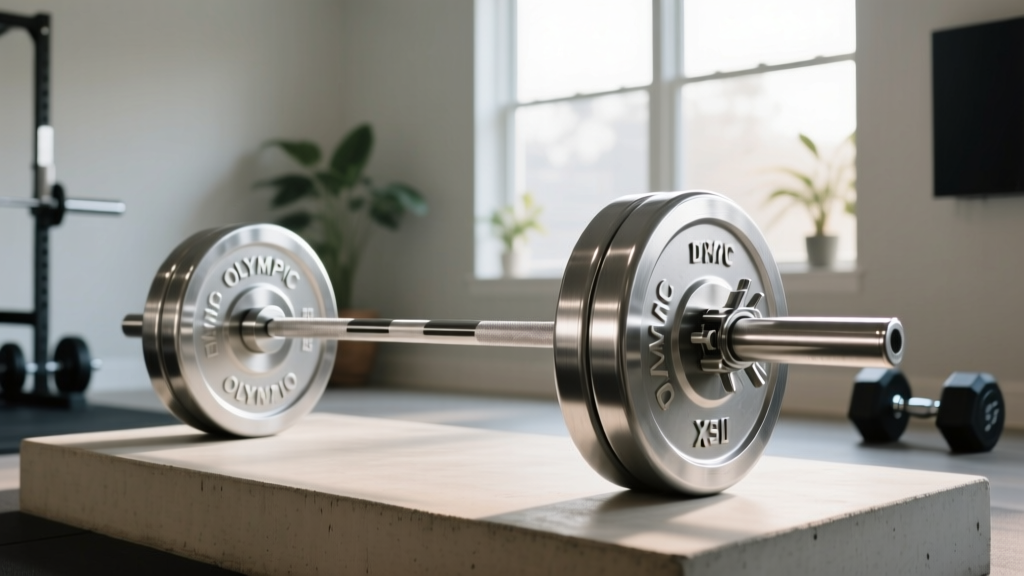
The barbell is the cornerstone of heavy pressing. However, not all 20kg bars are created equal. The shaft diameter, tensile strength, and knurl pattern dictate how the bar behaves during a strict press or a push press.
Barbell Weight, Shaft Diameter, and Tensile Strength
While the standard men's Olympic barbell weighs 20kg (44 lbs) and the women's weighs 15kg (33 lbs), the feel of the bar is dictated by its shaft diameter and tensile strength (measured in PSI).
- 28mm Shaft: Standard for Olympic weightlifting. The thinner shaft offers more 'whip' and is easier to grip for lifters with smaller hands, making it ideal for the jerk and snatch.
- 28.5mm Shaft: The ultimate hybrid. It provides enough rigidity for heavy strict presses while remaining comfortable for high-rep dumbbell and barbell accessory work.
- 29mm+ Shaft: Standard for powerlifting. The thicker shaft maximizes rigidity, reducing bar oscillation during heavy bench presses and squats, but can cause premature grip fatigue during high-volume overhead work.
Decoding Knurling: Volcano, Mountain, and Hill
Knurling is the machined pattern on the shaft that provides grip. According to Rogue Fitness's official barbell lineup, the geometry of the knurl drastically alters grip security and skin tearing.
- Volcano Knurl: The gold standard for overhead pressing. The machine cuts a sharp peak but then slightly blunts the very tip, creating a 'rim' that bites into the skin without tearing calluses. It provides maximum surface area contact.
- Mountain Knurl: Sharp, aggressive, and un-blunted. Excellent for heavy deadlifts with chalk, but it will shred your palms during high-rep dumbbell or barbell pressing sessions.
- Hill Knurl: Smooth and shallow. Found on cheap, entry-level barbells. It offers minimal grip security, forcing you to over-squeeze the bar, which drains tricep and deltoid energy before the press even begins.
2026 Barbell Comparison Matrix
| Barbell Model | Shaft / Knurl | Tensile Strength | Price (2026) | Best For |
|---|---|---|---|---|
| Rogue Ohio Bar | 28.5mm / Volcano | 190,000 PSI | $335 | Hybrid Pressing & CrossFit |
| Eleiko Olympic OP Bar | 28mm / Aggressive Diamond | 215,000 PSI | $1,150+ | Elite Weightlifting & Jerks |
| Kabuki Strength New Gen | 29mm / Aggressive | 250,000 PSI | $300 | Heavy Powerlifting / Bench |
| Rep Fitness Colorado Bar | 28.5mm / Stainless Volcano | 190,000 PSI | $389 | Corrosion-Resistant Home Gyms |
Biomechanics: Standing Dumbbell Shoulder Press Muscles Worked
While the barbell allows for maximum absolute load, the dumbbell shoulder press is unparalleled for hypertrophy, joint health, and stabilizer recruitment. Understanding the exact standing dumbbell shoulder press muscles worked is crucial for programming your accessory volume.
Primary Movers and Synergists
According to the biomechanical data mapped by ExRx.net's biomechanical directory, the standing dumbbell press is a compound, multi-joint movement that taxes the following musculature:
- Anterior Deltoid (Clavicular Head): The primary engine for shoulder flexion. Dumbbells allow for a slightly deeper stretch at the bottom of the movement compared to a barbell, increasing time-under-tension on the anterior fibers.
- Medial Deltoid: Acts as a crucial synergist. Because dumbbells require independent lateral stabilization, EMG studies show significantly higher medial deltoid activation compared to barbell pressing.
- Triceps Brachii: Responsible for elbow extension during the top 40% of the press. The lockout phase heavily recruits the lateral and medial heads of the triceps.
- Upper Pectoralis Major: The clavicular head of the pec assists in the initial drive off the shoulders, particularly if the elbows are tucked slightly forward (in the scapular plane) rather than flared directly out to the sides.
The Hidden Stabilizers: Core and Scapular Control
The true value of the standing dumbbell press lies in the isometric demand placed on the body's stabilizers. The National Strength and Conditioning Association (NSCA) emphasizes that standing overhead work is as much a core exercise as it is a shoulder exercise.
💡 Information Gain: The Serratus Anterior FactorDuring the final 15 degrees of overhead extension, the scapula must upwardly rotate. The serratus anterior and lower trapezius work in tandem to stabilize the scapula against the ribcage. If you lack serratus strength, you will experience 'scapular winging' and impingement at the top of the dumbbell press.
- Erector Spinae & Transversus Abdominis: Prevent hyperextension of the lumbar spine as the weight moves behind the body's center of gravity.
- Rotator Cuff (Supraspinatus, Infraspinatus, Teres Minor, Subscapularis): Fire isometrically to keep the humeral head centered in the glenoid fossa, preventing superior migration and shoulder impingement.
Synthesizing Hardware and Anatomy: Programming Insights
How does your barbell knurling choice affect your dumbbell pressing? The connection is rooted in central nervous system (CNS) fatigue and grip irradiation.
If you perform heavy barbell push presses with an aggressive 'Mountain' knurl (like the Kabuki Power Bar), the micro-trauma to your palms and the intense grip irradiation will fatigue your forearms and CNS. When you transition to standing dumbbell shoulder presses for hypertrophy, your grip will fail before your anterior deltoids do.
The 2026 Programming Fix: Use a barbell with a refined 'Volcano' knurl (like the Rogue Ohio Bar or Rep Colorado Bar) for your heavy barbell days. This secures the grip without tearing the skin, preserving your hand health and CNS capacity for high-volume, 10-15 rep dumbbell accessory work later in the week.
Frequently Asked Questions (FAQ)
Can I use a 15kg women's barbell for heavy overhead pressing?
Yes, but with caveats. A 15kg bar typically has a 25mm shaft. While excellent for grip, the lower tensile strength and thinner shaft mean the bar will oscillate (whip) significantly when pressing loads over 135 lbs. This oscillation can disrupt your bar path and destabilize the shoulder joint during the lockout phase.
Why do my wrists hurt during the standing dumbbell shoulder press?
Wrist pain is usually a result of 'grip creep'—allowing the dumbbell to roll toward the fingers, forcing the wrist into excessive extension. Keep the dumbbell handle low in the palm, directly over the radius and ulna bones, and squeeze the handle tightly to activate the irradiation effect, which stabilizes the wrist joint.
Is stainless steel worth the premium for a home gym barbell?
Absolutely. Bare steel bars require weekly oiling and scrubbing to prevent rust, especially in humid environments or unclimate-controlled garages. Stainless steel (priced between $350 and $500 in 2026) offers the exact same aggressive knurl feel as bare steel but is virtually impervious to oxidation, making it the ultimate 'buy it for life' investment.
'The overhead press is the ultimate test of structural integrity. Your barbell is the tool, but your scapular stabilizers are the foundation. Neglect one, and the other will fail.' — 2026 NSCA Biomechanics Symposium Summary
More gear to consider
All reviews
Troubleshooting Different Types of Dumbbell Curls with Neoprene Weights
How to Hit Triceps With Dumbbells & Barbell Knurling Buying Mistakes

Dumbbell Flys Works What Muscles? Top Neoprene Dumbbells Compared

Dumbbell Training for Seniors: Loadable Handle Maintenance

Olympic Barbell Guide & Bent Over Dumbbell Row Muscles Worked
