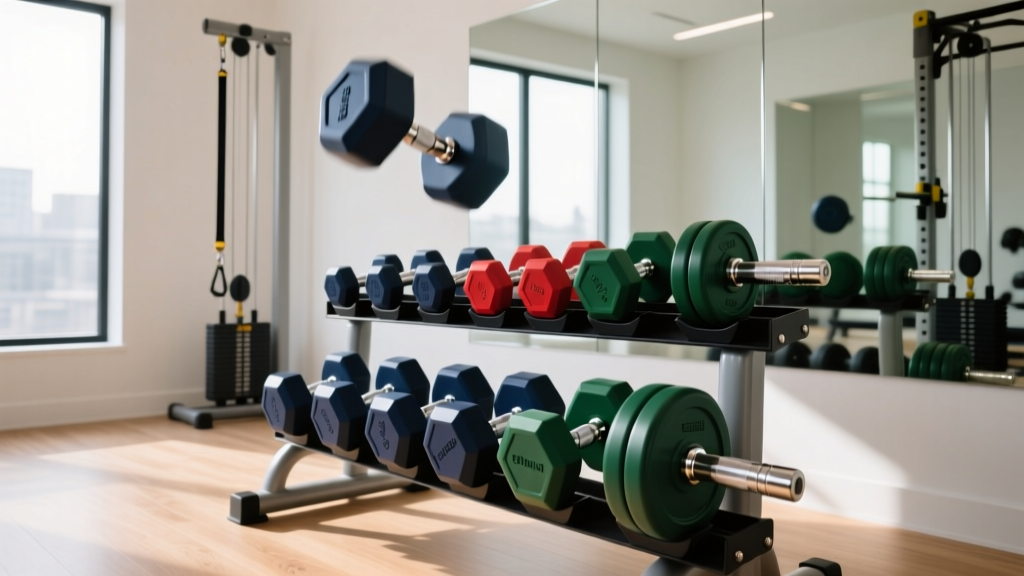
Rack Storage Tips for Your Weighted Pull Up Dumbbell Collection
Discover expert maintenance, rack selection, and storage solutions to protect your heavy weighted pull up dumbbell setup and extend equipment lifespan.

Progressing in calisthenics and back hypertrophy often means moving beyond standard bodyweight and adding external resistance. When you graduate to using a heavy hex or urethane-coated model as your go-to weighted pull up dumbbell, clamping it between your feet or attaching it via a dip belt, your equipment faces unique stresses. A 70 to 100 lb dumbbell isn't just heavy; its compact density creates massive point-loading forces when dropped or improperly racked. According to the National Strength and Conditioning Association (NSCA), proper facility layout and equipment storage are critical for mitigating impact damage and ensuring long-term structural integrity in both commercial and home gyms.
This guide dives deep into the biomechanics of dumbbell storage, rack selection matrices, and meticulous maintenance protocols to ensure your heavy free weights and storage solutions survive years of intense weighted pull-up training.
The Biomechanics of Storage: Point Loading from Heavy Dumbbells
When you finish a grueling set of weighted pull-ups and drop a 90 lb dumbbell from a standing height onto a rack or floor, the kinetic energy generated is immense. Unlike barbells, which distribute force across a wide sleeve and bumper plate, a dumbbell concentrates all its mass into a small surface area. If a heavy dumbbell misses the center of a rack saddle and strikes the edge, it creates a severe shear force.
Over time, this repetitive point loading causes micro-fractures in the welds of lower-tier storage racks. The Occupational Safety and Health Administration (OSHA) emphasizes that material handling and storage systems must be rated for the dynamic load of the objects they hold, not just the static weight. A rack rated for 500 lbs of static weight may easily buckle under the dynamic impact of a dropped 90 lb weighted pull up dumbbell if the steel gauge or weld gussets are inadequate.
⚠️ Impact Warning: Never drop a heavy hex dumbbell directly onto the steel lips of a storage rack. Always guide the dumbbell onto the UHMW (Ultra-High Molecular Weight) polyethylene protective saddles to prevent chipping the cast iron core and warping the rack's steel tiers.Rack Selection Matrix for Heavy Dumbbell Storage
Not all racks are engineered for the extreme density of heavy dumbbells used in advanced calisthenics. Below is a comparison of the three primary storage architectures available on the market, evaluated for heavy-duty use.
| Rack Architecture | Ideal Model Example | Static Capacity | Best For Heavy Pull-Up DBs? | Avg. Price Range |
|---|---|---|---|---|
| 3-Tier Horizontal | Rogue Monster Utility | 1,500+ lbs | Yes (11-gauge steel, wide base) | $395 - $550 |
| A-Frame Vertical | REP Fitness A-Frame | 800 - 1,000 lbs | Moderate (Risk of tipping if unbalanced) | $149 - $229 |
| Vertical Tree | CAP Barbell Tree | 300 - 500 lbs | No (Pegs bend under 50lb+ loads) | $60 - $120 |
For athletes routinely handling a 50 lb or heavier weighted pull up dumbbell, the 3-Tier Horizontal Rack is the only structurally sound choice. The horizontal cradle design distributes the weight across two contact points per dumbbell, drastically reducing shear stress on the welds compared to vertical pegs.
Step-by-Step Maintenance Protocol for Rack Longevity
Even premium 11-gauge steel racks require preventative maintenance to survive the abuse of heavy free weights. Implement this quarterly maintenance flow to prevent catastrophic hardware failure.
- Torque Verification: Use a calibrated torque wrench to check all structural bolts. For 1/2-inch Grade 8 zinc-plated bolts commonly found in Rogue and REP racks, apply 75 to 90 ft-lbs of torque. Vibrations from dropping heavy dumbbells will gradually back these out over a 6-month period.
- UHMW Saddle Inspection: Examine the plastic protective liners on the rack tiers. If you see deep gouges exposing the raw steel beneath, replace the UHMW pads. Exposed steel will rapidly degrade the urethane or rubber coating of your dumbbells through friction and oxidation.
- Weld Gusset Auditing: Wipe down the weld joints at the base of the rack with a clean microfiber cloth. Look for 'rust weeping'—a fine line of orange dust emerging from the weld seam. This is the earliest indicator of a micro-fracture caused by dynamic impact loading.
- Hardware Lubrication: Apply a dry PTFE (Teflon) lubricant to any moving parts or adjustable tier pins. Avoid WD-40, which attracts gym chalk and dust, creating an abrasive paste that accelerates metal wear.
Protecting Your Dumbbell Integrity
The dumbbell itself requires care, especially when used for weighted pull-ups. Clamping a dumbbell between your feet or dragging it against a leather dip belt causes unique wear patterns.
- Handle Knurling Care: If your weighted pull up dumbbell features aggressive knurling, sweat and magnesium carbonate (chalk) will pack into the grooves, leading to rust. Scrub the handles monthly with a stiff nylon brush and a 50/50 mix of water and white vinegar.
- Urethane vs. Rubber Degradation: Urethane dumbbells (like the industry standards noted in weight room safety guidelines) resist UV and ozone cracking far better than cheap virgin rubber. However, both will degrade if stored near direct HVAC vents or sunlight. Keep your rack in a climate-controlled zone (60-75°F, 40-50% humidity).
- Head Delamination: Heavy hex dumbbells dropped on concrete can suffer internal core separation from the outer urethane shell. Always use 3/4-inch vulcanized horse stall mats under your pull-up bar and storage rack to absorb the kinetic shock.
Troubleshooting Common Rack Failure Modes
Understanding how racks fail allows you to intervene before an accident occurs. Heavy dumbbell storage presents specific engineering challenges.
"The most common failure point in home gym dumbbell racks isn't the steel bending; it's the fatigue cracking at the HAZ (Heat Affected Zone) of the welds where the tier brackets meet the vertical uprights. Repeated eccentric loading from users tossing heavy dumbbells onto the top tier accelerates this fatigue."
— Structural Analysis of Fitness Equipment Load Bearing
Edge Case: The Tipping Hazard
If you must use an A-Frame rack due to space constraints, always load the heaviest weighted pull up dumbbells (e.g., your 80s and 100s) on the bottom tier. Placing 200 lbs of dense cast iron on the top tier of an A-frame raises the center of gravity, creating a severe tipping hazard when pulling a dumbbell off the rack at an awkward angle.
Frequently Asked Questions
Can I store my adjustable dumbbells on a standard 3-tier rack?
Generally, no. Adjustable models like the PowerBlock Commercial Elite or Nuobell 80s have different dimensions and center-of-gravity profiles compared to fixed hex dumbbells. Most standard 3-tier racks feature 12-inch spacing designed for fixed heads. Forcing adjustable dumbbells onto these tiers can crack their internal selector pins or warp the outer cages. Use the manufacturer-provided cradle or a dedicated flat shelf rack.
How do I fix a warped UHMW plastic saddle on my rack?
UHMW polyethylene cannot be easily heat-reshaped once it has deeply deformed under the static load of a 100 lb dumbbell. The best solution is to order replacement UHMW strips from the manufacturer. As a temporary fix, you can use heavy-duty double-sided VHB (Very High Bond) tape to secure a new layer of 1/8-inch UHMW tape directly over the warped section to protect your dumbbell coating.
Is it safe to hang a dip belt with a dumbbell attached on the rack?
Avoid hanging a loaded dip belt on the dumbbell rack tiers. The chains and carabiners will scratch the steel and UHMW plastics, and the concentrated hanging weight creates an unpredictable lateral load. Always detach the weighted pull up dumbbell from the belt and store them separately on the rack and a dedicated hook.
More gear to consider
All reviews
Top Loadable Dumbbells for the Incline Dumbbell Press Exercise
Dumbbell Shoulder Press Alternative: Cast Iron vs Competition Kettlebells

Rogue Urethane Dumbbell Setup: Beyond Neoprene for Home Gyms

One Arm Dumbbell Row: Complete Neoprene Setup Guide

Brian Shaw Dumbbell Grip vs Olympic Barbell Knurling Guide
