Power Rack vs Squat Rack vs Stand: Space for RDLs with Dumbbells
Compare power racks, squat racks, and squat stands. Discover which 2026 home gym setup offers the best safety, footprint, and space for RDLs with dumbbells.

The Home Gym Dilemma: Cage Safety vs. Open Floor Space
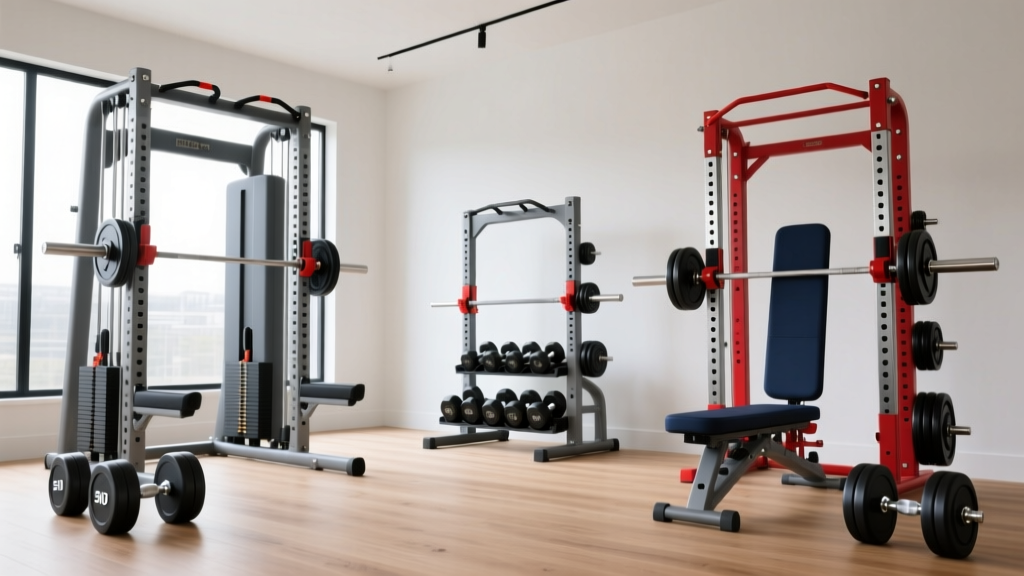
When outfitting a home gym in 2026, the debate between a power rack, a squat rack (half rack), and a squat stand usually centers on barbell safety and budget. However, a truly functional training space must account for more than just heavy squats and bench presses. Accessory movements dictate the flow of your workouts, and spatial constraints can severely limit your exercise selection. One of the most common points of friction in cramped home gyms is performing hinge movements—specifically, the challenge of executing RDLs with dumbbells inside or around your primary lifting station.
While a full power cage offers unmatched safety for solo barbell lifting, its enclosed footprint can turn heavy dumbbell accessories into an awkward, knuckle-scraping ordeal. Conversely, minimalist squat stands free up valuable floor space but require careful spotter arm management. This guide breaks down the structural, spatial, and financial realities of the three main rack categories, evaluating them not just for barbell safety, but for total gym versatility.
FitGearPulse Pro Tip: Before purchasing any rack, measure your tallest user's wingspan while holding your widest hex dumbbells at the side. If that measurement exceeds 42 inches, a standard 43-inch interior power rack will restrict your hip hinge mechanics during accessory work.Biomechanics and Clearance: The Hinge Movement Factor
To understand why rack selection impacts dumbbell training, we must look at the biomechanics of the hip hinge. According to exercise mechanics databases like ExRx.net, the dumbbell Romanian deadlift requires the weights to track vertically along the legs while the torso inclines forward. Unlike a barbell, which is constrained to a fixed width between your feet, dumbbells hang laterally at your sides.
When a 6-foot-tall lifter performs RDLs with dumbbells using 100-pound hex-head models (which can be up to 8 inches wide each), the total lateral clearance required during the eccentric lowering phase can easily approach 40 to 44 inches. If you are standing inside a power rack, the uprights, safety straps, and spotter arms become immediate collision hazards. This spatial reality is the hidden variable that separates a good home gym from a great one.
Power Racks: The Ultimate Safety Cage (With Spatial Trade-offs)
Power racks (full cages) feature four vertical uprights connected by crossmembers, offering 360-degree safety. In 2026, the industry standard remains the 3x3-inch 11-gauge steel upright with 1-inch hole spacing, popularized by commercial-grade models and adapted for premium home gyms.
- Top Contender: Titan Fitness T-3 Series Power Rack
- 2026 Price Range: $1,199 - $1,499 (depending on height and attachments)
- Interior Width: Typically 43 inches
- Footprint: 48" x 48" (or larger with front foot extensions)
The Dumbbell RDL Test: Performing RDLs with dumbbells inside a 43-inch wide cage is highly restrictive for larger lifters. The hex heads of heavy dumbbells will frequently clip the safety spotter arms or the uprights themselves during the descent. To compensate, lifters often have to step outside the cage, negating the benefit of the enclosed pull-up bar and internal storage. Furthermore, dropping heavy dumbbells inside a cage risks damaging the floor or the rack's lower crossmembers if the drop zone isn't perfectly managed.
Half Racks (Squat Racks): The Versatile Middle Ground
Half racks utilize two main front uprights and two rear stabilizing legs, creating an open-front design. This configuration provides excellent barbell safety via spotter arms while leaving the front of the rack completely unobstructed.
- Top Contender: REP Fitness PR-4000 Power Rack (Half-Rack Configuration)
- 2026 Price Range: $1,099 - $1,399
- Interior Width: 41 to 43 inches (but open at the front)
- Footprint: 50" x 53" (depth varies with spotter arm length)
The Dumbbell RDL Test: Half racks excel in accessory versatility. You can complete your heavy barbell squats, rack the weight, and simply take two steps forward into open space. This provides unrestricted lateral clearance for RDLs with dumbbells, allowing for a natural hip hinge without the psychological or physical barrier of steel uprights inches from your knuckles. The open front also makes it significantly easier to load and unload heavy dumbbells from a nearby storage tier without awkward maneuvering.
Squat Stands: Minimalist Footprint for Maximum Accessory Room
Squat stands consist of two independent uprights (sometimes connected by a minimal rear crossbar for stability). They are the most budget-friendly and space-efficient option, though they require strict adherence to safety protocols, such as always using spotter arms and never racking the bar outside the center of gravity.
- Top Contender: Rogue Monster Lite SML-2C Squat Stand
- 2026 Price Range: $595 - $695
- Interior Width: 49 inches (between the outsides of the uprights)
- Footprint: 30" x 48" (highly compact)
The Dumbbell RDL Test: Squat stands are the undisputed winners for dedicated dumbbell zones. Because they consume minimal floor space, you can position your squat stands against a wall and leave the entire center of your gym floor open for heavy hinge movements. When executing RDLs with dumbbells, you have 360 degrees of open air. There are no cages to bump into, and you can freely adjust your stance width to accommodate different dumbbell lengths or kettlebell variations.
Head-to-Head Comparison Matrix
| Feature | Power Rack (Full Cage) | Half Rack (Squat Rack) | Squat Stand |
|---|---|---|---|
| Avg. 2026 Cost | $1,200 - $4,000+ | $1,000 - $1,800 | $450 - $750 |
| Barbell Safety | Maximum (Enclosed) | High (Front Open) | Moderate (Requires Arms) |
| Dumbbell Hinge Space | Poor (Restricted Width) | Excellent (Step Forward) | Superior (Open Floor) |
| Attachment Ecosystem | Massive (Cable, Lat, Dip) | Large (Weight storage, Bands) | Minimal (Dip bars, Spotter) |
| Best For | Heavy solo barbell lifters | Hybrid barbell/dumbbell athletes | Small spaces & budget builds |
Edge Cases: Flooring, Drop Zones, and Equipment Longevity
A frequently overlooked aspect of rack selection is how it interacts with your flooring during failed repetitions or heavy accessory drops. When performing heavy RDLs with dumbbells, grip failure is a common edge case. Dropping 120-pound dumbbells from waist height generates immense localized force.
"In a full power rack, the internal footprint is usually covered by a single layer of 3/4-inch horse stall mats. Dropping heavy hex dumbbells inside the cage often leads to chipped paint on the lower crossmembers and accelerated degradation of the rubber flooring due to the inability to easily rotate or replace the mats under the cage." — Home Gym Engineering Analysis, 2025
With a squat stand or half rack setup, your dumbbell drop zone is completely exposed. This allows you to utilize dedicated drop pads, easily swap out worn rubber mats, and maintain your flooring without having to disassemble your primary lifting station. For athletes who frequently push their grip to failure on high-volume hinge days, the open-floor advantage of stands and half racks cannot be overstated.
Final Verdict: Matching the Rack to Your Training Style
The choice between a power rack, squat rack, and squat stand ultimately depends on your primary training modality and your available square footage.
- Choose the Power Rack if: Your programming is 80% barbell-focused, you lift alone near your one-rep max, and you have a dedicated room (like a two-car garage) where spatial restrictions won't impact your accessory work. You can simply perform your dumbbell RDLs outside the cage.
- Choose the Half Rack if: You want the premium attachment ecosystem (like lat pulldowns and belt squat attachments) but demand an open front for seamless transitions into RDLs with dumbbells, lunges, and kettlebell swings without leaving your primary lifting zone.
- Choose the Squat Stand if: You are building a gym in a spare bedroom, basement, or apartment. The minimal footprint preserves your open floor space, making heavy dumbbell hinge movements, sled work, and dynamic mobility drills vastly more comfortable and safe.
By evaluating your rack not just as a barbell holder, but as the central anchor of your gym's spatial flow, you ensure that every movement—from heavy back squats to high-rep RDLs with dumbbells—can be performed with optimal biomechanics and zero unnecessary friction.
More gear to consider
All reviews
Loadable Dumbbell Care for One-Arm Dumbbell Overhead Extensions

Cast vs Comp Kettlebells: Budget & Rolling Dumbbell Tricep Extension

Fix Upper Body Exercises with Dumbbells at Home: Neoprene Mistakes

Olympic vs Standard Plates: Setup for Squats & Dumbbell Goblet Squats

Adjustable Dumbbells vs. Neoprene Dumbbells 10 lbs: 2026 Guide
