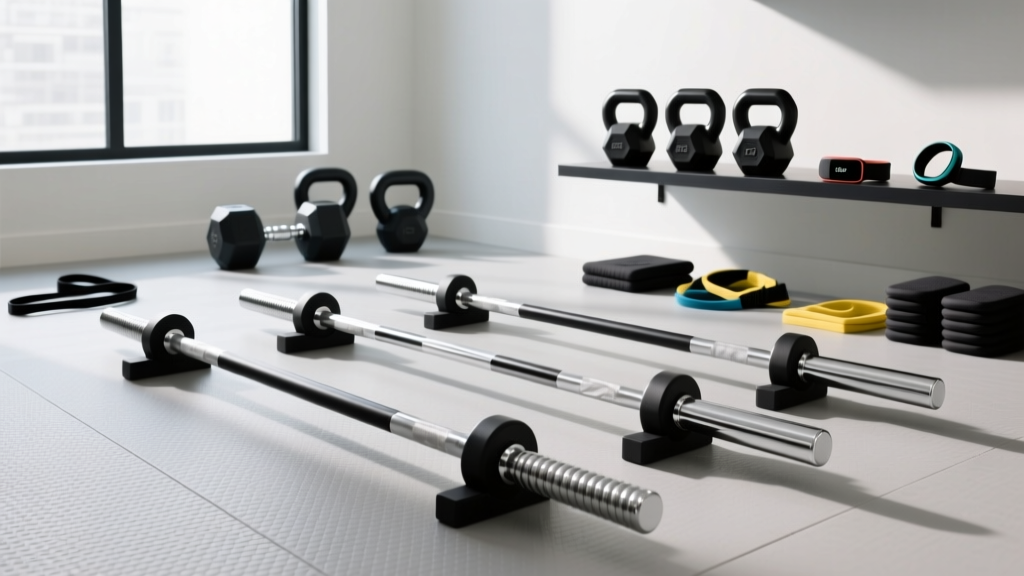
Compact Gym Layouts: Bumper vs Iron Plates & Dumbbell Pull Ups
Optimize your small home gym layout. We compare bumper vs iron plates for space efficiency and detail how to set up a station for dumbbell pull ups.

The 2026 Home Gym Dilemma: Space vs. Equipment Versatility
As urban square footage shrinks and garage conversions become the standard in 2026, home gym design has shifted from simply buying heavy gear to mastering spatial geometry. The most critical decision in any compact lifting environment—whether it is a 10x10 basement corner or a low-clearance garage—is choosing the right weight plates. The debate between bumper plates and cast iron plates extends far beyond aesthetics; it fundamentally dictates your rack placement, storage footprint, acoustic management, and even your exercise selection.
When you are operating within a tight 80-square-foot zone, every inch of barbell sleeve capacity and floor clearance matters. Furthermore, spatial constraints often force athletes to innovate their programming. For instance, when ceiling height prohibits standard overhead bar work, lifters must pivot to space-zero alternatives like dumbbell pull ups to maintain vertical pulling volume. This guide breaks down the exact dimensional data, layout strategies, and biomechanical workarounds required to build a high-performance, space-optimized home gym.
Bumper Plates vs. Iron Plates: The Dimensional Data
To understand how plates affect your gym layout, we must look at the raw manufacturing specifications. According to equipment analysts at BarBend, the primary differentiator between iron and rubber plates is thickness, which directly impacts barbell sleeve capacity and the physical footprint of your weight storage racks.
| Feature | Cast Iron Plates (e.g., Rogue Machined) | Crumb Rubber Bumpers (e.g., Rogue Echo) | Virgin Rubber Bumpers (e.g., Rogue Black) |
|---|---|---|---|
| 45lb Plate Thickness | ~1.15 inches | ~3.25 inches | ~2.75 inches |
| Max Load on 16.3" Sleeve | ~585 lbs per side | ~225 lbs per side | ~270 lbs per side |
| Drop Noise Level | Extremely High (Acoustic Shockwave) | Low (Deadened Thud) | Very Low (Quiet Bounce) |
| Storage Rack Footprint | Narrow A-Frame (24" x 24") | Wide Vertical Tree or Wall Mount | Wide Vertical Tree or Wall Mount |
| Average 2026 Cost | $1.50 - $2.00 / lb | $2.50 - $3.00 / lb | $4.50 - $6.00 / lb |
How Plate Thickness Alters Your Rack Layout
If your training involves heavy deadlifts or squats exceeding 400 pounds, using standard 45lb crumb rubber bumpers will max out a standard Olympic barbell sleeve (which typically offers 16.3 inches of loadable length). As noted in the technical specifications for Rogue Echo Bumper Plates, fitting five 45lb bumpers per side leaves almost no room for a secure collar.
Space Implication: If you choose thick bumpers, you must allocate space for a secondary set of fractional iron plates or invest in thinner (and vastly more expensive) competition bumpers. Conversely, cast iron plates allow you to load massive weight onto a standard bar, meaning you can utilize a shorter, space-saving 79-inch technique barbell without sacrificing loading capacity—a massive advantage in narrow rooms where wall-to-wall clearance is less than 6 feet.
Designing the Low-Clearance Pull Zone: Dumbbell Pull Ups
One of the most common spatial failures in home gym design is ignoring ceiling height. A standard power rack is 84 to 90 inches tall. If your basement ceiling is 86 inches, performing a standard pull-up will result in your head striking the joists. This is where the dumbbell pull ups variation becomes an essential component of the compact gym ecosystem.
Dumbbell pull ups are a highly effective, floor-based or low-bench lat isolation movement that mimics the exact biomechanical contraction of a vertical pull-up without requiring 8 feet of vertical clearance. By utilizing heavy hex dumbbells, athletes can maintain latissimus dorsi development in rooms with severely restricted overhead space.
Execution Guide: Floor-Based Dumbbell Pull Ups
- The Setup: Lie supine on a low-profile bench (or directly on a horse-stall mat) with your knees bent and feet flat.
- The Grip: Grasp two heavy hex dumbbells (e.g., 50-70 lbs each). The hex shape prevents them from rolling away on the floor.
- The Movement: Begin with the dumbbells extended overhead, resting lightly on the floor. Initiate the pull by driving your elbows down toward your hips, actively depressing your scapulae and squeezing your lats, mimicking the exact motor pattern of a barbell pull-up.
- The Contraction: Pull the dumbbells until they align with your lower ribcage, hold for a one-second isometric pause, and slowly return to the floor.
Pro-Tip: To increase the core demand and mimic the full-body tension of a strict pull-up, perform this movement while maintaining a hollow-body hold with your feet elevated six inches off the floor.
Acoustic & Vibration Constraints in Shared Spaces
Space optimization is not just about physical dimensions; it is also about acoustic space. If your home gym shares a wall with a living area, or if you are building out a second-floor bonus room, the acoustic shockwave of dropping cast iron plates will cause structural vibration and noise complaints.
- Iron Plates: Require a dedicated, heavily reinforced drop zone. You will need to allocate a 6x6 foot area layered with 3/4-inch vulcanized horse stall mats over a plywood subfloor to disperse kinetic energy. This permanently eats up 36 square feet of your layout.
- Bumper Plates: Feature a rubber durometer rating (typically 85 Shore A for crumb rubber) designed to absorb kinetic impact. While you still need protective rubber flooring, bumpers allow you to drop weights closer to the edges of your lifting platform, effectively shrinking your required safe-drop zone and freeing up floor space for other equipment like adjustable kettlebells or plyo boxes.
The Ultimate 10x10 Compact Layout Blueprint
When designing a 100-square-foot (10x10) room, every piece of equipment must serve multiple functions and respect the traffic flow. Here is a proven layout blueprint for 2026 that integrates plate storage and low-clearance pulling mechanics:
- The Anchor (0-48 inches from back wall): Place a 72-inch short power rack against the rear wall. The 72-inch height ensures barbell clearance while leaving 12+ inches of overhead space for low-clearance rooms.
- The Plate Zone (Left Flank): Mount a vertical wall plate rack on the left wall. If using bumpers, this keeps the 3.25-inch thick plates off the floor and out of the walking path. If using iron, a narrow A-frame can sit in the corner.
- The Dumbbell & Pull Zone (Right Flank): Place a low-profile adjustable bench on the right side, flanked by a pair of heavy hex dumbbells. This is your dedicated station for dumbbell pull ups, dumbbell floor presses, and Bulgarian split squats, requiring zero overhead clearance.
- The Center Path: Leave a 4-foot wide central corridor for barbell loading, deadlifts, and walking lunges. Use interlocking 3/4-inch rubber tiles only in this central drop zone to save money and reduce the room's overall thermal insulation (rubber traps heat in small rooms).
'In micro-gyms, the floor is your most expensive real estate. If a piece of equipment does not offer at least three distinct movement patterns or storage solutions, it does not belong in a 10x10 footprint.'
Frequently Asked Questions
Can I mix iron and bumper plates on the same barbell?
Yes, but with strict spatial rules. If you are deadlifting and need to bump the bar off the floor to the correct 8.75-inch starting height, you must place the 45lb bumper plate on the sleeve first (closest to the collar). You can then load thinner iron plates on the outside. However, never drop a barbell where the outermost plate is cast iron, as the iron will bear the brunt of the impact, potentially cracking the plate or bending your barbell sleeve.
Are dumbbell pull ups as effective as standard barbell pull ups for lat width?
While standard pull-ups offer superior closed-chain kinetic benefits and allow for infinite weighted progression via a dip belt, dumbbell pull ups provide an exceptional open-chain alternative for hypertrophy. Because you can independently control the angle and path of each dumbbell, you can achieve a deeper lat stretch and a more aggressive peak contraction, making it a highly effective accessory movement, especially when spatial constraints remove the pull-up bar from your layout.
What is the best storage solution for bumper plates in a tight garage?
Wall-mounted vertical plate pegs are the undisputed champions of space optimization for bumpers. By mounting steel pegs directly into your wall studs (ensuring you hit the center of the stud to support 300+ lbs of dead weight), you reclaim the 4-square-foot footprint that a traditional horizontal weight tree would occupy, keeping your garage floor clear for vehicle parking or open-floor conditioning work.
More gear to consider
All reviews
Home Gym Setup: Full Arm Exercises With Dumbbells Using Neoprene
EZ Bar vs Straight Bar: Space Layouts & Dumbbell Pullover Clearance
T Bar Rows With Dumbbells: Olympic vs Standard Plates
Best Romanian Deadlift Dumbbell Alternative: EZ Curl vs Straight Bar

Cast Iron vs Competition Kettlebells & Great Chest Workouts with Dumbbells