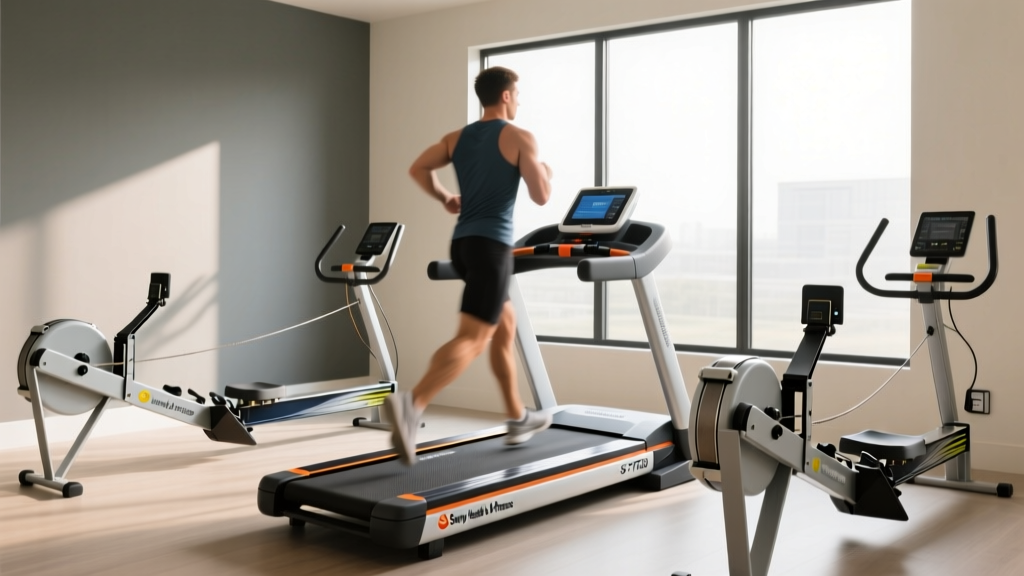
ProForm Treadmill Belt Tension Guide & 2026 Walking Pad Review
Master ProForm treadmill belt tension with our step-by-step guide. Plus, compare 2026 walking pads vs standard treadmills to find your perfect fit.

The 2026 Walking Pad vs. Traditional Treadmill Showdown
As remote work solidifies its place in 2026, the demand for under-desk walking pads has skyrocketed. However, many beginners overlook the mechanical differences between a compact walking pad and a full-sized upright treadmill. According to the Centers for Disease Control and Prevention (CDC), integrating consistent, low-impact walking into your daily routine drastically improves cardiovascular health, making these machines a staple in home offices.
But which form factor is right for you? To answer this, we are comparing two of the most popular models on the market: the ProForm WalkFit Carbon (Model PFWL3924) and the traditional ProForm Carbon TL (Model PFTL59224). Understanding their structural differences is crucial, especially when it comes to long-term maintenance like adjusting your ProForm treadmill belt tension.
| Feature | ProForm WalkFit Carbon (Walking Pad) | ProForm Carbon TL (Upright) |
|---|---|---|
| 2026 Retail Price | $399 - $449 | $599 - $649 |
| Footprint | 52.5" L x 24.5" W (Ultra-compact) | 70.5" L x 29.5" W (Standard) |
| Max Speed | 4.0 MPH (Walking only) | 10.0 MPH (Jogging/Running) |
| Belt Dimensions | 42" L x 18" W | 55" L x 18" W |
| Motor | 1.5 HP Continuous Duty | 2.6 HP Continuous Duty |
| Maintenance Frequency | High (Tension checks every 3 months) | Low (Tension checks every 6-12 months) |
As highlighted in the Consumer Reports Treadmill Buying Guide, smaller rollers and shorter belts on walking pads inherently create more friction and heat per square inch. This makes walking pads significantly more prone to belt slipping and stretching than their upright counterparts.
Why ProForm Treadmill Belt Tension Matters More on Walking Pads
If you own a walking pad, you have likely experienced the dreaded 'stutter'—that sudden, jarring hesitation of the belt when you plant your foot. This is almost always a symptom of improper belt tension.
On a full-sized ProForm Carbon TL, the larger 1.9-inch rollers grip the belt with ample surface area. On the WalkFit Carbon, the rollers are smaller, and the belt loops tighter. If the ProForm treadmill belt tension is too loose, the drive roller spins while the belt remains stationary, causing friction burns on the deck. If it is too tight, the 1.5 HP motor is forced to draw excessive amperage, which will fry the motor controller board—a $120 to $180 replacement part.
'Walking pads are essentially high-friction environments. Because users are often wearing hard-soled work shoes instead of cushioned running sneakers, the impact force on the belt is concentrated. Checking your ProForm treadmill belt tension every 90 days is non-negotiable for under-desk models.' — Home Fitness Equipment Repair Technician
Step-by-Step Guide: Adjusting ProForm Treadmill Belt Tension
Adjusting the tension on your ProForm machine is a beginner-friendly process that takes less than 15 minutes. Do not pay a technician $150 for a service call until you have tried this exact protocol.
Step 1: Diagnose and Prep the Machine
First, verify the issue. Stand on the side rails and start the machine at 2.0 MPH. Step onto the belt and intentionally plant your feet firmly. If the motor hums but the belt pauses under your weight, it is too loose. If the machine is unusually loud or you smell a faint burning rubber odor, it may be overtightened or lacking silicone lubricant.
Safety First: Unplug the treadmill from the wall outlet and remove the safety key before reaching for any tools.
Step 2: Gather Your Tools
You will need the following:
- A 5mm (or 3/16-inch) Allen wrench (usually included in the original ProForm assembly kit).
- A rag for wiping away excess dust.
- 100% silicone treadmill lubricant (if the deck is dry).
Step 3: The Quarter-Turn Rule
Locate the two adjustment bolts at the very rear of the treadmill, on the left and right sides of the roller. These bolts control the rear roller's position.
⚠️ CRITICAL WARNING: Never turn the adjustment bolts more than a 1/4 turn (90 degrees) at a time. Overtightening the belt is the number one cause of motor burnout in compact walking pads.- Insert the 5mm Allen wrench into the left rear adjustment bolt.
- Turn the bolt exactly 1/4 turn clockwise.
- Move to the right rear adjustment bolt and turn it exactly 1/4 turn clockwise.
- Plug the machine back in, insert the safety key, and test at 3.0 MPH.
Repeat this 1/4 turn sequence only if the belt is still slipping. The ideal tension allows you to lift the belt about 2 to 3 inches off the deck in the exact center of the machine.
Step 4: Center the Belt (Tracking Adjustment)
Adjusting tension can sometimes pull the belt off-center. If the belt drifts to the left, turn the left rear bolt 1/4 turn clockwise, and the right bolt 1/4 turn counter-clockwise. Give the machine 30 seconds at 3.0 MPH to self-center before making further adjustments. For official warranty and manual references, always consult ProForm Official Support.
Troubleshooting Edge Cases & Failure Modes
Sometimes, adjusting the ProForm treadmill belt tension does not solve the problem. Here is how to identify deeper mechanical failures:
🔴 Failure Mode: The 'Burning Smell' Edge CaseIf you have properly tensioned the belt but still smell burning plastic or rubber, stop immediately. This indicates that the walking belt has bonded to the wooden deck due to a lack of lubrication, or the motor's carbon brushes are worn out. Lift the belt; if the deck feels rough or gritty, you must apply 15ml of 100% silicone lubricant under the belt and walk on it at 2.0 MPH for 5 minutes to distribute it. 🔵 Failure Mode: Fraying Belt Edges
If the edges of your walking pad belt are shredding, your belt tension is likely correct, but your roller alignment is skewed. Check the front roller cap. If the front roller is not perfectly parallel to the rear roller, the belt will continuously 'walk' off the edge and shred against the plastic side rails. This requires loosening the front hood cover and realigning the front roller bracket.
Final Verdict: Which ProForm Machine Fits Your Space?
Choosing between a walking pad and a traditional treadmill comes down to your biomechanical needs and your willingness to perform routine maintenance.
If your goal is strictly to hit 8,000 to 10,000 steps a day while answering emails, the ProForm WalkFit Carbon is an unbeatable 2026 investment at under $450. Its low profile slides easily under a bed or sofa. However, you must commit to checking your ProForm treadmill belt tension every 90 days and lubricating the deck bi-annually to protect its smaller 1.5 HP motor.
Conversely, if you want the option to break into a light jog, or if you are a heavier user (over 220 lbs), the larger rollers and 2.6 HP motor of the ProForm Carbon TL will inherently require less frequent tension adjustments and provide a much smoother, more forgiving stride. Whichever you choose, mastering basic belt maintenance will easily add 3 to 5 years to the lifespan of your cardio equipment.
More gear to consider
All reviews
2026 Draxfit Treadmill Review: Best Folding Pick for Small Spaces
Air Bike vs Assault Bike: Better Than 30 min on the treadmill?

Beyond 30 Minutes on Treadmill Everyday: Home Stair Climber Guide
Urevo Cyberpad for Home Smart Treadmill vs. Stationary Bike Types

Virtual Reality Treadmill Buying Guide & Top Setups 2026