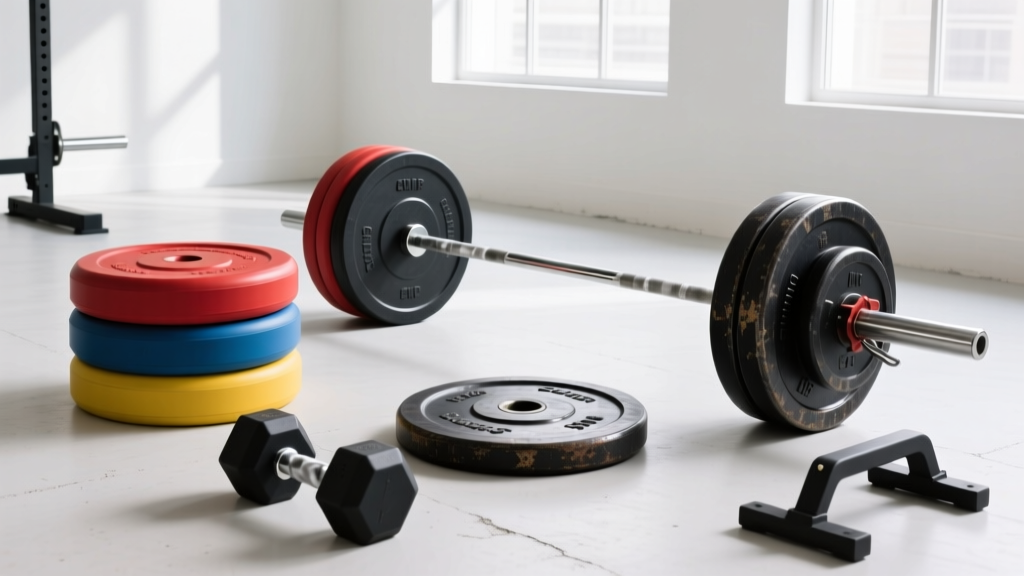
Preventing Dumbbell Rolls: Rubber Hex vs Urethane Layout Guide
Optimize your home gym layout by preventing dumbbell rolls. We compare rubber hex vs urethane dumbbells for space efficiency, rack sizing, and floor plans.

The Hidden Space Thief: Uncontrolled Dumbbell Rolls
When mapping out a compact home gym or commercial free-weight zone in 2026, most lifters focus on the static footprint of their equipment. They measure the length of their power rack and the width of their lifting platform. However, the most disruptive spatial liability in any fitness layout is dynamic: uncontrolled dumbbell rolls.
If you opt for traditional round dumbbells, a dropped or loosely placed weight doesn't just occupy its physical dimensions; it demands a 36-inch retrieval and safety buffer zone to account for rolling. In a 150-square-foot garage gym, this phenomenon destroys layout efficiency, forcing you to push racks away from walls and widening walkways unnecessarily.
To solve this, space-conscious gym designers turn to anti-roll geometries. The two dominant market contenders are the rubber hex dumbbell and the urethane dumbbell (typically featuring a 12-sided dodecagonal design). While both eliminate the rolling hazard, their material densities, head volumes, and rack integration requirements drastically alter your floor plan. Here is a deep-dive spatial analysis to help you choose the right iron for your layout.
Rubber Hex Dumbbells: The Budget Space-Saver
Rubber-coated cast iron hex dumbbells have been the cornerstone of commercial and home gyms for decades. The six-sided geometry guarantees zero lateral movement once the weight hits the floor, entirely neutralizing the threat of dumbbell rolls.
Spatial Advantages and Layout Impact
- Flush Wall Placement: Because hex dumbbells will not roll, you can design your layout with storage racks pushed completely flush against drywall or garage doors. There is no need to leave a 12-to-18-inch 'chase gap' to retrieve a rolled weight.
- Floor Stacking: During high-volume drop sets, hex dumbbells can be safely clustered in tight corners without migrating into your primary barbell deadlift zone.
The Volume Drawback
The primary spatial penalty of rubber hex dumbbells is their sheer volume. To protect the cast iron core and prevent chipping, manufacturers apply a thick layer of recycled rubber. According to product specifications from CAP Barbell Rubber Hex Dumbbells, a 50-pound hex head measures approximately 6.5 inches in width and 3.5 inches in thickness.
This bulky profile means that standard 3-tier horizontal storage racks fill up rapidly. A typical 41-inch wide rack might only accommodate 5 to 50-pound pairs. If your programming requires weights up to 100 pounds, you will need to purchase wider 5-tier racks or multiple storage units, significantly increasing the horizontal square footage dedicated to storage.
Expert Insight: While rubber hex dumbbells save floor space by preventing rolls, their thick heads force you to sacrifice vertical and horizontal rack space. Always measure the exact head width of your chosen brand before ordering a storage rack.
Urethane Dumbbells: Premium Density and Anti-Roll Geometry
Urethane is a premium elastomer that offers superior durability, zero odor, and a much tighter molecular bond than cheap rubber. In the context of space optimization, urethane's greatest advantage is its application in 12-sided (dodecagonal) designs, such as the Rogue Fitness Urethane Dumbbells.
Compact Footprint and Rack Efficiency
Because urethane is highly resilient and doesn't require the same thick shock-absorbing layer as recycled rubber, manufacturers can design significantly more compact dumbbell heads. Furthermore, the internal steel cores can be packed more densely.
A 50-pound Rogue urethane 12-sided dumbbell head measures roughly 5.8 inches in width—nearly three-quarters of an inch narrower than its rubber hex counterpart. While this seems marginal on a single weight, it compounds dramatically across a full set.
The Urethane Rack Multiplier
Due to the compact head size of 12-sided urethane dumbbells, you can fit a 5lb to 100lb set on a standard Rogue 3-Tier Dumbbell Storage rack. A rubber hex set of the same weight range would require a massive 5-tier rack or two separate 3-tier units. By choosing urethane, you effectively cut your storage footprint in half.
Spatial Comparison Matrix
To visualize how these two materials impact your gym's architectural layout, review the data matrix below based on a standard 5-50lb pair set.
| Feature | Rubber Hex (e.g., CAP) | Urethane 12-Sided (e.g., Rogue) | Spatial Impact |
|---|---|---|---|
| Roll Liability | Zero (Flat edges) | Zero (12-sided geometry) | Allows flush wall placement |
| 50lb Head Width | ~6.5 inches | ~5.8 inches | Urethane allows tighter rack tiers |
| Rack Requirement (5-100lbs) | 5-Tier or Dual Racks | Standard 3-Tier Rack | Urethane saves ~4 sq ft of floor space |
| Average Cost (2026) | $1.50 - $2.00 / lb | $3.50 - $4.50 / lb | Hex is better for tight budgets |
Designing Your Layout: The Roll Radius Rule
When drafting your gym's floor plan, apply the Roll Radius Rule to determine equipment placement. If you ever mix in round Olympic plates or specialty round dumbbells for specific movements, you must account for dynamic clearance.
- Map the Static Zone: Outline the exact dimensions of your squat rack, bench, and dumbbell storage rack. This is your non-negotiable footprint.
- Apply the Anti-Roll Buffer: If using rubber hex or 12-sided urethane, your buffer zone is 0 inches. You can place your storage rack directly adjacent to your lifting platform or against a load-bearing wall.
- Calculate the Dynamic Zone: If your layout includes any round implements, draw a 36-inch semi-circle radiating from the storage area. No other equipment (like cable machines or cardio units) can intersect this semi-circle, as a stray roll will create a tripping hazard or damage adjacent machines.
Flooring Considerations
Both rubber hex and urethane dumbbells are designed to be dropped, but the geometry affects how they interact with your flooring. Rubber hex dumbbells feature sharp 90-degree corners. When dropped on 3/4-inch horse stall mats from a height of four feet, the concentrated force on those corners can eventually cause the rubber to split or the internal cast iron to fracture. Urethane's 12-sided design distributes impact force across more surface area and features slightly beveled edges, preserving both the dumbbell and your subfloor over years of heavy use.
Expert Verdict: Which Should Anchor Your Floor Plan?
The decision between rubber hex and urethane ultimately comes down to the intersection of your budget and your available square footage.
If you are building out a larger basement gym (200+ square feet) where rack footprint is a secondary concern, rubber hex dumbbells remain the undisputed champion of cost-efficiency. They completely eliminate dumbbell rolls, protect your floors, and cost roughly half as much per pound. Just be prepared to allocate extra wall space for wider, multi-tier storage racks.
However, if you are optimizing a micro-gym, a spare bedroom, or a tight garage bay where every square inch matters, 12-sided urethane dumbbells are a mandatory investment. The premium material allows for a drastically smaller head profile, enabling you to store a massive weight range on a single, compact 3-tier rack. By eliminating dumbbell rolls and shrinking your storage footprint, urethane frees up valuable floor space for the movements that actually matter.
More gear to consider
All reviews
Kettlebell Care for Women with Dumbbells: Cast Iron vs Competition

Bumper vs Iron Plates: Maintenance & Dumbbell Wrist Flexion Grip

Hex vs Urethane: Space Layouts & Dumbbell Swing Works What Muscles

Best Dumbbell Racks for the Lying Dumbbell Pullover to Extension
EZ Curl Bar vs Straight Bar & Neutral-Grip Dumbbell Bench Press