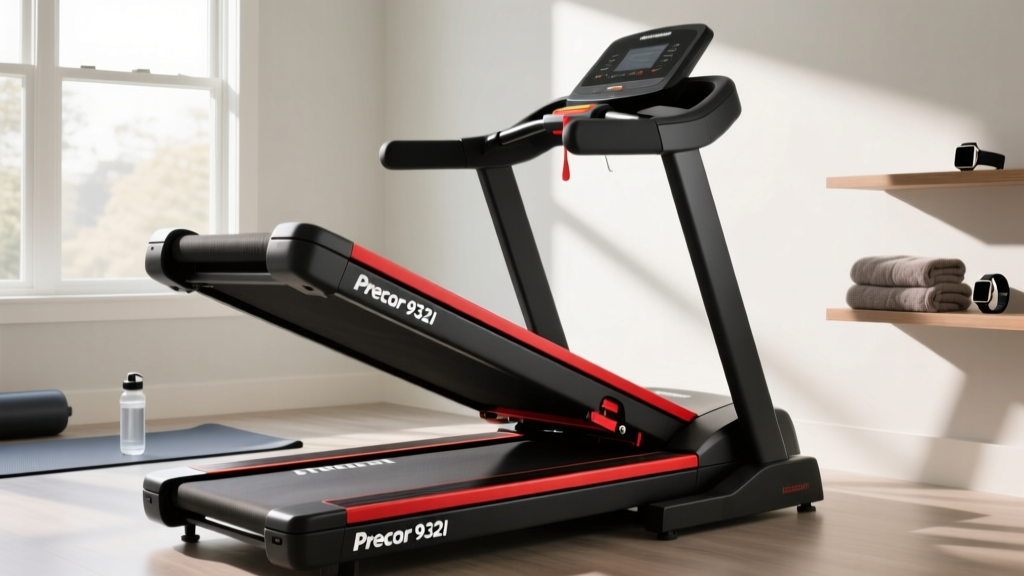
Precor 932i Treadmill Belt Maintenance: Cost & Value Analysis
Analyze the 5-year maintenance costs of the Precor 932i treadmill. Learn belt tension metrics, avoid costly lubrication mistakes, and maximize ROI.

The True Total Cost of Ownership for Premium Cardio Gear
When investing in a commercial-grade machine like the Precor 932i treadmill—which typically retails between $13,500 and $16,000 for light-commercial and home-gym setups—the initial purchase price is only the beginning of the financial equation. True value analysis requires examining the Total Cost of Ownership (TCO), specifically regarding deck and belt maintenance. While budget home treadmills demand constant, messy manual lubrication, the engineering behind the Precor TRM 932i fundamentally changes the maintenance paradigm. However, misunderstanding this technology is one of the most expensive mistakes a fitness equipment owner can make.
In this budget breakdown, we analyze the exact costs of maintaining the Precor 932i treadmill over a 5-year period, contrast it with standard consumer models, and provide exact, actionable specifications for belt tensioning to protect your investment.
⚠️ CRITICAL WARNING: The Silicone TrapNever apply standard 100% silicone treadmill lubricant to a Precor 932i belt. Doing so will degrade the proprietary wax-impregnated belt, create a friction-increasing sludge, and ultimately fry the PWM drive board. This single mistake accounts for nearly 30% of premature commercial treadmill failures in private home gyms.
Precor 932i Deck Technology: Why Standard Lubrication Fails
To understand the budget breakdown, you must first understand the hardware. The Precor 932i utilizes a low-friction, wax-impregnated running belt paired with a high-density phenolic resin deck. According to Precor Official Support, this system is engineered to distribute microscopic wax particles across the deck surface as the belt moves, generating heat-activated lubrication exactly where the user's footstrike occurs.
Standard home treadmills (like the Sole F80 or NordicTrack Commercial 1750) rely on a raw MDF or basic composite deck that requires 0.5 oz of 100% liquid silicone applied every 150 miles or every 3 months. If you apply this liquid silicone to the Precor 932i, it washes away the embedded wax, pools at the edges of the belt, and attracts dust. The resulting friction spike forces the 4.0 HP AC continuous-duty motor to draw excessive amperage, leading to catastrophic thermal failure of the motor controller.
5-Year Budget Breakdown: Standard vs. Precor 932i Maintenance
Below is a comparative cost analysis projecting the 5-year maintenance expenses of a standard premium home treadmill versus the Precor TRM 932i, assuming 5 hours of weekly use (approx. 1,500 miles annually).
| Maintenance Variable | Standard Home Treadmill | Precor TRM 932i | 5-Year Savings |
|---|---|---|---|
| Lubricant Supplies | $60 ($12 x 5 bottles) | $0 (Wax-impregnated) | +$60 |
| Belt Replacement | $150 (Year 4) | $0 (Lasts 7-10 years) | +$150 |
| Deck Replacement | $250 (Year 5) | $0 (Phenolic resin) | +$250 |
| Drive Board Repairs | $350 (Avg 1 failure) | $0 (If maintained properly) | +$350 |
| Total 5-Year TCO | $810 + Labor | $0 (Parts) | +$810+ |
While the Precor 932i saves significant money on consumable parts, it requires a shift in maintenance focus: from lubrication to tension and alignment. As noted by the equipment specialists at Treadmill Doctor, improper belt tension is the leading cause of premature wear on commercial-grade walking surfaces.
Belt Tension and Alignment: The Real Maintenance Metrics
Because you are not lubricating the Precor 932i, your maintenance budget is better spent on a high-quality set of metric and standard hex keys and an annual professional inspection. Here is the exact protocol for checking and adjusting the belt tension on the 932i to preserve the Integrated Footplant Technology (IFT) feel.
Step-by-Step Tension Verification
- Power Down: Unplug the treadmill from the wall. Never adjust roller bolts while the machine is live.
- The Deflection Test: Reach under the center of the running belt (midway between the front and rear rollers). Lift the belt upward. On a properly tensioned Precor 932i, the belt should lift exactly 2.0 to 2.5 inches (approx. 5 to 6.5 cm) off the deck.
- Identify Slippage: If the belt lifts more than 3 inches, it is too loose. This will cause the belt to slip under heavy footstrikes, destroying the IFT algorithm's responsiveness and wearing out the rear roller pulley.
- Adjustment Protocol: Locate the two rear roller adjustment bolts at the very back of the treadmill frame. Using a 3/16-inch hex key, turn both the left and right bolts exactly one-quarter (1/4) turn clockwise.
- Re-test: Check the deflection again. Never turn the bolts more than 1/4 turn at a time. Over-tightening puts immense lateral stress on the roller bearings, leading to a $200+ roller replacement job.
Tracking and Alignment
Plug the machine in and set the speed to 3.0 MPH. Stand to the side and observe the rear edge of the belt. If the belt drifts to the left, the left side is too loose. Turn the left rear adjustment bolt 1/4 turn clockwise. If it drifts right, tighten the right bolt. Allow the belt to run for 60 seconds between adjustments to let the tracking settle.
Edge Cases and Costly Failure Modes
Even with a wax-impregnated belt, environmental factors and user errors can introduce hidden costs. Be aware of these specific failure modes:
- Chalk and Dust Ingestion: If your home gym is in a garage or basement where drywall dust or lifting chalk is present, the dust will embed into the wax layer of the belt. This acts like sandpaper on the phenolic deck. Solution: Vacuum under the motor hood and around the deck edges monthly using a soft brush attachment.
- The 'Squeak' Misdiagnosis: Owners often hear a rhythmic squeaking and assume the belt is dry. On the Precor 932i, a squeak is almost never the belt; it is usually the drive motor belt (the ribbed belt connecting the motor to the front roller) losing tension, or the pivot bolt on the elevation motor needing a drop of white lithium grease. Applying silicone to the running belt to fix a motor belt squeak will ruin the running surface.
- Amp Draw Spikes: If you have access to a clamp multimeter, check the amp draw on the motor wires while walking at 3.0 MPH. A healthy Precor 932i should pull between 4 and 6 amps. If it consistently pulls over 9 amps, the deck is compromised or the belt wax is depleted, requiring a professional belt/deck swap (approx. $650 in parts and labor via Fitness Repair Parts certified technicians).
"The biggest threat to a $15,000 commercial treadmill isn't heavy usage; it's well-intentioned but misinformed maintenance. Treating a low-friction phenolic deck like a standard MDF home deck is a guaranteed way to void your warranty and destroy a $600 drive board."
— Senior Fitness Equipment Technician
Final Value Verdict
From a strict budget breakdown perspective, the Precor 932i treadmill justifies its massive upfront premium through near-zero consumable maintenance costs. Over a 5-to-10-year lifespan, the absence of required liquid lubricants, combined with the extreme durability of the phenolic resin deck, results in a TCO that is actually lower than buying two successive $2,000 consumer-grade treadmills. However, this value proposition relies entirely on the owner resisting the urge to apply aftermarket silicone and strictly adhering to mechanical tensioning protocols.
Frequently Asked Questions (FAQ)
Q: How often should I replace the belt on a Precor 932i?
A: In a standard home or light-commercial setting (under 20 hours a week), the OEM wax-impregnated belt should last 7 to 10 years, or roughly 15,000 to 20,000 miles. Replacement costs are approximately $350 to $450 for the part alone.
Q: Can I use a damp cloth to clean the Precor 932i belt?
A: Yes. If the belt accumulates sweat salts or dust, wipe it down with a microfiber cloth lightly dampened with warm water and a tiny drop of mild dish soap. Never use harsh chemical degreasers, which will strip the embedded wax.
Q: Does the Precor 932i require professional servicing?
A: While daily maintenance is zero, it is highly recommended to pay a certified technician ($120-$150/hour) for an annual preventative maintenance (PM) visit. They will vacuum the motor compartment, check the drive belt tension, and inspect the elevation motor pivot points.
More gear to consider
All reviews
Rowing Machine Guide & Technique: Setup for 8.0 Incline on Treadmill

XTERRA TR3 0 Treadmill vs. Home Stair Climbers: 2026 Guide
How Long Should I Run on the Treadmill? Budget Portable Cardio
Echo Bike vs Assault Bike: Space for a Treadmill Interval Program
Life Fitness Club Series+ Treadmill vs Folding Small Space Models
