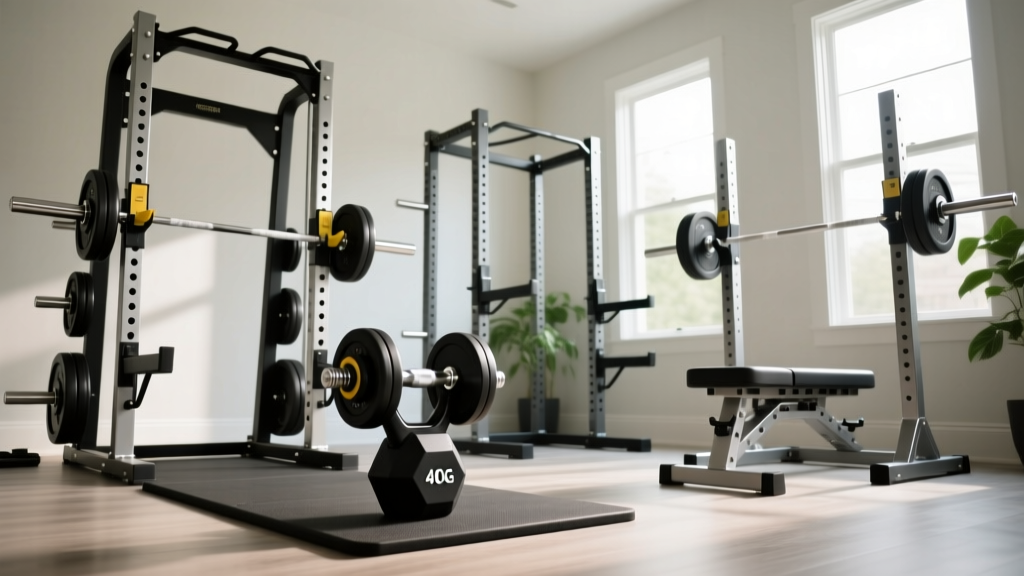
Power Rack vs Squat Rack vs Stand: Reverse Lunge Single Dumbbell
Compare power racks, squat racks, and squat stands for 2026. Discover the best setup for heavy squats and the reverse lunge single dumbbell.

The 2026 Home Gym Dilemma: Beyond the Barbell Back Squat
When outfitting a home gym in 2026, the conversation around squat racks has evolved. It is no longer just about accommodating a 400-pound barbell back squat. Modern functional training demands versatile stations that support heavy unilateral movements, dynamic kettlebell flows, and asymmetrical loading. One of the most demanding tests of a rack's spatial design and safety features is the reverse lunge single dumbbell variation. Whether performed as a heavy suitcase hold or an offset goblet lunge, this movement requires unobstructed backward clearance, precise safety spotter placement, and a stable base that won't tip if a 100-pound dumbbell is dropped abruptly.
In this head-to-head comparison, we dissect the Power Rack, the Squat Rack (Half Rack), and the Squat Stand. We will evaluate their footprints, structural integrity, and real-world viability for both maximal barbell lifts and functional unilateral exercises.
Expert Insight: According to biomechanical data from ExRx.net, the dumbbell lunge places immense shear force on the knee and requires significant core stabilization. Failing a heavy single-dumbbell reverse lunge doesn't just mean dropping the weight; it often involves a lateral collapse. Your rack setup must account for off-center weight dumps, not just vertical barbell drops.Head-to-Head Specification Matrix
Before diving into the biomechanics of the reverse lunge, let us establish the baseline specifications for premium-tier racks in the current market.
| Feature | Power Rack (Full Cage) | Squat Rack (Half Rack) | Squat Stands |
|---|---|---|---|
| Standard Footprint | 47" x 47" (e.g., REP PR-4000) | 48" x 24" (e.g., Titan T-2) | 23" x 23" per stand (Independent) |
| Steel Gauge (2026 Std) | 11-Gauge 3x3" Steel | 11-Gauge 2x2" or 3x3" | 11-Gauge 2x2" or 3x3" |
| Weight Capacity | 1,000+ lbs | 600 - 800 lbs | 500 - 800 lbs |
| Safety Mechanism | Enclosed Pin-Pipe or Flip-Down | Extended Spotter Arms | Independent Spotter Arms (Trip Hazard) |
| Avg. Price Range | $500 - $950 | $350 - $650 | $180 - $350 |
Power Racks: The Ultimate Safe Haven (With Spatial Caveats)
The power rack remains the gold standard for safety. Models like the Rogue RML-390F or the REP Fitness PR-4000 utilize 3x3-inch 11-gauge steel and 5/8-inch hardware, providing a rock-solid enclosure. For heavy barbell squats, the enclosed cage allows you to fail a rep safely in any direction.
The Reverse Lunge Single Dumbbell Test
Where the power rack faces a challenge is spatial awareness during dynamic movements. When executing a heavy reverse lunge single dumbbell movement—such as a 90-pound suitcase lunge—your center of gravity shifts dramatically backward.
- The 24-Inch Depth Problem: If you use a shallow 24-inch deep power rack, stepping backward into a lunge will immediately place you outside the protective safety spotter arms. If you lose your balance and drop the dumbbell, you are entirely unprotected.
- The 41-Inch Depth Solution: Deeper cages (like the REP PR-4000 at 41 inches) keep you inside the safety zone. However, the rear uprights become a tripping hazard. Stepping back 3 feet into a deep lunge risks kicking the rear steel posts, which can cause a severe ankle roll or ruin the biomechanics of the rep.
Verdict: Power racks are unbeatable for barbell safety, but they require meticulous spotter arm placement and spatial awareness for heavy unilateral dumbbell lunges.
Squat Racks (Half Racks): The Functional Middle Ground
Half racks, such as the Titan Fitness T-2 Series or the Rogue SML-2, feature two main front uprights and an open-front design, often paired with rear weight storage horns. This design fundamentally changes how you interact with the space.
Why Half Racks Excel at Unilateral Work
The open-front architecture is highly advantageous for the reverse lunge single dumbbell variation. Because there are no rear uprights, you have an infinite backward runway to step into your lunge. You can comfortably step back 4 to 5 feet without fear of tripping over steel posts.
Furthermore, the rear weight storage horns serve a dual purpose: they act as a counterbalance, allowing the rack to remain stable even when heavy safety spotter arms are extended forward to catch a dropped dumbbell or a failed barbell.
Pro-Tip for Half Rack Owners: When performing offset dumbbell lunges inside a half rack, set your safety spotter arms at the lowest possible pin position (just above the floor). This creates a 'catch net' for a dropped heavy dumbbell without interfering with your foot placement or the downward trajectory of your knee.
Squat Stands: Minimalist, But Are They Safe?
Squat stands, like the Rogue SML-1 or budget-friendly options from Fitness Reality, consist of two independent uprights. They are incredibly popular for apartment gyms, garages with low ceilings, and budget-conscious lifters. Priced between $180 and $300, they offer an excellent entry point for barbell training.
The Danger Zone for Dumbbell Lunges
While squat stands are adequate for bench presses and controlled squats (when bolted to a platform), they are fundamentally flawed for heavy, dynamic unilateral exercises.
- Independent Spotter Arms: To use safety arms with independent stands, you must either buy stands with integrated catch bars (which are often too high to protect a lunge) or use a separate crossmember. A crossmember placed near the floor becomes a massive trip hazard when stepping backward into a lunge.
- Balance Failure: According to guidelines from the National Strength and Conditioning Association (NSCA), unilateral loading requires intense core stabilization. If you fail a heavy single-dumbbell reverse lunge and fall laterally, independent stands offer zero lateral protection or structural support to grab onto.
2026 Buyer's Decision Framework
Choosing the right rig requires matching your primary training modalities to your available square footage. Use this framework to make your final decision:
Step 1: Measure Your Clearance
Do you have at least 8 feet of clear, unobstructed floor space in front of and behind the rack?
If No: Look at 24-inch deep Power Racks or Squat Stands (but limit heavy lunging).
If Yes: Proceed to Step 2.
Step 2: Evaluate Your Unilateral Volume
Do you frequently program heavy reverse lunge single dumbbell variations, Bulgarian split squats, or kettlebell swings?
If Yes: A Half Rack (Squat Rack) is your optimal choice. The open front allows for backward stepping, and the extended spotter arms protect against dropped weights.
If No (Strictly Barbell Powerlifting): A 41-inch deep Power Rack provides the ultimate safety for heavy squats and bench presses.
Step 3: Assess Budget and Anchoring
Can you bolt your equipment to a wooden platform or concrete floor?
If Yes: Squat Stands become a viable, budget-friendly option for general fitness.
If No: You must purchase a full Power Rack or a Half Rack with rear weight storage to ensure the unit does not tip during racking/ unracking or dynamic movements.
Frequently Asked Questions
Can I perform dumbbell lunges outside the rack entirely?
Yes, but as you progress to heavier loads (e.g., 80+ lb dumbbells), the risk of wrist strain and grip failure increases. Dropping a heavy hex dumbbell from shoulder height can damage your flooring and the dumbbell itself. Utilizing the interior space of a Half Rack with low safety arms allows you to train to failure safely.
Does Westside hole spacing matter for lunges?
Westside spacing (1-inch hole spacing in the lower bench/lunge zone) is critical for barbell bench presses and low-box squats. For standing dumbbell lunges, standard 2-inch spacing is perfectly adequate, as you are setting the safety arms near the floor to catch a dropped weight, not to catch a barbell mid-rep.
What is the best flooring for heavy dumbbell lunges inside a rack?
Avoid standing directly on bare concrete or rigid rubber tiles. For heavy reverse lunges, use a 3/4-inch thick horse stall mat over a plywood subfloor. This provides the necessary shock absorption for your knee when it grazes the floor at the bottom of the lunge, while maintaining enough density to prevent the dumbbell from bouncing unpredictably if dropped.
More gear to consider
All reviews
Best Adjustable Dumbbells for Arm and Shoulder Exercises

Barbell Collar Types Compared: Squats to Dumbbell Shrugs Form

2026 Adjustable Dumbbell Review & Biceps Dumbbell Exercises Chart
Collar Clamp Types: Safety for Lower Back Dumbbell Exercises
Barbell Collar Comparison: Beyond the Basic Dumbbell Graphic
