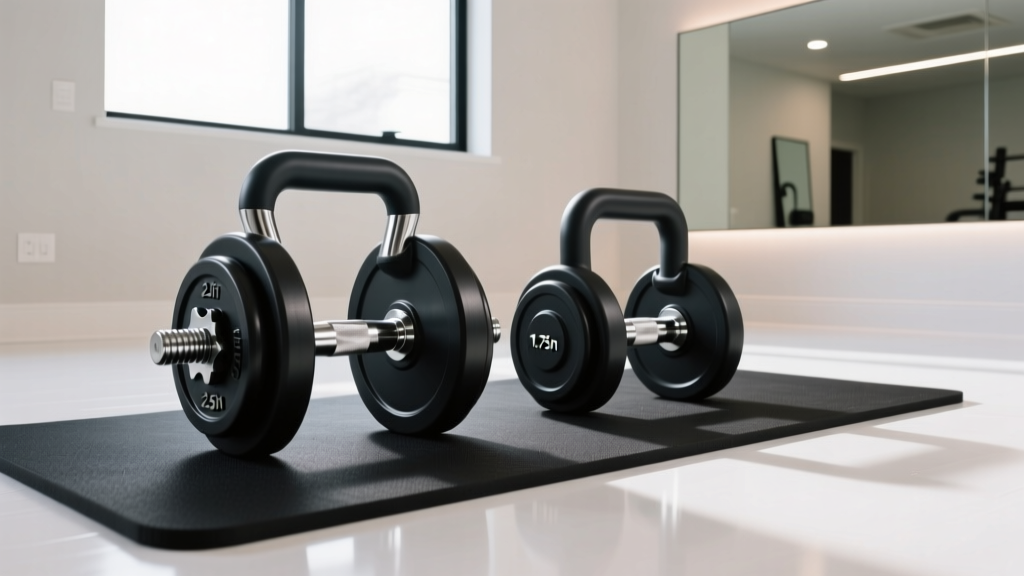
Olympic vs Standard Plates: Neutral Grip Dumbbell Shoulder Press Guide
Discover how Olympic vs standard plates impact your neutral grip dumbbell shoulder press. Compare loadable handles, sleeve rotation, and 2026 costs.

When advancing your overhead pressing strength, the neutral grip dumbbell shoulder press is a staple for targeting the anterior and medial deltoids while minimizing shoulder impingement. However, as you push past the 50-pound mark per hand, fixed-weight dumbbells and standard adjustable selectors often fall short. This forces serious lifters to explore loadable dumbbell handles, bringing up a critical equipment crossroads: should you invest in 1-inch standard plates or 2-inch Olympic plates?
This in-depth buying guide breaks down the biomechanical, financial, and structural differences between Olympic and standard weight plates specifically through the lens of the neutral grip overhead press.
The Biomechanics of the Neutral Grip Press
According to exercise kinesiology data from ExRx.net, the neutral grip (palms facing each other) alters the activation profile of the shoulder press. It places greater emphasis on the anterior deltoid and the upper clavicular head of the pectoralis major compared to a pronated (palms forward) grip. More importantly, it opens the subacromial space, reducing the risk of supraspinatus tendon impingement during heavy concentric drives.
Expert Insight: The neutral grip requires your wrists to remain perfectly stacked over your elbows. Any rotational torque from the dumbbell handle will force your wrist into ulnar or radial deviation, leaking power and increasing injury risk under heavy loads.Standard vs. Olympic Plates: Core Specifications
Before analyzing how these plates interact with dumbbell handles, we must establish the baseline differences in manufacturing, tolerance, and material density.
| Feature | 1-Inch Standard Plates | 2-Inch Olympic Plates |
|---|---|---|
| Center Hole Diameter | 1 inch (25.4 mm) | 2 inches (50.8 mm) |
| Weight Tolerance | +/- 5% to 10% | +/- 1% to 3% (Calibrated) |
| Common Materials | Cast Iron, Cement/Vinyl | Cast Iron, Urethane, Rubber |
| Max Load per Dumbbell | ~45-60 lbs (Sleeve space limited) | 100+ lbs (with fractional plates) |
| Average Cost per Pound | $1.00 - $1.50 | $2.00 - $4.50 |
The Dealbreaker: Sleeve Rotation and Wrist Torque
The most critical factor for the neutral grip dumbbell shoulder press is not the plate itself, but the handle the plate slides onto. This is where the Olympic vs. Standard debate is decisively won.
1-Inch Standard Spin-Lock Handles
Standard dumbbell handles (like the ubiquitous 14-inch spin-lock models) feature fixed sleeves. The cast iron sleeve is a single solid piece of steel with the grip. When you load a 10-pound standard plate onto the sleeve and press it overhead, the rotational inertia of the plate is transferred directly to your wrist. During the sticking point of a heavy shoulder press, your body naturally wants to micro-rotate the humerus to find mechanical leverage. A fixed sleeve fights this, placing immense shearing force on the radiocarpal joint.
2-Inch Olympic Loadable Handles
High-quality Olympic loadable dumbbell handles, such as the Rogue Loadable Dumbbell Handles, are engineered with internal bronze bushings or needle bearings. This allows the 2-inch sleeve to rotate independently of the grip. When you perform a heavy neutral grip press, the plates can spin freely, accommodating the natural rotational arc of your shoulder joint while your wrist remains locked in a safe, neutral position.
Plate Profile: The Clank Factor at Lockout
A common failure mode when using loadable dumbbells for overhead pressing is premature plate collision at the top of the movement. The neutral grip requires the dumbbells to track closely together over the crown of the head to achieve full adduction and peak deltoid contraction.
- Standard Plates: Often feature wide, raised lips and painted finishes that chip easily. A pair of 25-pound standard plates can easily add 6 inches of width to each side of the handle, causing the dumbbells to collide before your arms reach full extension.
- Olympic Urethane Plates: Urethane Olympic plates are incredibly dense and feature flat, narrow profiles. You can stack multiple 10-pound or 5-pound Olympic fractional plates tightly against the collar, keeping the overall footprint compact and allowing for a complete range of motion without the distracting collision at lockout.
The Role of Fractional Plates in Overhead Progression
The shoulder press is notoriously difficult to progress linearly compared to the squat or deadlift. Moving from a 40-pound to a 45-pound dumbbell press represents a massive 12.5% jump in total load, which often leads to stalled progress or form breakdown. This is where the plate ecosystem matters immensely.
Standard plate sets rarely include increments smaller than 2.5 pounds, and finding 1.25-pound standard plates with a true 1-inch hole is incredibly difficult in the modern market. Conversely, the Olympic ecosystem is rich with fractional options. You can easily source 0.5 lb, 1 lb, and 1.25 lb Olympic change plates. By utilizing micro-loading on your Olympic loadable handles, you can add just 1 pound per dumbbell each week. This technique, known as micro-progression, is essential for advanced lifters trying to break through a plateau on the neutral grip shoulder press without compromising the strict biomechanics of the movement.
2026 Cost Breakdown: Building Your Overhead Press Arsenal
If you are building a home gym specifically optimized for heavy dumbbell pressing in 2026, here is the financial reality of both pathways.
Path A: The Standard Setup (Budget Friendly)
- Pair of 14-inch Standard Spin-Lock Handles: $45
- 200 lbs of Cast Iron Standard Plates: $220
- Standard Spin-Lock Collars: $15
- Total Investment: ~$280
Path B: The Olympic Setup (Performance Optimized)
- Pair of Olympic Loadable Handles (Bushing/Bearing): $195
- 200 lbs of Urethane Olympic Grip Plates: $550
- Pair of Quick-Release Aluminum Collars: $45
- Total Investment: ~$790
Step-by-Step: Loading and Executing the Heavy Neutral Press
Once you have selected your plate and handle system, proper loading and execution are paramount for safety and hypertrophy.
- Calculate and Balance: Always load symmetrically. If using Olympic handles, place the largest diameter plates closest to the inner collar to minimize sleeve flex.
- Secure the Collars: For standard spin-locks, tighten the star nut until the plate is immobile. For Olympic handles, use quick-release clamp collars tightened flush against the plate to prevent lateral shifting during the press.
- The Clean to Shoulder: With loadable dumbbells, the clean is harder than with hex dumbbells. Hinge at the hips, drive through the floor, and aggressively pull the handles to your shoulders, ensuring your wrists immediately settle into the neutral (palms in) position.
- The Press: Keep your elbows tucked at roughly a 30-degree angle from your torso (the scapular plane). Drive vertically, allowing the Olympic sleeves to rotate naturally as you approach lockout.
Final Verdict: Which Plate Type Wins?
If your primary goal is general fitness and you are pressing under 40 pounds per hand, 1-inch standard plates paired with spin-lock handles offer an unbeatable budget-friendly entry point. However, for serious hypertrophy, strength athletes, and anyone prioritizing joint longevity, 2-inch Olympic plates loaded onto rotating-sleeve handles are the undisputed champion. The independent sleeve rotation eliminates wrist torque, the urethane profiles prevent lockout collisions, and the precise weight tolerances ensure balanced bilateral development during the neutral grip dumbbell shoulder press.
More gear to consider
All reviews
Are 20 Pound Dumbbells Good for Building Muscle? The Loadable Fix
Collar Comparison: Fixing Dumbbell Farmers Carry & Squat Mistakes

Power Rack vs Squat Rack vs Squat Stand: Incline Dumbbell Curl Setup

Dumbbell Lake Layout: Olympic vs Standard Plate Rack Setup

Power Rack vs Squat Stand: SA Dumbbell Bench Press Setups
