Olympic vs Standard Plates: How Many Calories Do Dumbbell Curls Burn
Learn the differences between Olympic and standard weight plates for your home gym, plus discover how many calories do dumbbell curls burn.

The Great Home Gym Debate: 1-Inch vs 2-Inch Holes
Building your first home gym is an exciting milestone, but navigating the free weights aisle can quickly become overwhelming. One of the very first decisions you will face when buying weight plates is choosing between 'Standard' and 'Olympic' sizing. This choice dictates not only the plates you buy but the barbells, dumbbell handles, and storage racks you will use for years to come. In this step-by-step beginner guide, we will break down the exact hardware specifications, real-world failure modes, and current pricing to help you make the right choice. Finally, once your gear is set up, we will cover how to plan your first arm day and answer a frequent beginner question: how many calories do dumbbell curls burn?
Step 1: Understand the Hardware Specs
The fundamental difference between these two categories comes down to the center hole diameter and the corresponding barbell sleeve size.
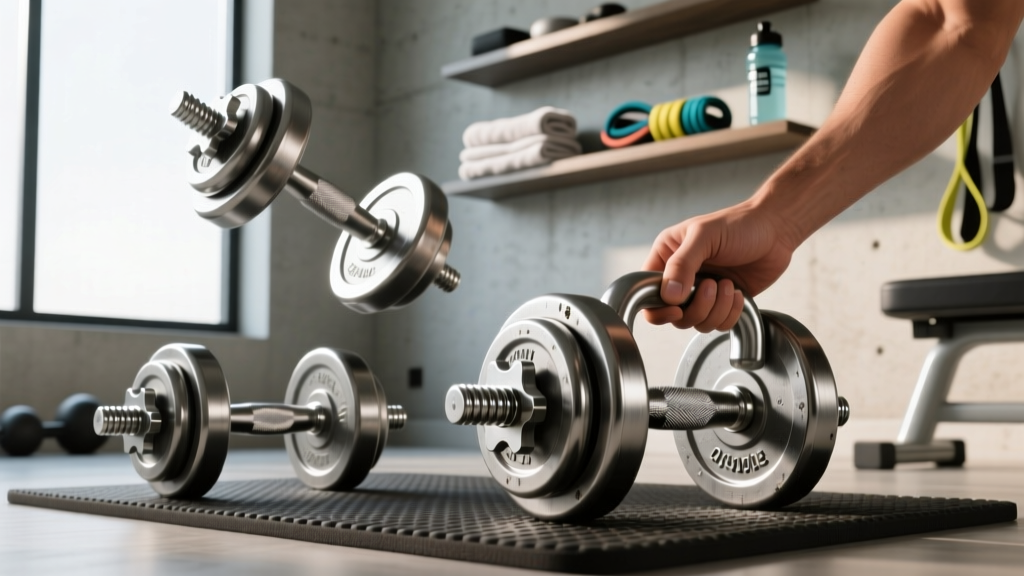
- Standard Plates: These feature a 1-inch (25.4mm) center hole. They are designed to slide onto standard barbells and dumbbell spin-lock handles. The plates themselves are typically 11 to 13 inches in diameter, regardless of weight.
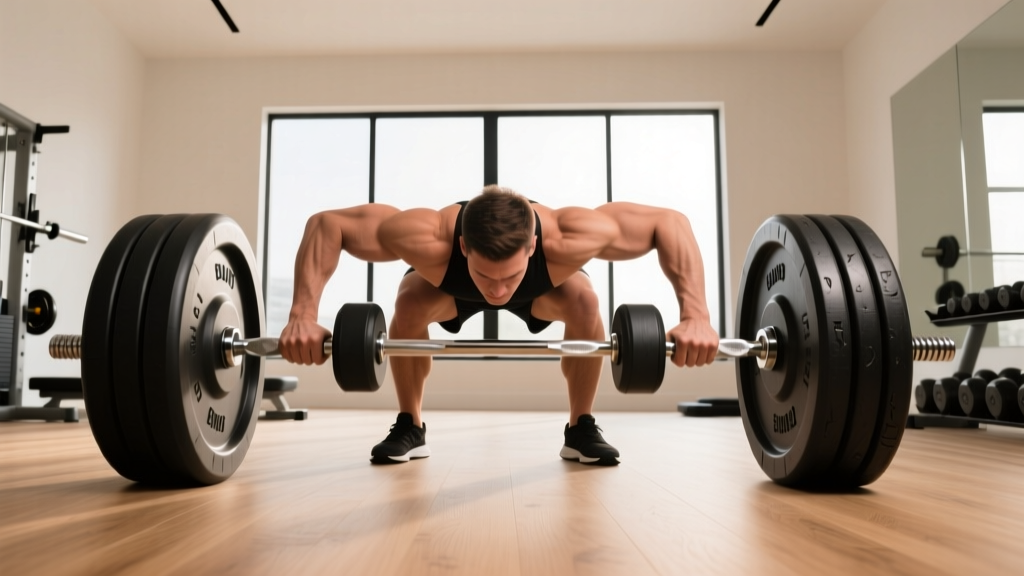
- Olympic Plates: These feature a 2-inch (50.8mm) center hole, engineered to fit the thick, rotating sleeves of Olympic barbells. A defining characteristic of Olympic plates—especially bumper plates—is that they share a uniform diameter of 17.7 inches (450mm) across all weights, from 10 lbs to 45 lbs.
Standard barbells are generally made from lower-grade steel. If you load a standard 1-inch barbell past 200–250 lbs, the bar is highly likely to experience plastic deformation (permanent bending). Olympic bars, like the Rogue Ohio Power Bar, are rated for 1,500+ lbs of tensile and yield strength. If you plan on deadlifting or squatting heavy, Olympic is non-negotiable.
Step 2: Evaluate Budget and Failure Modes
As of 2026, the price gap between standard and Olympic plates has narrowed slightly due to global shipping adjustments, but Olympic gear remains a premium investment. Here is what you need to know about the real-world costs and how these plates actually fail over time.
Standard Plates: The Budget Option
You can typically find standard cast iron plates (like the CAP Barbell H-101 series) for $1.00 to $1.50 per pound. Many big-box stores also sell vinyl-coated standard plates filled with cement. While cheap ($0.80/lb), cement-filled plates have a notorious failure mode: the vinyl shell eventually cracks, and the internal cement degrades or leaks, ruining your gym floor and altering the plate's weight distribution.
Olympic Plates: The Lifetime Investment
Olympic cast iron plates generally cost $2.00 to $3.00 per pound, while high-density rubber or urethane bumper plates range from $3.50 to $6.00+ per pound. The most common failure mode for cheap Olympic bumpers is the steel center insert popping out after repeated drops. Always look for plates with hooked or welded steel inserts, such as those found on Titan Fitness Elite Bumpers or Rogue Echo Bumpers.
Step 3: The Cost & Durability Matrix
| Feature | Standard (1-Inch) | Olympic (2-Inch) |
|---|---|---|
| Avg. Cost Per Pound | $0.80 - $1.50 | $2.00 - $6.00 |
| Max Safe Barbell Load | ~250 lbs | 500 - 1,500+ lbs |
| Drop Tolerance | Very Low (Cast Iron Chips) | High (If Bumper Plates) |
| Resale Value | Low | High (Holds 70%+ value) |
Step 4: Plan Your First Workout & Calorie Math
Once your plates and dumbbells are unboxed, it is time to put them to work. Beginners often gravitate toward isolation movements like bicep curls to test out their new gear. This brings up a very common fitness question: how many calories do dumbbell curls burn?
To calculate this accurately, exercise physiologists use METs (Metabolic Equivalent of Task). According to the Harvard T.H. Chan School of Public Health, general weightlifting has a MET value of roughly 3.0 to 6.0, depending on the intensity and rest periods.
Calculating the Burn
Dumbbell curls are an isolation exercise, meaning they recruit a relatively small muscle mass (the biceps brachii and brachialis) compared to compound movements like squats. Therefore, they sit on the lower end of the MET scale (around 3.5 METs).
The Formula: Calories Burned = (METs x 3.5 x Body Weight in kg) / 200 x Minutes Active.
If a 155 lb (70 kg) individual performs moderate-intensity dumbbell curls with strict form, they will burn approximately 4 to 5 calories per minute of active lifting. If your arm workout consists of 4 sets of 12 reps, taking about 6 minutes of total active lifting time (excluding rest), you will burn roughly 25 to 30 calories from the curls alone.
For a deeper dive into energy expenditure during resistance training, the National Strength and Conditioning Association (NSCA) notes that while isolation movements burn fewer calories per minute than compound lifts, they are crucial for targeted hypertrophy and joint stabilization in beginners.
Step 5: Storage and Future-Proofing Your Rack
Your choice of plates dictates your storage solutions. Standard plates are usually stored on A-frame racks or simple wall pegs. Because standard plates vary wildly in diameter (a 2.5 lb plate might be 6 inches wide, while a 25 lb plate is 12 inches), organizing them can be visually chaotic.
Olympic plates, particularly bumpers, are uniform in diameter. This allows for sleek, vertical plate trees or wall-mounted cradles. If you purchase an Olympic power rack (like the REP Fitness PR-4000), it will include built-in 2-inch storage pegs, keeping your gym floor clear and safe. Future-proofing your gym means accepting the higher upfront cost of Olympic gear; attempting to adapt 1-inch standard plates to a serious powerlifting routine is a frustrating edge case that often results in buying a completely new set of weights within two years.
Frequently Asked Questions
Can I use standard plates on an Olympic bar?
No. Standard plates have a 1-inch hole and will not fit over the 2-inch sleeves of an Olympic barbell. However, you can buy cheap plastic 'adapter sleeves' that slide onto an Olympic bar to reduce the diameter to 1 inch, allowing you to use standard plates temporarily.
Are standard dumbbells okay for beginners?
Yes. If you are just starting and lifting under 50 lbs per hand, standard spin-lock dumbbell handles with 1-inch plates are a highly cost-effective way to build a home gym. Just be aware that the spin-lock collars can loosen during dynamic movements like lunges or snatches.
Do heavier dumbbell curls burn significantly more calories?
Marginally. While lifting a heavier weight requires more acute muscular force, the overall systemic caloric expenditure remains tied to your heart rate and the duration of the set. To increase calorie burn, focus on compound movements like dumbbell thrusters or walking lunges rather than simply increasing the weight on your curls.
More gear to consider
All reviews
Power Rack vs Squat Rack vs Stand: Mistakes for Biceps Exercises with Dumbbells
How to Use Dumbbells Effectively: Loadable Dumbbell Maintenance
Bumper vs Iron Plates & Standing Abs Workout with Dumbbells

Top Adjustable Dumbbells for a Quad Workout With Dumbbells: Setup

Life Fitness Dumbbell Set Value: Rubber Hex vs Urethane