
Olympic vs Standard Plates: Upgrading Calves Exercises Beyond Dumbbells
Compare Olympic vs standard weight plates. Discover why upgrading your calves exercises from dumbbells to plate-loaded machines maximizes lower-leg growth.

The Grip Bottleneck: Why Dumbbells Fail Heavy Calf Training
When building a home gym, most lifters begin their lower-leg journey searching for the best calves exercises dumbbells can support. Single-leg dumbbell calf raises are a fantastic starting point for neuromuscular activation and basic tendon conditioning. However, the gastrocnemius and soleus muscles are incredibly dense, load-bearing tissues designed to move your entire body weight thousands of times a day. To force hypertrophy, they require extreme mechanical tension.
If your current regimen of calves exercises relies on dumbbells, you will eventually hit a loading ceiling. Holding two 100-pound dumbbells for high-rep calf raises taxes your forearm flexors and grip strength long before your calf muscles reach true mechanical failure. According to Schoenfeld et al.'s comprehensive meta-analysis on resistance training volume and hypertrophy, maximizing muscle growth in highly resilient muscle groups requires progressive overload that often exceeds what grip strength can sustain with free weights. This bottleneck forces serious lifters to transition to plate-loaded calf machines or barbell setups, bringing us to the ultimate home gym equipment debate: Olympic vs. standard weight plates.
Head-to-Head: Standard vs. Olympic Weight Plates
Before investing in a dedicated seated or standing calf machine, you must understand the foundational differences between the two primary weight plate standards. The choice you make here will dictate the safety, longevity, and expandability of your entire free weight setup.
Standard Weight Plates
Standard plates feature a 1-inch (25.4mm) center hole. They are typically manufactured from cast iron or, in cheaper commercial sets, a cement-vinyl composite. Standard bars and machines are generally rated for lower weight capacities, often maxing out between 200 and 300 pounds before the bar itself begins to bend or the sleeves warp.
Olympic Weight Plates
Olympic plates feature a 2-inch (50.8mm) center hole and are built to withstand the immense forces of heavy compound lifting. Constructed from precision steel, virgin rubber, or urethane, Olympic plates are paired with heavy-duty bars and machines featuring rotating sleeves with high-tensile steel shafts. They are the undisputed standard for commercial gyms and serious home setups.
Specification & Compatibility Matrix
| Feature | Standard Plates (1-Inch) | Olympic Plates (2-Inch) |
|---|---|---|
| Center Hole Diameter | 1 inch (25.4mm) | 2 inches (50.8mm) |
| Common Materials | Cast Iron, Cement/Vinyl | Steel, Urethane, Virgin Rubber |
| Weight Accuracy | +/- 5% to 10% | +/- 1% to 3% (Calibrated) |
| Max Sleeve Load | 200 - 300 lbs | 500 - 1,500+ lbs |
| Avg. Price Per Pound (2026) | $1.20 - $1.60 / lb | $2.50 - $4.00 / lb |
| Calf Machine Compatibility | Poor (Requires Adapters) | Excellent (Native Fit) |
The Calf Machine Compatibility Test
The most critical factor in the Olympic vs. standard debate for lower-leg training is equipment compatibility. Nearly all dedicated, heavy-duty calf machines on the market in 2026—from the Rogue Fitness plate-loaded line to the Body-Solid Pro Club series—are engineered with 2-inch Olympic sleeves.
The biomechanics of a heavy seated calf raise generate immense lateral sheer force against the machine's pivot points and loading pins. Standard plates simply will not fit on these machines natively. While you can purchase '1-inch to 2-inch' plastic or aluminum sleeve adapters online, using them on a calf machine is a severe safety hazard.
⚠️ SAFETY WARNING: The Adapter HazardNever use standard-to-Olympic adapters for heavy, dynamic, or high-torque movements like calf raises or squats. Under 400+ pounds of axial and lateral load, cheap aluminum adapters can crack, warp, or slip off the sleeve entirely, resulting in a catastrophic drop of the weight stack directly onto your heels or Achilles tendon.
2026 Market Pricing & Specific Models
When budgeting for your lower-leg training upgrade, consider the long-term cost per pound. While standard plates are cheaper upfront, they represent a dead-end investment if you plan to progress to heavy machine work.
- CAP Barbell Standard Cast Iron: Averaging $1.40/lb in 2026. Excellent for budget-friendly dumbbell replacements and basic barbell work, but entirely incompatible with modern calf machines.
- Titan Fitness Urethane Olympic Grips: Averaging $2.60/lb. Urethane is highly recommended for home gyms as it does not degrade, smell, or mark floors like cheap rubber. The integrated grips make loading heavy seated calf machines significantly easier.
- Rogue Echo Bumper Plates: Averaging $3.25/lb. While primarily designed for Olympic drops, their dead-blow rubber construction minimizes noise when loading and unloading plate-loaded standing calf machines in a garage gym.
Programming Calves: Gastrocnemius vs. Soleus
Understanding why you need heavy Olympic plates requires a brief anatomy lesson. The calf is composed of two primary muscles, each requiring different equipment setups and rep ranges:
- The Gastrocnemius: The large, visible diamond-shaped muscle. It crosses the knee joint, meaning it is maximally stretched and activated during straight-leg exercises (like standing barbell calf raises or standing machine raises). The gastroc responds best to heavy, low-rep overload (6-10 reps), demanding the massive 400+ lb capacities that only Olympic plates and heavy-duty bars can safely provide.
- The Soleus: The wider, flatter muscle underneath the gastroc. It does not cross the knee, meaning it is isolated during bent-knee exercises (like seated calf raises). The soleus is highly endurance-oriented and responds best to higher rep ranges (15-25 reps) with moderate weight, making plate-loaded seated machines loaded with Olympic plates the gold standard.
Whether using dumbbells or an Olympic plate-loaded machine, eliminate the Achilles tendon's stretch reflex. Pause for a full 2 seconds at the bottom of every calf raise to dissipate elastic energy, forcing the muscle belly to initiate the concentric lift. This single technique tweak yields more hypertrophy than simply adding more weight.
The Decision Framework: Which Should You Buy?
Use this framework to finalize your purchasing decision based on your current training age and home gym footprint.
Buy Standard Plates If:
- You are strictly limited to a budget under $150 for your entire weight set.
- You only have space for a lightweight, 1-inch solid steel barbell and a pair of adjustable dumbbell handles.
- You are a beginner who has not yet exhausted the progressive overload potential of single-leg dumbbell calf raises.
Buy Olympic Plates If:
- You are investing in a dedicated seated or standing calf machine (which will require 2-inch sleeves).
- You regularly squat or deadlift over 225 pounds and need equipment that matches your growing strength.
- You want the flexibility to use modern urethane or bumper plates that protect your home gym flooring.
Frequently Asked Questions
Can I just hold heavy dumbbells while sitting on a bench for seated calf raises?
Yes, but it is highly inefficient. Balancing heavy dumbbells on your knees for seated calf raises is awkward, limits your range of motion, and poses a risk of the dumbbell slipping and damaging your patella. A plate-loaded seated calf machine with Olympic weights secures the load via a padded lever arm, allowing you to push to absolute failure safely.
Are vinyl-cement standard plates worth it for calf training?
No. Vinyl-cement plates are incredibly bulky. A 25-pound cement plate can be twice the diameter of a 25-pound cast iron plate. This excessive bulk limits how many plates you can fit on a machine's loading pin or barbell sleeve, artificially capping your maximum weight for heavy gastrocnemius training.
Do I need calibrated Olympic plates for calf exercises?
Calibrated plates (accurate to within 10 grams) are reserved for competitive powerlifting and Olympic weightlifting. For calf hypertrophy, standard cast iron or urethane Olympic plates with a +/- 3% variance are more than sufficient and will save you hundreds of dollars.
More gear to consider
All reviews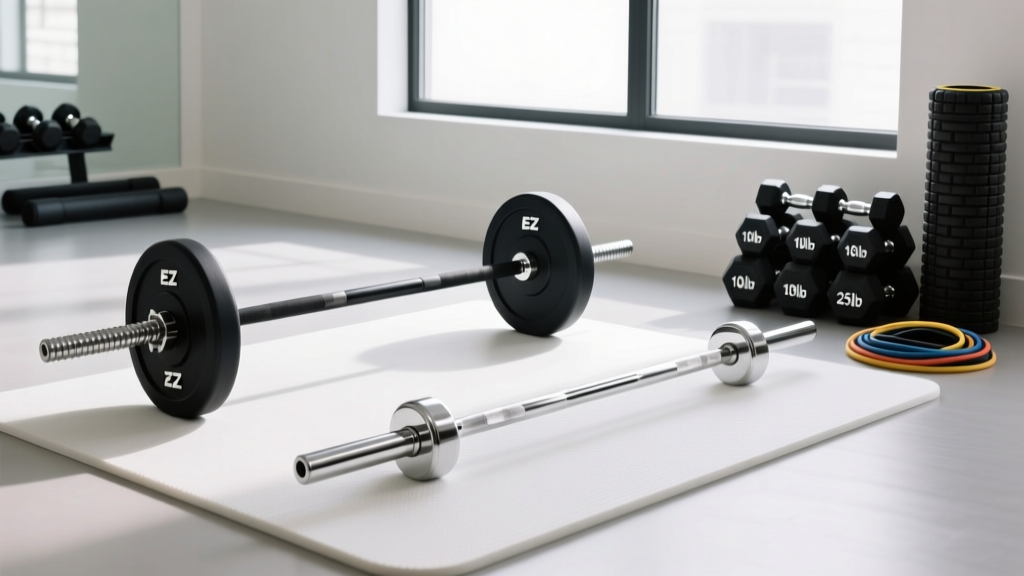
EZ Bar vs Straight Bar: Upgrading Your Dumbbell Workout Split

EZ Curl Bar vs Straight Bar & Shoulder Training with Dumbbells
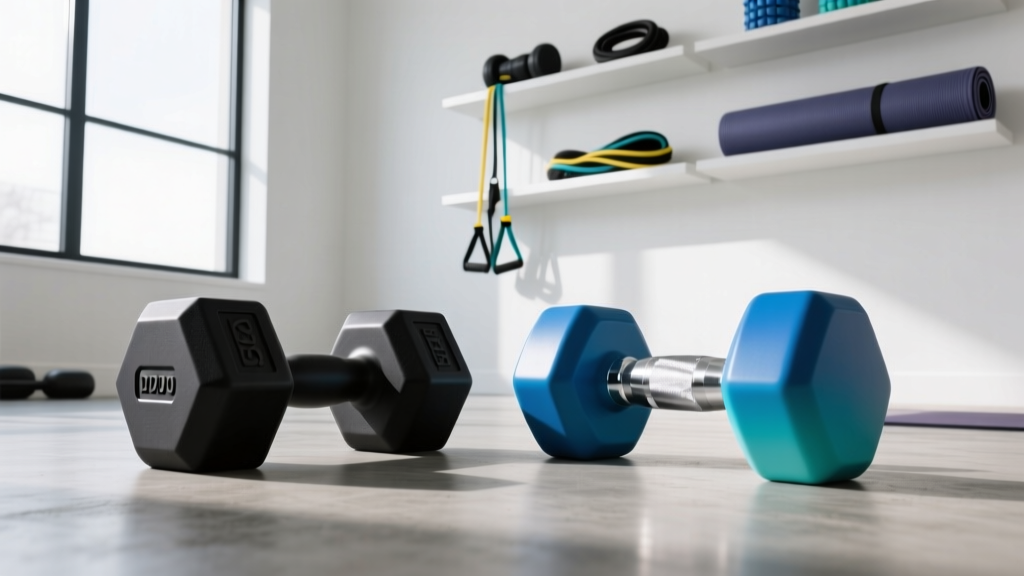
Rubber Hex vs Urethane: 2026 Gear for Lateral Pulls with Dumbbells

Cast Iron vs Competition Kettlebells for a Men's Dumbbell Workout

Best Storage Racks for Dumbbell Exercises for Love Handles
