
Barbell Collar and Clamp Types Comparison & Arm Blaster Dumbbell Curls
Master barbell collar and clamp types comparison to prevent plate shift. We troubleshoot clamping mistakes and contrast arm blaster dumbbell curls.

The Biomechanics of Plate Shift: Barbell vs. Dumbbell Isolation
When troubleshooting bicep isolation exercises, lifters often focus entirely on form, neglecting the hardware that keeps them safe. A catastrophic collar failure during a heavy barbell curl doesn't just ruin a set; it creates an immediate asymmetric load that can lead to severe distal bicep tendon tears or wrist sprains. According to safety guidelines from the National Strength and Conditioning Association (NSCA), collars must be used on all barbell lifts to prevent asymmetric loading and subsequent joint trauma.
Many lifters pivot from straight-bar barbell curls to arm blaster dumbbell curls to eliminate the wrist supination torque and medial epicondylitis associated with fixed straight bars. The arm blaster—an aluminum or rigid plastic curved plate worn around the neck—anchors the elbows forward, forcing strict isolation. However, if you are performing arm blaster dumbbell curls with adjustable plate-loaded dumbbells, the necessity of understanding collar mechanics becomes even more critical. Dumbbell sleeves are significantly shorter than a 7-foot Olympic barbell. A sliding plate on a dumbbell alters the center of mass instantly, creating severe valgus stress on the elbow joint mid-rep.
Barbell Collar and Clamp Types Comparison Matrix
Not all collars are created equal. The market is flooded with cheap spring clips that offer negligible lateral resistance. Below is a comprehensive comparison of the primary collar types available in 2026, detailing their mechanical limits and failure modes.
| Collar Type | Mechanism | Avg Lateral Force | Price Range (2026) | Best Application | Primary Failure Mode |
|---|---|---|---|---|---|
| Spring Clip | Coiled Steel Tension | ~35 lbs | $10 - $15 | Light accessories, warm-ups | Spring fatigue / stretching over time |
| Lever Clamp (e.g., Lock-Jaw) | Nylon/Plastic Lever | ~120 lbs | $25 - $40 | General hypertrophy, dumbbells | Plastic cracking in cold environments |
| Aluminum Grip (e.g., Rogue MG-15) | CNC Aluminum Lever | ~180 lbs | $45 - $55 | Heavy eccentric curls, powerlifting | Knurling damage to barbell sleeve |
| Competition Spinlock | Threaded Steel Screw | ~250+ lbs | $80 - $100 | Olympic lifting, max effort | Thread stripping if cross-threaded |
Troubleshooting the 3 Most Common Clamping Mistakes
Even with premium equipment, user error leads to plate shift. Here is how to troubleshoot the most frequent mistakes encountered in both commercial and garage gyms.
Mistake 1: Relying on Spring Clips for Rotational Lifts
Spring clips rely on basic tensile strength. While they might hold a plate during a linear movement like a deadlift, exercises involving rotational torque—like strict barbell curls or Zottman curls—generate centrifugal force that easily overcomes 35 lbs of lateral pressure. Troubleshooting fix: Ban spring clips from your arm day. Upgrade to a lever-based system that physically locks against the sleeve.
Mistake 2: Ignoring Sleeve Tolerance and Knurling Debris
A standard Olympic sleeve is nominally 50mm in diameter. However, manufacturing tolerances mean sleeves can range from 49.5mm to 50.2mm. Equipment testing by BarBend demonstrates that rigid aluminum collars can fail to latch on a 50.2mm sleeve, or slide freely on a 49.5mm sleeve if the inner padding is worn. Furthermore, chalk and metal shavings from knurled sleeves build up inside the collar's rubber gasket, reducing friction.
⚠️ WARNING: Cold Garage Gym FailuresIf you train in an unheated garage gym during winter, avoid nylon or hard plastic lever clamps. Polymers become brittle at temperatures below 40°F (4°C). The sudden shock of dropping a loaded dumbbell after a heavy set of arm blaster dumbbell curls can cause a frozen plastic lever to shatter, releasing the plates.
Mistake 3: Misaligning the Lever on Adjustable Dumbbells
When setting up adjustable dumbbells for isolation work, lifters often slap the collar on at an angle to save time. If the lever is not seated perfectly parallel to the plate, the cam mechanism only bites the sleeve on one side, reducing clamping force by up to 60%.
Premium Clamp Models: Deep Dive and Real-World Pricing
To achieve true E-E-A-T (Experience, Expertise, Authoritativeness, and Trustworthiness) in your equipment selection, you must look at specific, proven models rather than generic categories.
- Rogue MG-15 Monster Grips ($45 - $55): Machined from 6061 billet aluminum, these are the gold standard for heavy lifters. Manufacturers like Rogue Fitness engineer these to accommodate standard 50mm Olympic sleeves with a proprietary rubber pad that grips without scratching. They are ideal for heavy barbell curls where plate rattle can break your mind-muscle connection.
- Lock-Jaw Pro ($30 - $40): A glass-reinforced nylon clamp that uses a dual-lever system. These are exceptionally popular for adjustable dumbbells used in arm blaster dumbbell curls because they are lightweight and don't add excessive bulk to the short sleeve of a dumbbell handle.
- Eleiko Olympic Training Collars ($85 - $95): Featuring a precision-machined steel locking screw and an ergonomic T-handle. These are overkill for standard curls but are necessary if you are incorporating heavy rotational cleans or high-velocity movements into your regimen.
Transitioning to Arm Blaster Dumbbell Curls for Joint Safety
Why do so many advanced lifters abandon the barbell curl in favor of the arm blaster? The straight barbell forces the wrists into full supination while the elbows are pinned to the sides. This unnatural biomechanical alignment places immense shear stress on the medial epicondyle (the inner elbow).
The arm blaster apparatus solves the 'cheating' problem of the barbell curl without locking the wrists into a fixed supinated position. By using adjustable dumbbells with the arm blaster, you can adopt a neutral (hammer) grip or a semi-supinated grip, drastically reducing elbow torque.
'The arm blaster effectively turns the upper arm into a fixed lever, mimicking the strictness of a preacher curl but allowing for natural wrist rotation. However, because the elbows are locked forward, any lateral weight shift from a loose dumbbell collar is immediately magnified, transferring directly into the elbow joint rather than being absorbed by the torso.'
Therefore, when setting up for arm blaster dumbbell curls, you must use high-tolerance lever clamps (like the Lock-Jaw Pro) and perform a 'shake test' before initiating the first rep.
Step-by-Step Collar Maintenance Protocol
To ensure your hardware remains safe through years of heavy hypertrophy cycles, implement this 3-step maintenance routine:
- Weekly Solvent Wipe: Use a rag lightly dampened with isopropyl alcohol to wipe down the inner rubber gaskets of your aluminum or lever clamps. This removes chalk dust and oxidized metal shavings that act as lubricants.
- Monthly Tension Check: Attach the collar to an unloaded barbell sleeve. Attempt to slide it using only your thumb and forefinger. If it moves with less than 20 lbs of pressure, the internal spring or lever cam is fatigued and must be replaced.
- Annual Sleeve Inspection: Check your barbell and dumbbell sleeves for deep grooves. Aggressive aluminum collars can eventually wear down the zinc or chrome plating on a barbell sleeve, creating a 'track' that allows plates to slide more easily over time.
Final Verdict: Securing the Lift
Whether you are loading up a 7-foot Olympic bar for heavy eccentric negatives or dialing in your adjustable dumbbells for strict arm blaster dumbbell curls, the collar is your primary fail-safe against asymmetric joint loading. Ditch the spring clips, invest in CNC aluminum or reinforced nylon lever clamps, and respect the manufacturing tolerances of your sleeves. In the world of free weights, hardware failure is entirely preventable—provided you understand the mechanics of your clamps.
More gear to consider
All reviews
Barbell Collars: Secure Your Back and Bicep Dumbbell Workout Setup

Power Rack vs Squat Rack Setup: Tricep Workout With One Dumbbell

Standing Military Press with Dumbbells vs. Olympic Barbell Knurling

Space-Saving Supported Dumbbell Row: Loadable Dumbbell Guide
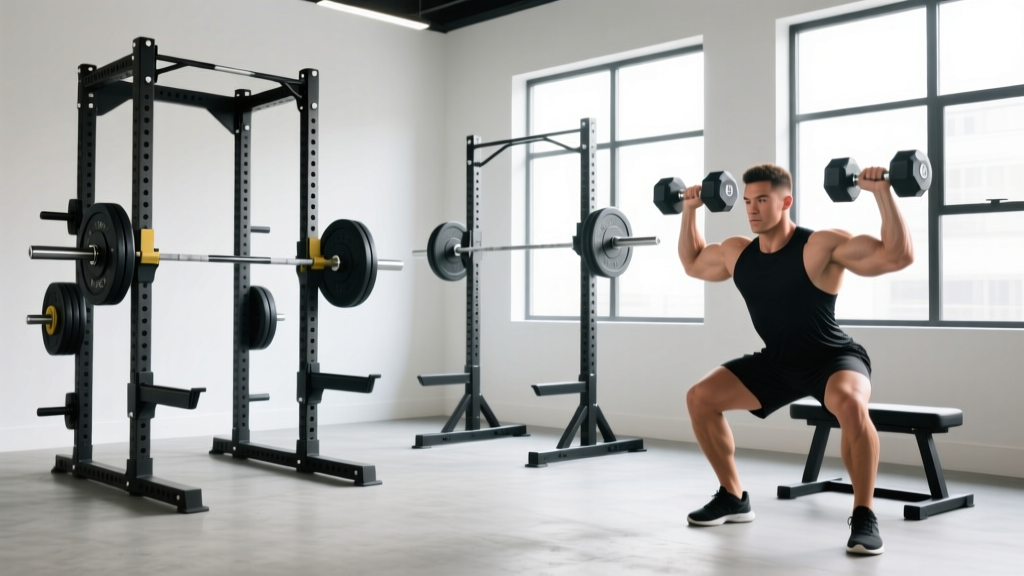
Power Rack vs Squat Rack vs Stand: Plus Easy Dumbbell Arm Workout
