Olympic vs Standard Plates: Best Brachialis Exercises with Dumbbells
Compare Olympic vs standard plates for loadable dumbbells, and master the best brachialis exercises with dumbbells to build thicker arms in 2026.

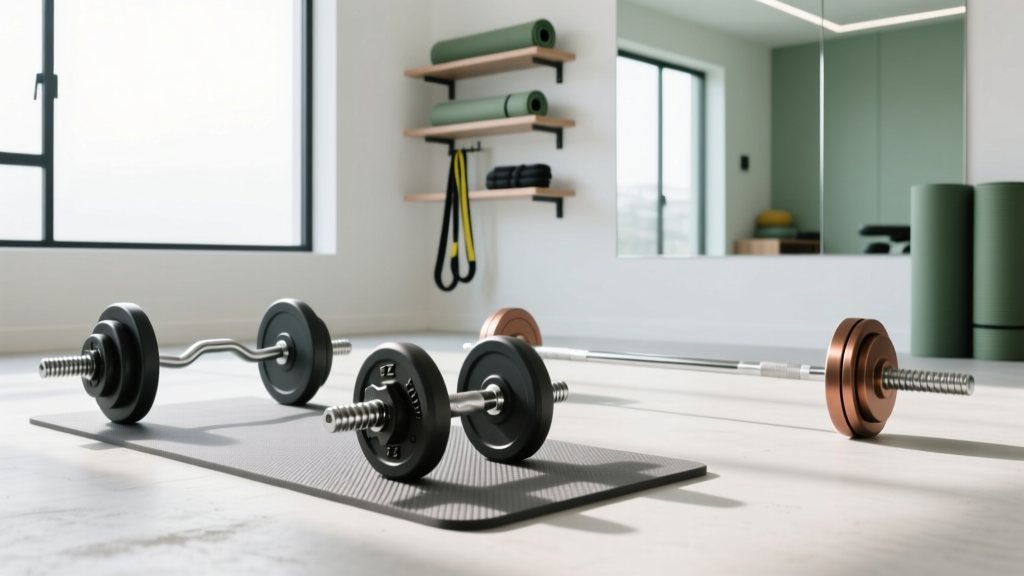
The Loadable Dumbbell Dilemma: Olympic vs. Standard Plates
When outfitting a home gym for serious arm development, the conversation usually gravitates toward fixed dumbbells or expensive adjustable selectorized sets. However, for lifters who prioritize micro-loading and heavy, unrestrictive range of motion, loadable dumbbell handles remain the gold standard. But this brings up a critical gear decision: should you pair your handles with standard 1-inch plates or Olympic 2-inch plates?
This choice directly impacts your biomechanics, especially when performing targeted brachialis exercises with dumbbells. The brachialis—the thick muscle sitting directly beneath the biceps brachii—requires strict, uninterrupted elbow flexion to grow. If your weight plates are too bulky, they will physically block your range of motion. In this 2026 head-to-head gear guide, we break down the exact differences between standard and Olympic weight plates for loadable dumbbells, and how to leverage your chosen setup for maximum brachialis hypertrophy.
Head-to-Head: Standard vs. Olympic Plate Specifications
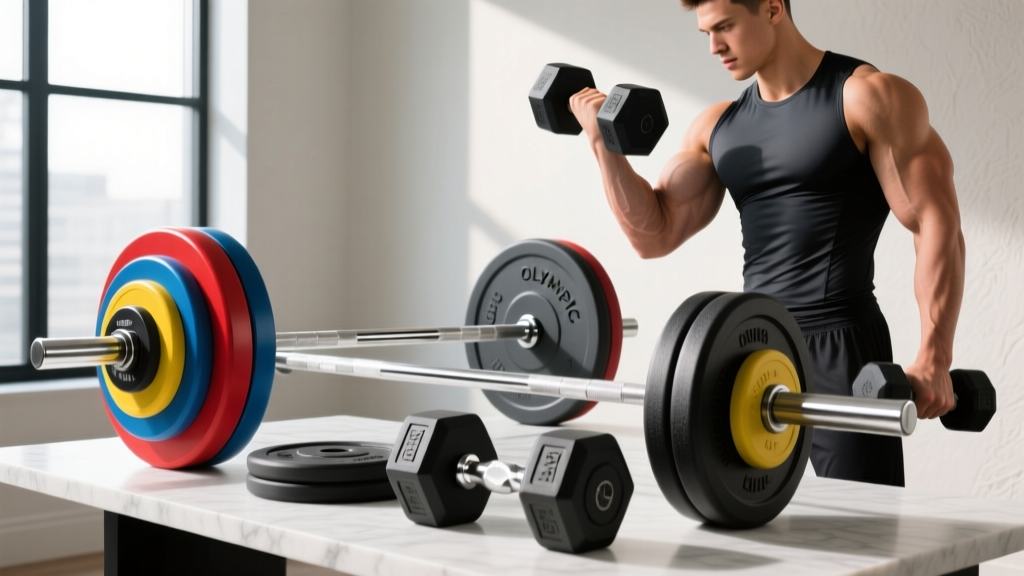
Before diving into exercise selection, we must understand the physical footprint of the gear. Standard plates (1-inch center hole) and Olympic plates (2-inch center hole) differ vastly in diameter, sleeve compatibility, and cost. Here is how the top 2026 market options compare for dumbbell loading:
| Feature | Standard Cast Iron (1-Inch) | Olympic Urethane/Iron (2-Inch) |
|---|---|---|
| Center Hole | 1 inch (25.4 mm) | 2 inches (50.4 mm) |
| Handle Max Capacity | ~60 - 80 lbs per hand | 120 - 165+ lbs per hand |
| 10 lb Plate Diameter | ~6.5 inches | ~9.0 inches (or wider) |
| Avg. Cost Per Pound (2026) | $1.20 - $1.80 / lb | $2.80 - $4.50 / lb |
| Best For | Isolation, Hammer Curls, Budget Gyms | Heavy Pressing, Elite Loadable Setups |
⚠️ The "Thigh-Strike" Edge Case
Here is a non-obvious real-world insight that most gear reviewers miss: plate diameter dictates exercise viability. A standard 10 lb cast iron plate is roughly 6.5 inches in diameter. An Olympic 10 lb plate is often 9 inches or more to maintain structural integrity around the 2-inch steel hub. When performing hammer curls, wide Olympic plates will prematurely strike your quadriceps, robbing you of the bottom 15% of the stretch. For dedicated brachialis exercises with dumbbells, standard plates or specialized Olympic fractional plates are vastly superior to preserve your full range of motion.
Biomechanics of the Brachialis: Why Grip Matters
According to the ExRx.net Muscle Directory, the brachialis is the primary flexor of the elbow joint. Unlike the biceps brachii, which acts as both a flexor and a supinator, the brachialis is a pure hinge flexor. It does not care about wrist rotation; it only cares about elbow bending.
However, because the biceps brachii is mechanically disadvantaged when the forearm is pronated (palms down) or neutral (palms facing each other), utilizing these grips forces the brachialis to take over the lion's share of the load. Research published in the National Center for Biotechnology Information (NCBI) regarding muscle activation and hypertrophy confirms that altering grip orientation is one of the most effective ways to target specific synergistic muscle groups. Loadable dumbbells are perfect for this because you can adjust the weight in micro-increments, ensuring the brachialis is pushed to true mechanical failure without the biceps compensating.
Top Brachialis Exercises with Dumbbells (Optimized for Loadable Handles)
Using your loadable dumbbell setup, here are the three most effective movements for brachialis hypertrophy. Note the specific gear recommendations for each.
1. The Cross-Body Hammer Curl
Instead of curling the dumbbell straight up, you curl it diagonally across your torso toward the opposite shoulder. This places the brachialis in a highly shortened, cramping position at the top of the movement while maintaining a neutral wrist.
- Setup: Neutral grip (palms facing each other).
- Gear Note: Use Standard 1-inch plates. If you use wide Olympic plates, they will clash together at the top of the movement or hit your chest, ruining the peak contraction.
- Execution: 3 sets of 10-12 reps. Pause for 1 full second at the top, squeezing the outer arm.
2. Seated Pronated Reverse Curls
By flipping the grip so the palms face the floor, you entirely remove the biceps brachii from the movement equation. The brachialis and brachioradialis are left to move the load alone.
- Setup: Pronated grip (palms facing down). Seated on an incline bench set to 60 degrees to prevent cheating.
- Gear Note: Keep the weight light. The brachialis is strong, but the wrist extensors will fatigue first. Use fractional plates (0.5 lb to 1.25 lb) to micro-load this movement over a 6-week mesocycle.
- Execution: 4 sets of 12-15 reps. Control the eccentric (lowering) phase for a full 3 seconds.
3. Neutral-Grip Zottman Curl (Modified)
The traditional Zottman curl involves curling up with a supinated grip and lowering with a pronated grip. For pure brachialis focus, we modify this by keeping the lift in a neutral (hammer) position, and only rotating to pronated on the way down.
- Setup: Start neutral, rotate to pronated at the top, lower slowly.
- Gear Note: Loadable dumbbell handles with smooth rotating sleeves are mandatory here. If your plate collars are locked down too tightly or the handle sleeve doesn't spin, the rotational torque will wreck your wrists. Olympic handles with bushings or bearings excel here, provided you use low-profile bumper or urethane plates.
- Execution: 3 sets of 8-10 reps. Focus heavily on the 4-second pronated eccentric.
Micro-Loading: The Secret to Arm Growth
The ACE Fitness Exercise Library emphasizes the importance of progressive overload for all muscle groups, but isolation movements like brachialis curls require incredibly small weight jumps. Adding 5 lbs to a curl is a massive 10-15% increase in total load, which often leads to form breakdown and momentum-based cheating.
This is where your plate ecosystem matters. Standard 1-inch fractional plates (like the 1.25 lb or 2.5 lb varieties from CAP Barbell) are cheap, widely available, and compact. Olympic fractional plates (like Rogue's LB Fractional Plates) are beautifully machined but cost significantly more and take up more sleeve space. If your primary goal for loadable dumbbells is arm isolation, investing in a high-quality set of standard 1-inch micro-plates will yield better long-term progression than buying heavy Olympic bumpers.
Expert Verdict: Which System Should You Buy?
If you are building a home gym in 2026 and want a versatile setup that allows for heavy pressing and precise brachialis exercises with dumbbells, here is the ultimate decision framework:
- Choose Standard (1-Inch) If: Your budget is under $200, your primary focus is bodybuilding isolation, and you want to ensure plates never interfere with your range of motion during hammer and reverse curls. Buy a pair of solid 14-inch steel standard handles and 150 lbs of cast iron plates.
- Choose Olympic (2-Inch) If: You are an advanced powerlifter or strongman who also wants to do arm work. You will need to purchase specialized, low-profile Olympic grip plates or fractional plates to avoid the "thigh-strike" issue during curls. Expect to spend $150+ on handles (like the Titan Fitness Olympic Loadable Handles) and $300+ on plates.
Ultimately, the brachialis responds best to strict tension, deep stretches, and controlled eccentrics. By matching the right weight plate profile to your loadable dumbbell handles, you eliminate physical interference and allow the muscle to do exactly what it was designed to do: flex the elbow and push your biceps peaks to new heights.
More gear to consider
All reviews
Bowflex SelectTech Dumbbells with Stand Setup & Barbell Clamp Guide
2026 Market Trends: Storage Racks for Dumbbells and Barbells

Olympic Barbell Buying Guide: Knurling & Lateral Burpees Over Dumbbell

Bumper vs Iron Plates Value & Deltoid Workouts with Dumbbells

Neoprene Sets for a Shoulder Workout With Dumbbells for Women