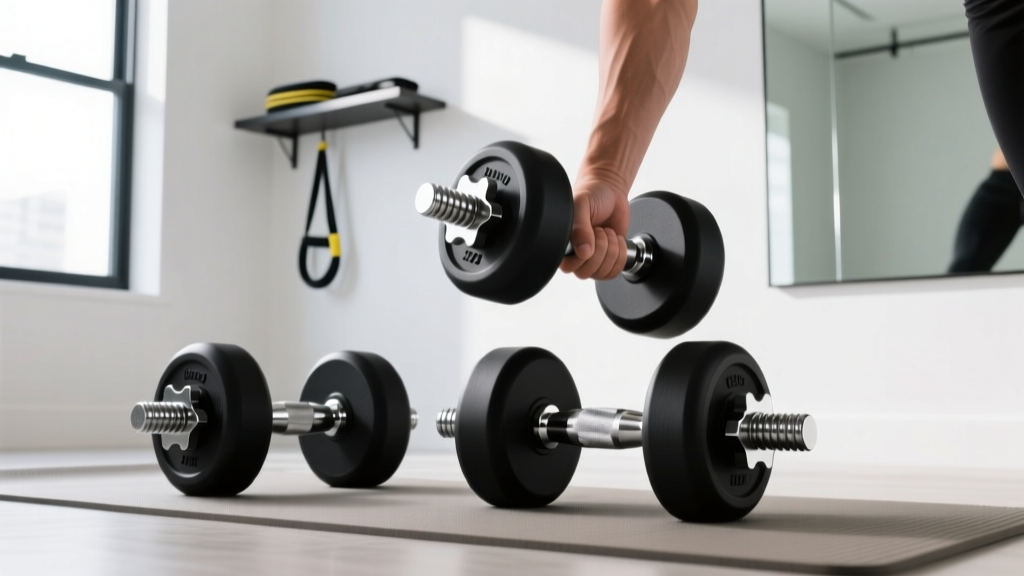
Best Adjustable Dumbbells for Dumbbell Reverse Flys: 2026 Guide
Discover the best adjustable dumbbells for dumbbell reverse flys in 2026. We compare handle ergonomics, micro-loading, and rear delt isolation.

The Biomechanics of Dumbbell Reverse Flys and Gear Selection
When targeting the posterior deltoids, the dumbbell reverse flys movement is a staple in both bodybuilding and physical rehabilitation programs. However, because the rear delts are a relatively small muscle group, they require precise micro-loading and strict isolation to achieve hypertrophy without recruiting the larger latissimus dorsi or trapezius muscles. According to the ExRx biomechanics database, the primary function of the posterior deltoid is horizontal abduction, meaning the resistance curve peaks when the arms are fully extended laterally.
This biomechanical reality creates a unique challenge for home gym owners using adjustable dumbbells. Most adjustable sets are designed for heavy compound presses, jumping in 5lb or 10lb increments. But for dumbbell reverse flys, a 5lb jump from 15lbs to 20lbs represents a massive 33% increase in load—often leading to form breakdown, momentum cheating, and shoulder impingement. Furthermore, the physical dimensions of the dumbbell handle and the weight blocks can interfere with the natural arc of the movement, causing the weights to clank together at the peak contraction or dig into your wrists during a pronated grip.
In this 2026 in-depth buying guide, we evaluate the top adjustable dumbbells on the market specifically through the lens of isolation movements, rear-delt micro-loading, and ergonomic handle design.
2026 Adjustable Dumbbell Comparison Matrix
Below is our proprietary comparison matrix evaluating the top three adjustable dumbbells for isolation work. We have scored each model based on its suitability for dumbbell reverse flys, factoring in weight increments, handle length, and wrist ergonomics.
| Model (2026) | Weight Increments | Handle Length | Max Weight | Approx. Price | Fly-Suitability Score |
|---|---|---|---|---|---|
| Nuobell 50lb | 5 lbs | 14.5 inches | 50 lbs | $349 / pair | 8.5 / 10 |
| PowerBlock Elite USA | 2.5 lbs (with adders) | 12.0 inches | 50 lbs | $389 / pair | 9.0 / 10 |
| Bowflex SelectTech 552 | 2.5 lbs (up to 25lbs) | 15.7 inches | 52.5 lbs | $399 / pair | 7.0 / 10 |
In-Depth Reviews: Top Picks for Isolation Movements
1. PowerBlock Elite USA: The Micro-Loading Master
For strict isolation work like dumbbell reverse flys, the PowerBlock Elite USA remains the undisputed champion of micro-loading. Rear delts respond best to higher rep ranges (15-25 reps) and precise progressive overload. The PowerBlock system includes a 2.5lb "adder weight" pin that slides into the core of the dumbbell, allowing you to make 2.5lb jumps (e.g., 12.5lbs, 15lbs, 17.5lbs). This level of granularity is virtually impossible to find in competing twist-dial models.
The Ergonomic Trade-off: The PowerBlock's signature rectangular cage design is incredibly durable and compact (only 12 inches long), which completely eliminates the "clanking" issue at the top of a reverse fly. However, the cage restricts wrist supination and pronation. If you prefer to perform your reverse flys with a strictly pronated (palms facing down) grip, the edges of the urethane cage can press against the lateral aspect of your wrist at the peak of the concentric phase. We recommend using a neutral grip (palms facing each other) or a semi-pronated grip to bypass this edge case.
- Pros: Unmatched 2.5lb micro-loading; compact footprint prevents weight collision; 15-year warranty.
- Cons: Cage shape restricts full wrist rotation; grip thickness feels slightly blocky.
2. Nuobell 50lb: The Ergonomic Champion
If handle feel and traditional biomechanics are your top priorities, the Nuobell 50lb is the closest an adjustable dumbbell gets to a commercial-grade hex dumbbell. The handle features a mild, well-placed knurling pattern that grips the calluses of your palm without tearing the skin during high-rep lateral and reverse flys. The 14.5-inch total length provides enough clearance for most lifters to execute a full range of motion without the weight blocks colliding at the top of the movement.
The Increment Drawback: The Nuobell utilizes a smooth twist-lock mechanism that only adjusts in 5lb increments. As noted by the National Strength and Conditioning Association (NSCA), small muscle groups require smaller load progressions to avoid plateauing or tendon strain. Jumping from 15lbs to 20lbs on a reverse fly can be jarring for beginners. To mitigate this, we recommend utilizing drop-sets or manipulating the tempo (e.g., 4-second eccentrics) to increase time-under-tension without needing to increase the physical load.
- Pros: Feels exactly like a standard dumbbell; excellent knurling; fast and quiet adjustments.
- Cons: 5lb minimum increments are too large for advanced rear-delt isolation; 2-year warranty is relatively short.
3. Bowflex SelectTech 552: The Increment King with a Footprint Flaw
The Bowflex SelectTech 552 offers a brilliant compromise for the first half of its weight range. From 5lbs up to 25lbs, the dials allow for 2.5lb increments, making it an exceptional tool for rehabilitation and beginner rear-delt development. The weight distribution is surprisingly balanced, and the ABS plastic casing is relatively quiet when setting the weights down on a bench.
The Spatial Issue: The major flaw of the Bowflex 552 for dumbbell reverse flys is its excessive length. At 15.7 inches, the dumbbells are nearly 4 inches longer than standard fixed dumbbells. When you bring your arms together at the peak contraction of a chest-supported reverse fly, the plastic dials and weight plates will inevitably collide, robbing you of the final 10% of the range of motion and potentially damaging the dial mechanism over time. If you choose the Bowflex, you must intentionally stop the concentric phase just short of the midline to protect the gear.
⚠️ Biomechanical Warning: Shoulder ImpingementWhen performing dumbbell reverse flys, avoid internally rotating the shoulder (pouring out the pitcher) at the top of the movement. According to the American Council on Exercise (ACE), excessive internal rotation under load severely narrows the subacromial space, drastically increasing the risk of supraspinatus impingement. Keep the thumb slightly higher than the pinky throughout the arc of motion to maintain a safe joint capsule.
Form Troubleshooting: Adapting to Adjustable Bells
Because adjustable dumbbells have different centers of gravity and physical profiles compared to fixed cast-iron bells, your form must adapt to the equipment. Here is a step-by-step framework to optimize your reverse flys based on the gear you select:
- The Chest-Supported Setup: Set an adjustable bench to a 30-to-45-degree incline. Lay face down. This eliminates lower-back momentum, which is crucial when using bulky adjustable dumbbells that can swing unpredictably if you use a bent-over standing position.
- The Grip Adjustment: If using PowerBlocks, adopt a neutral grip (thumbs pointing forward) to avoid the cage digging into your wrist. If using Nuobells or Bowflex, you can safely use a pronated grip (palms down) to maximize posterior deltoid stretch.
- The Scapular Retraction: Before initiating the lift, retract your shoulder blades slightly. However, do not pinch them together so hard that your rhomboids take over the lift. The goal is to stabilize the scapula so the rear delt acts as the primary horizontal abductor.
- The Eccentric Control: Lower the weights for a full 3 seconds. Adjustable dumbbells can feel "clunky" on the way down; controlling the eccentric phase prevents the weight plates from rattling and keeps continuous tension on the muscle fascia.
"The rear deltoid is a postural muscle that responds exceptionally well to metabolic stress and time-under-tension. Ego-lifting with heavy, 50lb adjustable dumbbells on reverse flys almost always shifts the load to the mid-traps. Stick to the 15-25lb range, focus on the 2.5lb micro-progressions, and let the burn dictate the set."
Final Verdict: Which Set Should You Buy?
Choosing the right adjustable dumbbell for dumbbell reverse flys ultimately depends on your current strength level and your tolerance for equipment quirks.
If you are an intermediate to advanced lifter who requires 2.5lb micro-loading to progressively overload the rear delts without hitting a plateau, the PowerBlock Elite USA is the definitive 2026 winner. The ability to add 2.5lbs to a 17.5lb reverse fly is a game-changer for hypertrophy, and the compact 12-inch footprint ensures your form is never compromised by clanking weight plates.
However, if you prioritize handle ergonomics and traditional gym feel over micro-loading, and you primarily use the reverse fly as a metabolic finisher rather than a primary strength movement, the Nuobell 50lb is vastly superior. The knurled steel handle and natural weight distribution allow for a mind-muscle connection that the caged competitors simply cannot replicate.
Invest in the tool that matches your biomechanics, respect the small nature of the posterior deltoid, and your 2026 training blocks will yield the capped, 3D shoulders you are looking for.
More gear to consider
All reviews
Best Neoprene Dumbbells for Dumbbell Forward Lunges (2026)

Escaping the Dumbbell Nebula: Bumper Plate vs Iron Plate Space Guide

Collars vs Clamps for Plate-Loaded Dumbbell Workouts Routine

Olympic vs Standard Plates for Lifts & Russian Twists with Dumbbells
Bumper vs Iron Plates: Trends Beyond the Dumbbell Hammer Curl Workout
