
Olympic vs Standard Plates: Sourcing Dumbbells in Spanish Markets
Compare Olympic vs standard weight plates. Expert specs, pricing, and a bilingual guide for sourcing mancuernas and dumbbells in Spanish markets.

When outfitting a home gym, commercial facility, or cross-border fitness studio, the choice between Olympic and standard weight plates dictates your entire equipment ecosystem. This decision becomes even more complex for bilingual gym owners, expats, and international buyers navigating diverse supply chains. If you have ever found yourself searching for mancuernas or dumbbells in Spanish markets to complete your setup, you already know that mixing incompatible sleeve diameters is a costly and frustrating mistake. In this comprehensive head-to-head comparison, we break down the exact specifications, material sciences, failure modes, and 2026 pricing structures of Olympic versus standard plates to help you build a bulletproof free weight arsenal.
The Core Dimensional Divide: 50mm vs 25mm
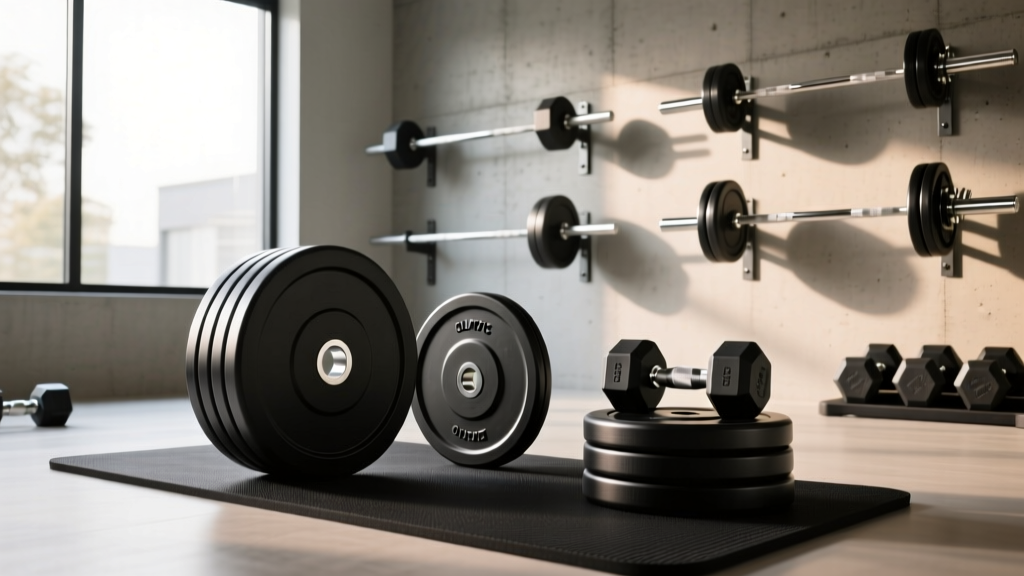
The most fundamental difference between the two systems lies in the sleeve diameter of the barbells and dumbbell handles they are designed to fit. Standard plates feature a 1-inch (25mm) center hole, while Olympic plates utilize a 2-inch (50mm) opening. This 25mm discrepancy is not merely a matter of sizing; it represents a completely different engineering philosophy regarding load distribution, rotational physics, and tensile strength.
📐 Quick Spec Callout: The Engineering Gap
- Standard Sleeves: 25mm diameter. Typically solid steel or chrome-plated, lacking rotational mechanics.
- Olympic Sleeves: 50mm diameter. Engineered with internal bushings or needle bearings to allow the sleeve to rotate independently of the shaft during dynamic lifts like cleans and snatches.
Because standard bars lack rotational sleeves, the torque generated during explosive movements transfers directly into the lifter's wrists and the bar's structural integrity. Conversely, Olympic bars absorb this rotational force, protecting both the athlete and the hardware from catastrophic failure.
Head-to-Head Comparison Matrix
Below is a detailed breakdown comparing the two systems across critical performance and purchasing metrics, including the essential Spanish terminology required for international sourcing.
| Feature | Olympic System (50mm) | Standard System (25mm) | Spanish Terminology |
|---|---|---|---|
| Sleeve Diameter | 2 inches (50mm) | 1 inch (25mm) | Diámetro del manguito |
| Bar Tensile Strength | 190,000+ PSI | Under 100,000 PSI | Resistencia a la tracción |
| Max Safe Load | 500 - 1,500+ lbs | 150 - 250 lbs | Carga máxima |
| Primary Plate Materials | Urethane, Virgin Rubber, Calibrated Steel | Basic Cast Iron, Cement-filled Plastic | Materiales de los discos |
| Avg. Price Per Pound (2026) | $1.80 - $4.50 / lb | $1.10 - $1.60 / lb | Precio por libra |
| Dumbbell Handle Type | Solid Steel w/ Clamp Collars | Threaded Spinlock w/ Star Nuts | Mango de mancuerna |
Material Science and Durability Breakdown
When evaluating weight plates, the material dictates not only the lifespan of the equipment but also the acoustic and environmental impact on your gym space. Standard plates are overwhelmingly produced from basic cast iron or, in budget tiers, cement-filled PVC. While cast iron standard plates are incredibly cheap—often hovering around $1.20 per pound—they are prone to chipping, rusting, and creating massive noise pollution when dropped.
The Urethane Advantage in Olympic Plates
In the Olympic ecosystem, premium manufacturers have largely shifted toward virgin urethane. According to specifications from industry leaders like Rogue Fitness, high-quality urethane plates boast a Shore A durometer rating between 85 and 90. This specific density provides a dead bounce that protects flooring and equipment racks while completely eliminating the noxious off-gassing of volatile organic compounds (VOCs) commonly associated with cheap recycled rubber. In 2026, expect to pay between $2.80 and $4.50 per pound for top-tier urethane Olympic plates, a justified investment for commercial environments.
Calibrated Steel for Precision
For powerlifting and competition prep, calibrated steel Olympic plates are the gold standard. Brands like Eleiko machine these plates to a strict +/- 10-gram tolerance. Standard plates, by contrast, can legally vary by up to 5% in weight, meaning a standard 45 lb plate could realistically weigh anywhere from 42 to 47 lbs, severely impacting progressive overload tracking.
The Dumbbell Connection: Sourcing Mancuernas Across Borders
For bilingual facility owners or expats building gyms in Latin America and Spain, searching for adjustable mancuernas or dumbbells in Spanish markets often reveals a highly fragmented supply chain. Many local distributors in these regions heavily stock 1-inch standard spinlock sets because they are cheaper to ship and appeal to casual home users. However, premium 2-inch Olympic dumbbell handles must often be special-ordered or imported.
Understanding this plate-to-handle ecosystem is critical. If you purchase Olympic plates but accidentally order standard dumbbell handles, your gear is instantly incompatible. Here is how the two dumbbell systems compare in real-world application:
- Standard Spinlock Handles: These feature threaded ends secured by a star nut. Failure Mode: Under loads exceeding 40 lbs per handle, the threads are highly susceptible to cross-threading or stripping, especially if the user drops the dumbbell and the nut absorbs the shock.
- Olympic Dumbbell Handles: These utilize smooth 50mm sleeves and require external clamp collars (like spring clips or machined aluminum clamps). Advantage: The solid steel shaft can easily support 100+ lbs per hand, and the rotating sleeve reduces wrist strain during heavy pressing movements.
"When importing gym gear across borders, always verify the center hole diameter in millimeters. Relying on translated terms like 'pesas grandes' (large weights) is a common procurement error that results in thousands of dollars of incompatible inventory."
Failure Modes and Edge Cases
Any seasoned gym owner knows that equipment doesn't just wear out; it fails in specific, predictable ways based on its engineering class.
- The Standard Bar 'Taco' Effect: Standard barbells and dumbbell handles are typically made from lower-grade steel. When loaded past 150 lbs on a barbell, the shaft will permanently bend (colloquially known as 'tacoing'). Once bent, the bar will never roll smoothly again and becomes a safety hazard.
- Rubber Degradation: If you opt for budget rubber-coated Olympic plates, be aware of hydrolysis. In humid environments (like coastal gyms in Florida or Spain), cheap rubber absorbs moisture over time, leading to a sticky, crumbling surface that ruins barbell knurling.
- Caliper Inaccuracies: Standard plates often have poorly machined center holes. If the hole is slightly under 25mm, forcing it onto a chrome standard bar will scrape the chrome finish, leading to rapid oxidation and rust on the barbell sleeves.
Cross-Border Buying Guide: Freight and Logistics
Weight plates are dense, making shipping costs a primary factor in your total investment. In 2026, LTL (Less Than Truckload) freight rates remain volatile. When sourcing equipment from US-based manufacturers to Mexico or Spain, buying standard plates is rarely cost-effective due to the high shipping-to-product cost ratio. It is almost always more economical to source heavy cast iron locally and import only the high-precision items—such as urethane-coated Olympic plates, calibrated steel, and specialized Olympic dumbbell handles—from international premium brands.
Expert Verdict: Which System Should You Build?
The choice between Olympic and standard is ultimately a decision between long-term scalability and short-term budget constraints. Standard plates and spinlock dumbbells are strictly for light-duty, casual home use where maximum loads will never exceed 100 lbs and space is severely limited. However, for any lifter focused on progressive overload, dynamic movements, or commercial durability, the Olympic system is the undisputed champion. The 50mm sleeve diameter, superior tensile strength, and availability of premium materials like virgin urethane ensure that your investment will outlast your lifting career. When sourcing internationally or navigating bilingual markets, always prioritize exact millimeter specifications over translated marketing terms to ensure your mancuernas and plates integrate flawlessly.
Frequently Asked Questions (FAQ)
Can I use an adapter to fit Olympic plates on a standard bar?
No. While you can buy plastic or aluminum adapters to fit standard 1-inch plates onto an Olympic 2-inch bar, the reverse is physically impossible. Furthermore, using adapters on Olympic bars adds sleeve length, altering the bar's whip and balance, and is generally discouraged for heavy lifting.
Why are Olympic dumbbell handles so much more expensive?
Olympic dumbbell handles require significantly more raw steel, precision machining for the rotational bushings, and specialized external collars. A pair of heavy-duty Olympic handles can cost $80 to $150, whereas standard spinlock handles often retail for under $25. However, the Olympic handles will never suffer from stripped threads and can safely hold 100+ lbs per hand.
What is the Spanish term for bumper plates?
When searching for Olympic bumper plates in Spanish markets or catalogs, the correct terminology is discos de caucho, discos olímpicos de goma, or simply bumpers (as the English term is widely adopted in CrossFit and weightlifting communities across Latin America and Spain).
More gear to consider
All reviews
Incline Dumbbell Hammer Curls: Rack vs Stand Setup Errors

Kettlebells vs Upper Body Dumbbell Workout for Beginners: 2026 Guide
Olympic vs Standard Plates: Dumbbell Exercises for Upper Body Strength

Barbell Collar Types and Adjusting Weight Dumbbells Setup Guide

Athletic Works Dumbbells vs. Loadable Dumbbells with Interchangeable Plates
