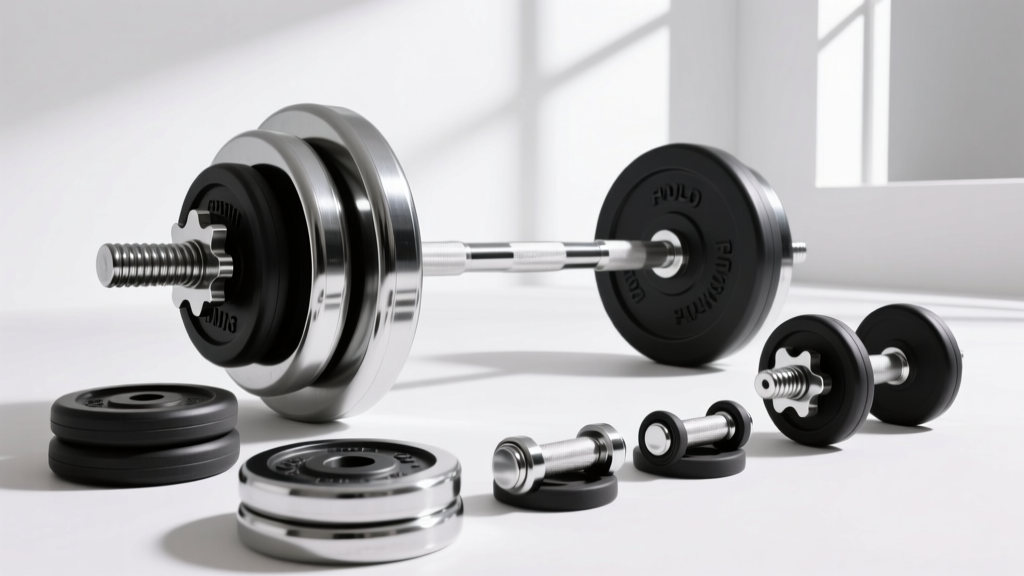
Olympic Barbell Guide vs Dumbbell Hamstring Curl Alternative
Compare Olympic barbell knurling and weight specs against the best dumbbell hamstring curl alternative for ultimate posterior chain growth in 2026.

The Posterior Chain Dilemma: Heavy Hinges vs. Targeted Isolation
Building a bulletproof posterior chain requires a delicate balance of heavy, systemic loading and targeted, joint-friendly isolation. For home gym owners and garage lifters in 2026, this often sparks a fierce equipment debate: Should you invest in a premium Olympic barbell for heavy Romanian Deadlifts (RDLs) and Good Mornings, or should you pivot to a highly effective dumbbell hamstring curl alternative setup to spare your lower back?
This head-to-head comparison dives deep into the metallurgy, weight specifications, and knurling patterns of elite Olympic barbells, while contrasting them against the biomechanics and gear requirements of the best dumbbell-based hamstring isolation techniques. Whether you are chasing raw power or hypertrophy, understanding these equipment nuances is critical for your programming.
Contender 1: The Olympic Barbell (Weight, Whip, and Knurling Deep Dive)
Not all barbells are created equal. When selecting a barbell specifically for posterior chain work, the shaft diameter, tensile strength, and knurl pattern dictate your grip security and the bar's behavior under heavy loads.
Weight, Shaft Diameter, and Tensile Strength
Standard men's Olympic bars weigh exactly 20kg (44 lbs) with a 28mm to 29mm shaft diameter, while women's bars weigh 15kg (33 lbs) with a 25mm shaft. For heavy hinge movements like RDLs, a 29mm power bar is vastly superior to a 28mm Olympic weightlifting bar. The thicker shaft reduces the 'whip' (flex) of the bar, providing a more stable, rigid platform when pulling heavy loads from the floor or rack.
Tensile strength, measured in Pounds per Square Inch (PSI), determines how much weight the bar can hold before permanently bending. Budget bars sit around 165,000 PSI, but for serious posterior chain training, you need a minimum of 190,000 PSI. Elite power bars, like the Rogue Ohio Power Bar, boast 205,000 PSI, ensuring the bar snaps back to perfectly straight even after heavy 500+ lb good mornings.
Knurling Profiles: Hill, Mountain, and Volcano
The knurl is the machined grip pattern on the shaft. For high-rep hypertrophy blocks where sweat compromises your grip, the knurl profile is your most vital spec.
- Hill Knurl: Found on Olympic weightlifting bars. The peaks are rounded off to be gentle on the hands during high-rep cleans, but they offer poor grip security for heavy, sweaty deadlifts or RDLs.
- Mountain Knurl: Aggressive, sharp peaks that feel like cheese graters. Excellent for grip, but they will tear your calluses during high-volume hamstring work.
- Volcano Knurl: The gold standard for powerlifting and hinge movements. The peaks are slightly flattened with deep grooves, providing a 'velcro-like' grip that locks into your hands without shredding your skin.
If you plan on performing heavy barbell back squats to complement your hamstring work, ensure your bar has a center knurl. A 1.2mm deep center knurl will grip your shirt during squats but won't scrape your chest during bench presses. Bars without a center knurl (like many deadlift-specific bars) will slide down your back during low-bar squats.
Finishes: Bare Steel vs. Cerakote vs. Stainless
The finish affects both oxidation and grip feel. Bare steel offers the absolute best grip because there is no coating filling in the knurl valleys, but it requires weekly oiling to prevent rust. Zinc and black oxide are standard but wear off over time. In 2026, Cerakote (a ceramic-polymer coating) is highly popular for its rust resistance and color options, though it slightly dulls the aggressiveness of the knurl. For the ultimate blend of zero maintenance and raw knurl feel, a Stainless Steel shaft (typically priced between $350 and $450) is the undisputed king.
Contender 2: The Dumbbell Hamstring Curl Alternative Setup
While barbell hinges build massive systemic strength, they incur high axial loading on the spine. This is where a dumbbell hamstring curl alternative becomes a non-negotiable tool for hypertrophy and rehabilitation. By utilizing adjustable dumbbells, you can perform lying leg curls, slider curls, and unilateral work without compressing the lumbar spine.
Biomechanics of the Lying Dumbbell Hamstring Curl
The lying dumbbell hamstring curl is executed by pinching a dumbbell between your feet while lying prone on a flat or slightly inclined bench. According to electromyography (EMG) research published in the Journal of Sports Science and Medicine, knee-flexion exercises (like curls) activate the lateral hamstrings (biceps femoris) significantly more than hip-extension exercises (like RDLs), which bias the medial hamstrings (semitendinosus).
Pro-Tip for Execution: To maximize hamstring involvement and minimize calf (gastrocnemius) takeover, you must plantarflex your ankles (point your toes away from your shins) while holding the dumbbell. Dorsiflexion (pulling toes toward the shin) shifts the load to the calves.
Essential Gear for the DB Alternative
To execute this properly, you do not need a $3,000 cable machine. You need:
- Adjustable Dumbbells: A pair of 5-50 lb or 5-80 lb adjustable dumbbells (e.g., Nuobell or PowerBlock) allows for precise 5-lb micro-loading, which is crucial for isolation movements.
- Adjustable Bench: A bench that can incline to 15-30 degrees puts the hamstrings in a stretched position, vastly increasing the hypertrophic stimulus.
- Furniture Sliders or Valslides: For standing or supine slider hamstring curls, a $15 pair of sliders on a turf or hardwood floor provides immense eccentric overload.
Head-to-Head Comparison Matrix
| Feature | Olympic Barbell (RDLs / Good Mornings) | Dumbbell Hamstring Curl Alternative |
|---|---|---|
| Primary Stimulus | Hip Extension (Medial Hamstrings & Glutes) | Knee Flexion (Lateral Hamstrings) |
| Axial Fatigue | High (Heavy lumbar and CNS tax) | Zero (Spine is fully supported) |
| Equipment Cost | $300 - $500+ (Barbell + Bumper Plates) | $150 - $450 (Adjustable DBs + Bench) |
| Grip Limitation | High (Requires straps or strong knurl) | None (Weight is held by feet/floor) |
| Space Required | Large (Requires full power rack footprint) | Small (Corner of a room or garage) |
2026 Gear Recommendations for Your Setup
If you are committing to the barbell route for your posterior chain, the Rogue Ohio Power Bar (Stainless Steel) remains the benchmark. Priced around $425, its 205,000 PSI shaft, 29mm diameter, and flawless volcano knurl provide unmatched grip security for heavy RDLs. For those on a budget, the Rep Fitness PR-4000 ($329) offers a surprisingly aggressive knurl and ceramic coating that punches well above its weight class.
If you are prioritizing the dumbbell hamstring curl alternative route to manage lower back fatigue, invest in the Nuobell 80lb Adjustable Dumbbells ($429). Their traditional handle shape and smooth adjustment mechanism make them ideal for pinching between the feet or holding during single-leg slider curls. Pair them with a Rogue Adjustable Incline Bench to unlock the stretch-mediated hypertrophy benefits of inclined lying curls.
Final Verdict: Which Setup Belongs in Your Rack?
The truth of modern sports science, as highlighted by biomechanics experts at Stronger By Science, is that the hamstrings are a bi-articular muscle group crossing both the hip and the knee. Therefore, training them exclusively with barbell hinges leaves massive growth on the table.
The ideal 2026 home gym does not force you to choose just one. However, if budget and space dictate a single purchase: buy the Olympic barbell and plates for raw, foundational strength and athletic power. But if you are a bodybuilder, an older lifter managing lumbar disc issues, or an athlete in-season needing to minimize CNS fatigue, the dumbbell hamstring curl alternative setup provides a safer, highly targeted, and incredibly effective path to massive posterior chain development.
More gear to consider
All reviews
Bumper Plate vs Iron Plate Care: What Survives the Dumbbell High Row?
Single Leg Romanian Deadlift One Dumbbell: Adjustable Comparison

The Complete Home Setup for Dumbbell Rows for Women
Bumper vs Iron Plates: Gear for Split Squats with One Dumbbell

Upgrading Your Dumbbell Complete Body Workout: Barbell Clamps