Cast Iron vs Competition Kettlebells & Both Hand Dumbbell Budget 2026
Compare 2026 pricing for cast iron vs competition kettlebells. We break down cost-per-pound, hidden fees, and both hand dumbbell alternatives.

The 2026 Free Weight Market: Navigating the Kettlebell Divide
As we move through 2026, the home gym equipment market has stabilized, but the economics of shipping heavy iron remain a critical factor in your budget breakdown. When outfitting a garage gym or commercial facility, buyers inevitably hit a crossroads: do you invest in traditional cast iron kettlebells, or pay the premium for uniform competition kettlebells? Furthermore, how do these specialized tools compare in value to utilizing a standard heavy hex dumbbell as a both hand dumbbell for ballistic movements?
This guide strips away the marketing fluff and dives deep into the metallurgy, dimensional geometry, and real-world cost-per-pound analysis of today's top kettlebell categories. Whether you are training for StrongFirst hardstyle certification or Girevoy Sport (GS) endurance, understanding where your money actually goes is the first step to building an efficient, cost-effective arsenal.
The Dimensional Divide: Cast Iron vs. Competition Geometry
Before analyzing the budget, we must establish the physical differences that dictate pricing. According to StrongFirst kettlebell standards, the tool you choose fundamentally alters the biomechanics of the swing, clean, and snatch.
Cast Iron Kettlebells (The Traditionalist)
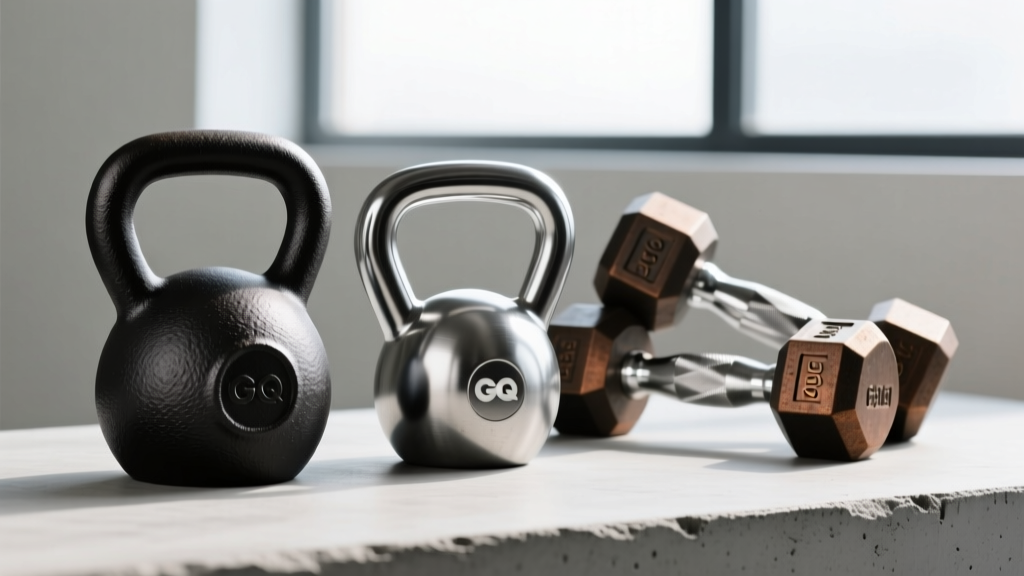
Cast iron bells (like those from Rogue Fitness or REP Fitness) are forged as a single, solid piece of iron, typically finished with a powder coat or e-coat. Their dimensions scale with their weight. A 12kg cast iron bell is physically smaller than a 32kg bell. The handle diameter usually hovers around 33mm to 35mm, and the center of mass sits tightly against the handle, making them ideal for hardstyle grinds and heavy, low-rep ballistics.
Competition Kettlebells (The Specialist)
Competition bells are manufactured to strict, uniform dimensions regardless of weight: exactly 352mm in height, 210mm in width, and featuring a 90mm handle diameter with a 33mm handle thickness. To achieve this, lighter bells (8kg to 20kg) are hollow and filled with a dense filler (often steel shot or iron dust) sealed at the base. This uniformity ensures that your technique and rack position never change as you increase weight, a mandatory requirement for GS sport lifters.
💡 The Handle Window Dilemma
One of the most overlooked budget factors is the 'handle window'—the empty space between the handle and the bell. On cast iron bells under 20kg, this window shrinks significantly. If you have average-to-large adult hands, performing two-handed swings with a 16kg cast iron bell will result in crushed knuckles. Competition bells maintain a wide window across all weights, accommodating two hands comfortably even at 8kg.
2026 Cost-Per-Pound Matrix: Where Your Money Goes
Pricing in 2026 reflects both raw material costs and the precision machining required for competition bells. Below is a comparative breakdown based on current market averages for premium brands.
| Weight (kg/lbs) | Cast Iron (Avg Price) | Competition (Avg Price) | Price Premium |
|---|---|---|---|
| 16kg (35 lbs) | $65 - $80 | $130 - $150 | +100% |
| 24kg (53 lbs) | $105 - $125 | $175 - $195 | +65% |
| 32kg (70 lbs) | $150 - $180 | $240 - $270 | +55% |
Note: Prices exclude freight shipping, which can add $40 to $120 depending on your proximity to the manufacturer's distribution hubs.
The 'Both Hand Dumbbell' Loophole: A Budget Alternative?
When budget-conscious lifters realize that a 16kg cast iron kettlebell has a handle window too narrow for comfortable two-handed swings, they often pivot to a both hand dumbbell setup. This involves gripping a single heavy hex dumbbell (e.g., a 40lb or 50lb CAP Barbell hex dumbbell) by the bell or handle with both hands to simulate goblet squats, swings, or sumo deadlifts.
Budget vs. Biomechanics
From a pure financial perspective, the both hand dumbbell workaround is highly effective. A 50lb rubber hex dumbbell costs roughly $60 to $75 (about $1.30/lb), whereas a 24kg competition kettlebell with a universally wide handle window costs upwards of $185. By utilizing a both hand dumbbell for heavy two-handed hinge movements, a home gym owner can save over 50% upfront.
However, as detailed in Garage Gym Reviews' comprehensive equipment analysis, this substitution sacrifices critical biomechanical benefits. A dumbbell's center of mass is perfectly balanced between the hands. A kettlebell's offset center of mass forces the lifter to manage a dynamic, pulling arc during the swing, heavily engaging the lats and grip stabilizers. Furthermore, cleaning a heavy hex dumbbell to the shoulder for goblet squats is notoriously awkward and risks wrist impingement compared to the smooth, curved horn of a competition bell.
✅ The Hybrid Budget Strategy: Buy a single 24kg Competition Kettlebell ($185) for technical work, snatches, and two-handed swings where handle geometry matters. Supplement your heavy conditioning with a 50lb or 60lb hex dumbbell ($75) used as a both hand dumbbell for high-rep goblet squats and farmer carries. Total cost: ~$260. Buying both a 24kg and 32kg competition bell would cost over $450.Hidden Costs: Shipping, Degradation, and Failure Modes
The sticker price is only half the budget equation. Iron is incredibly dense, and shipping companies charge by dimensional weight and actual weight. When ordering from major suppliers like Rogue Fitness, orders exceeding 150 lbs often trigger LTL (Less Than Truckload) freight shipping, which can add $80+ to your checkout cart.
Failure Modes to Watch For
- Cast Iron Powder Coat Chipping: If you train outdoors or on raw concrete without drop pads, the powder coat on cast iron bells will chip upon impact. Once the bare iron is exposed to humidity, surface rust begins within 48 hours. Maintenance requires wire brushing and a fresh coat of rust-oleum, adding time and minor material costs.
- Competition Bell Filler Rattle: Lower-tier competition bells use cheap sand or unsealed iron dust as filler. Over hundreds of drops, the internal welds can fracture, causing the filler to settle and creating an annoying rattle. This shifts the center of mass slightly off-axis, ruining the bell for sport lifting. Always invest in premium brands that use solid steel shot or precision-machined internal cavities.
- Resale Value: Competition kettlebells hold their value exceptionally well. A used 24kg competition bell in good condition will routinely sell for 70-80% of its retail price on secondary markets, whereas chipped cast iron bells depreciate much faster.
Final Verdict: Building Your 2026 Arsenal
Your budget allocation should be strictly dictated by your training modality. If your goal is general fitness, hardstyle strength, and basic conditioning, cast iron kettlebells offer the highest ROI at roughly $1.75 per pound. They are virtually indestructible and require zero internal maintenance.
If you are pursuing Girevoy Sport, or if you have large hands and refuse to compromise on two-handed swing mechanics with lighter weights, the competition kettlebell is a non-negotiable investment. The uniform 90mm handle diameter and wide window justify the 60% to 100% price premium.
Finally, do not overlook the utility of the both hand dumbbell as a strategic budget plug. By pairing a single, high-quality competition bell for technical mastery with a heavy, inexpensive hex dumbbell for brute-force conditioning, you can build a world-class home gym setup without breaking the bank in 2026.
More gear to consider
All reviews
Rubber Hex vs Urethane: Budgeting Your Arm Workout With Dumbbells

Neoprene 5lb Dumbbell Set: Home Gym Setup & Storage Guide
Olympic vs Standard Plates for Heavy Delts Dumbbell Workouts

Reverse Lunge Dumbbell vs Barbell: Weight & Knurling Guide
EZ vs Straight Bar Comparison & Dumbbell Pull Exercises Care
