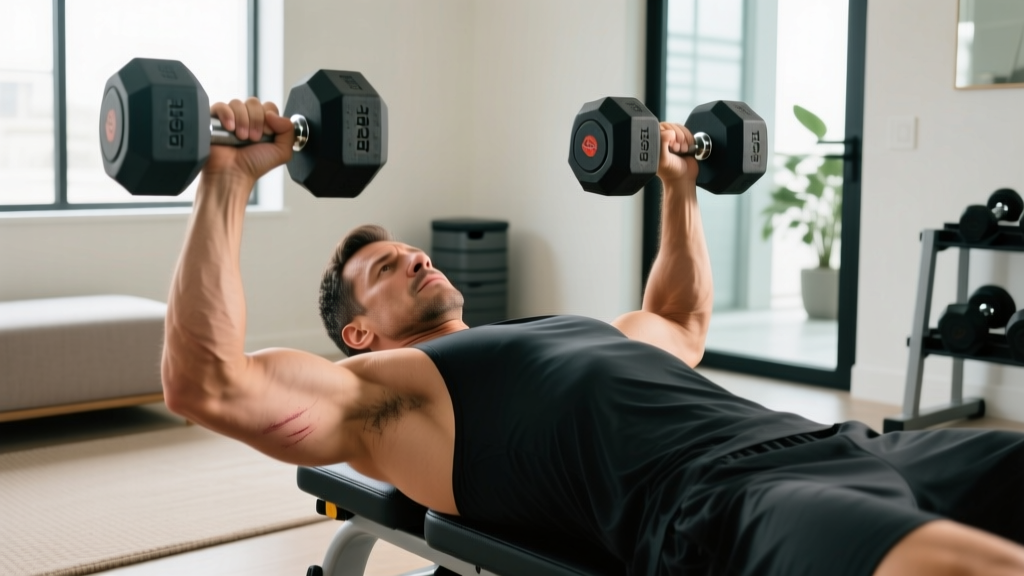
Beyond Good Dumbbell Exercises: Barbell Weight & Knurling Compared
Transitioning from good dumbbell exercises to heavy barbell lifts? We compare the Rogue Ohio Bar and Eleiko Sport Training Bar on weight, knurling, and whip.

The Dumbbell Ceiling: When to Upgrade Your Arsenal
Mastering good dumbbell exercises like the goblet squat, Romanian deadlift, and unilateral floor press builds a phenomenal foundation for muscular symmetry and joint stability. Dumbbells force each side of your body to work independently, correcting imbalances and recruiting vital stabilizer muscles. However, as your central nervous system adapts and your strength surpasses the 100-pound dumbbell threshold, unilateral loading becomes a logistical bottleneck. Getting 120-pound dumbbells into position for a heavy chest press or back squat is not just inefficient; it is a potential injury risk.
This is the exact inflection point where transitioning to an Olympic barbell becomes mandatory for progressive overload. But walking into the barbell market in 2026 can be overwhelming. A standard 20kg (44lb) Olympic barbell can cost anywhere from $150 to over $1,000. The difference in price is not just about brand prestige; it is rooted in metallurgy, knurling geometry, and sleeve construction. To help you make the leap from dumbbells to heavy bilateral compounds, we are putting two of the most highly regarded barbells on the market head-to-head: the Rogue Ohio Bar (Stainless Steel) and the Eleiko Sport Training Bar.
Quick Decision Matrix
- Choose Rogue Ohio Bar if: You are a powerlifter, CrossFit athlete, or general strength enthusiast who needs a durable, aggressive-grip all-rounder for squats, bench, and deadlifts.
- Choose Eleiko Sport Training Bar if: You are an Olympic weightlifter or technique-focused athlete who prioritizes bar whip, smooth sleeve spin, and a refined grip for high-rep cleans and snatches.
Meet the Contenders: Specifications at a Glance
Before we dissect the tactile feel of the knurling and the physics of the barbell whip, let us look at the raw engineering data. Both bars adhere to the 20kg standard, but their dimensional tolerances tell a different story about their intended use cases.
| Feature | Rogue Ohio Bar (Stainless) | Eleiko Sport Training Bar |
|---|---|---|
| Total Weight | 20 KG (44 LBS) | 20 KG (44 LBS) |
| Shaft Diameter | 28.5 mm | 28.0 mm |
| Tensile Strength | 190,000 PSI | 215,000+ PSI |
| Knurl Pattern | Dual (Power & Weightlifting) | Single IWF Mark |
| Center Knurl | None | Passive / Refined |
| Sleeve Construction | Composite Bronze Bushings | Precision Needle Bearings |
| Approx. 2026 Price | $425.00 | $925.00 |
Knurling Geometry: Volcano vs. Refined Diamond
When athletes transition from the chalky, thick handles of heavy dumbbells to a steel barbell, the knurling is the first point of tactile shock. Knurling is not just about 'roughness'; it is a precise geometric pattern cut into the steel to maximize friction without destroying the epidermis.
The Rogue Ohio Bar: Composite Volcano Knurl
Rogue utilizes a 'volcano' knurl pattern on the Ohio Bar. Traditional knurling machines cut sharp, mountain-like peaks into the steel. Over time, or with aggressive cutting wheels, these peaks become jagged and tear calluses. The volcano pattern, however, is engineered so that the peak is slightly flattened or cratered, leaving a sharp rim around the edge. This provides an immense amount of surface area for your skin to grip into, offering a 'bite' that feels incredibly secure during heavy deadlifts and bench presses, yet it rarely rips the hands during high-volume metcons.
The Eleiko Sport Training Bar: Refined Diamond
Eleiko approaches knurling from an Olympic weightlifting perspective. According to the International Weightlifting Federation (IWF) standards, a barbell must allow for a secure hook grip but must also rotate smoothly during the violent turnover phase of a clean or snatch. Eleiko's proprietary diamond knurl is shallower and more refined. It relies on a broader contact patch rather than sharp peaks. If you are used to the aggressive grip required for good dumbbell exercises like heavy farmer's walks, the Eleiko might initially feel 'slippery' in your hands until you learn to utilize the hook grip and chalk properly. However, this refined knurl is a massive advantage for Olympic lifts, as it prevents the bar from grinding away the skin on your collarbone and wrists during rapid bar rotations.
Expert Insight: Never judge a barbell's knurl by running your fingers lightly over it. The true test of knurl geometry is how it feels under a 225lb load when your hands are sweaty and chalked. The volcano pattern excels under heavy compressive loads, while the refined diamond excels under high-velocity rotational friction.
Sleeve Construction: Bushings vs. Bearings
The sleeve is the part of the barbell where the weight plates load. How the sleeve connects to the shaft dictates the 'spin' of the bar, which is a critical safety and performance factor.
- Bronze Bushings (Rogue Ohio Bar): Bushings are solid metal rings that provide a low-friction surface for the sleeve to rotate on. They offer a slow, controlled spin. This is ideal for powerlifting movements like the bench press and squat. When you unrack a heavy bench press, you do not want the bar spinning wildly in your hands; you want it to feel stable and planted. Bushings provide exactly that stability.
- Needle Bearings (Eleiko Sport Bar): Needle bearings use dozens of tiny, cylindrical steel rollers to reduce friction to near zero. This allows the sleeve to spin rapidly and independently of the shaft. If you are transitioning from dumbbell snatches to barbell snatches, the rapid spin of a bearing bar is mandatory. It allows the bar to rotate in your hands as you pull it overhead, preventing severe torque on your wrists and elbows. Using a bushing bar for heavy Olympic lifts can lead to acute joint injuries.
Tensile Strength and the 'Whip' Factor
Tensile strength, measured in Pounds per Square Inch (PSI), dictates how much force it takes to permanently deform the bar. But in practical terms, it also dictates the 'whip'—the elastic oscillation of the barbell when loaded heavily or moved dynamically.
The Rogue Ohio Bar sits at 190,000 PSI. This is the sweet spot for a multi-purpose bar. It has enough stiffness to feel stable during a heavy back squat, but enough whip to provide a slight bounce off the chest during a bench press or off the floor during a deadlift. The 28.5mm shaft diameter also adds to the rigidity, making it highly favored by powerlifters who prefer a thicker grip.
The Eleiko Sport Training Bar boasts a tensile strength exceeding 215,000 PSI, paired with a slightly thinner 28.0mm shaft. This specific combination is engineered to maximize 'whip'. When an Olympic lifter pulls a heavy clean from the floor, the bar bends slightly before the plates leave the ground. As the lifter explodes upward, the bar snaps back straight, essentially aiding the lifter's upward momentum. This phenomenon, heavily studied in biomechanics and detailed in resources from the National Strength and Conditioning Association (NSCA), is a distinct advantage in competitive weightlifting but can feel unnervingly bouncy if you try to use it for strict, slow-tempo squats.
2026 Pricing and Value Proposition
As of 2026, the global supply chain for aerospace-grade steel and precision-machined bearings has stabilized, but premium manufacturing costs remain high. The Rogue Ohio Bar (Stainless) retails for approximately $425. Given its use of stainless steel—which provides the corrosion resistance of chrome without the flaking or environmental toxicity of the chrome-plating process—it remains the undisputed king of value for home gym owners and commercial facilities alike. You can view their full lineup on the Rogue Fitness barbells page.
The Eleiko Sport Training Bar commands a premium price of around $925. This is not just a markup for the Swedish heritage brand; you are paying for aerospace-level tolerances, needle bearings that will outlast multiple generations of lifters, and a specialized knurl that is virtually impossible to replicate on budget machinery. For the dedicated Olympic weightlifter, it is a lifelong investment. For the general fitness enthusiast who primarily squats, benches, and deadlifts, it is an unnecessary expense.
Frequently Asked Questions (FAQ)
Can I use an Olympic barbell for the same exercises I did with dumbbells?
While you can perform unilateral movements with a barbell (like lunges or split squats), the barbell is primarily designed for bilateral, heavy compound movements. You should maintain a set of adjustable dumbbells for isolation work, unilateral stability, and exercises like lateral raises or chest flyes, while using the barbell for your heavy CNS-loading lifts.
Do I need to oil or maintain my barbell?
Yes. Even stainless steel bars like the Rogue Ohio require occasional maintenance. In 2026, most manufacturers recommend using a stiff nylon brush to remove chalk and skin from the knurling weekly, followed by a light application of 3-in-One oil or a specialized barbell wax to the shaft and sleeves to prevent oxidation and keep bushings/bearings spinning smoothly.
What weight plates should I buy to match these bars?
Both bars feature standard 50mm (2-inch) Olympic sleeves. If you are dropping the bar from overhead (as in Olympic lifting or CrossFit), you must use rubber bumper plates to protect the bar's sleeves and your flooring. If you are strictly powerlifting, calibrated steel plates offer a thinner profile, allowing you to load more weight onto the 16.4-inch loadable sleeve length before needing bar collars.
More gear to consider
All reviews
Single Arm Dumbbell Chest Press & Kettlebells: Cast vs Competition

Bumper vs Iron Plate Care & Lunges Exercise with Dumbbells Tips
2026 Rack Trends: Storage Solutions for Chest Presses with Dumbbells

Bumper vs Iron Plates: Value Analysis & Wide Grip Dumbbell Curl Form

Rubber vs Urethane Care & Chin-Up Alternative with Dumbbells