
Olympic Barbell Buying Guide: Knurling vs Lat Pulldown Smith Machine
Compare premium Olympic barbell knurling and weight specs against all-in-one lat pulldown smith machine combos to build your ultimate home gym.

The Home Gym Crossroads: Premium Free Weights vs. All-In-One Combos
When outfitting a serious home gym in 2026, lifters inevitably face a major capital allocation decision: do you invest in a premium, standalone Olympic barbell and a traditional power rack, or do you purchase an all-in-one lat pulldown smith machine combo? While the all-in-one units offer incredible space-saving convenience and built-in cable stacks, the biomechanical reality of the bar you are gripping is vastly different between the two setups.
This comprehensive Olympic barbell buying guide focuses heavily on the two most critical factors of any barbell experience: weight calibration and knurling patterns. By comparing a top-tier standalone Olympic barbell against the integrated Smith machine bar found in popular lat pulldown combos, we will help you determine which investment aligns with your strength goals, grip mechanics, and training style.
Decoding Knurling: The Grip Mechanics That Make or Break Your Lift
Knurling is the cross-hatched pattern machined into the steel shaft of a barbell. It is not merely for aesthetics; it is a precise engineering feature designed to increase friction between your skin and the bar. When comparing a premium Olympic barbell to the bar integrated into a lat pulldown smith machine, the difference in knurling aggressiveness is night and day.
1. Volcano Knurling (The Powerlifter Standard)
Premium standalone bars, such as the renowned Rogue Ohio Power Bar, utilize 'Volcano' knurling. This is created by a specialized CNC machining process that leaves a sharp, grippy rim around each diamond rather than flattening the peak. It provides an aggressive, almost sandpaper-like bite that is essential for pulling heavy deadlifts or holding a low-bar squat in place. According to testing data from Garage Gym Reviews, volcano knurling remains the gold standard for heavy, low-rep powerlifting because it prevents bar slip without tearing the calluses off your hands.
2. Hill and Mountain Knurling (The All-Rounders)
'Mountain' knurling (popularized by American Barbell) features flatter peaks with moderate depth, offering a balanced grip suitable for both pressing and pulling. 'Hill' knurling, often found on Olympic weightlifting bars, is smooth and shallow to accommodate high-rep cleans and snatches where aggressive knurling would destroy the palms.
3. The Smith Machine Bar Reality
The integrated bar on most lat pulldown smith machine combos features a very mild, passive knurl. Because the bar is locked into linear bearings and restricted to a fixed vertical (or slightly angled) plane, the manufacturer assumes you do not need an aggressive grip to stabilize the weight. If you attempt heavy barbell rows or front squats on a Smith machine, the mild knurling combined with the fixed rail path often results in the bar slipping in your hands or digging uncomfortably into your clavicles.
Warning: The Center Knurl FactorAlmost all IPF-spec Olympic power bars feature a center knurl to grip the upper back during heavy squats. Integrated Smith machine bars almost universally lack a center knurl. If you prioritize heavy, raw back squats, the lack of center knurling on a Smith machine will cause the bar to slide up your back as you lean forward out of the hole.
Weight Calibration and the Counterbalance Problem
One of the most overlooked aspects of an Olympic barbell buying guide is weight tolerance. A certified standalone Olympic power bar weighs exactly 20 kilograms (44.09 pounds). The International Powerlifting Federation (IPF) mandates a strict tolerance, meaning a premium bar will never deviate by more than a fraction of a percent. When you load two 45-pound plates on each side, you know with absolute mathematical certainty that you are lifting 225 pounds.
The Smith Machine Weight Illusion
Conversely, the bar on a lat pulldown smith machine rarely weighs 45 pounds. Due to the heavy steel carriage, linear bearings, and pulley systems required to make the machine function smoothly, manufacturers often use counterbalance mechanisms.
- Starting Weight Variance: Depending on the brand (e.g., Force USA, Inspire Fitness, or Body-Solid), the starting weight of a Smith bar can range anywhere from 15 lbs to 25 lbs.
- Friction Variables: Linear bearings create friction. Pushing the bar up might feel like 20 lbs, but lowering it might require resisting 25 lbs due to the carriage drag.
- Angled Rails: Many Smith machines feature a 7-degree incline to mimic natural pressing mechanics. This angle introduces gravitational vectors that alter the true resistance felt by the lifter.
For lifters focused on strict progressive overload and tracking exact 1-rep max percentages, the ambiguity of a Smith machine bar's true weight is a significant drawback compared to the raw, unassisted 20kg of a standalone Olympic barbell. For deeper kinesiology and equipment mechanics, resources like ExRx.net detail how fixed-plane machines alter force vectors compared to free weights.
Tensile Strength, Whip, and Sleeve Rotation
When evaluating an Olympic barbell, tensile strength (measured in PSI) dictates how much load the bar can take before it permanently bends. A high-quality power bar boasts a tensile strength of 205,000 PSI or higher. This ensures the bar remains rigid during heavy squats but still possesses enough 'whip' (elastic rebound) to assist in the lockout phase of a deadlift.
Furthermore, standalone Olympic bars utilize bronze bushings or needle bearings in the sleeves, allowing the plates to spin independently of the shaft during dynamic movements like power cleans.
How the Lat Pulldown Smith Machine Compares
The bar on a lat pulldown smith machine does not require high tensile strength because the load is transferred directly into the steel guide rails via the carriage hooks, not supported by the bar's own span. Consequently, the bar itself will not 'whip' or bend. While this provides a highly stable, rigid pressing surface, it completely eliminates the elastic rebound that advanced lifters use to their advantage in free-weight powerlifting. Additionally, sleeve rotation is largely irrelevant on a Smith machine, as the bar cannot rotate within the fixed carriage.
Head-to-Head Comparison Matrix
To visualize the differences, here is a direct comparison between a premium standalone Olympic barbell and a typical integrated Smith machine bar found in all-in-one combos.
| Feature | Premium Olympic Barbell (e.g., Rogue OPB) | Lat Pulldown Smith Machine Bar |
|---|---|---|
| Exact Weight | 20kg / 44.09 lbs (IPF Certified) | 15 lbs - 25 lbs (Counterbalanced) |
| Knurling Pattern | Volcano (Aggressive, high-friction) | Mild / Passive Hill (Low-friction) |
| Center Knurl | Yes (Essential for raw squats) | No (Rarely included) |
| Tensile Strength | 205,000+ PSI (Prevents bending) | N/A (Supported by steel rails) |
| Bar Whip / Flex | Calculated stiffness for deadlift rebound | Zero whip (Rigid carriage system) |
| Sleeve Rotation | Bronze Bushings or Needle Bearings | Locked / Fixed Carriage |
| Avg. Equipment Cost | $350 - $450 (Bar only) | $2,500 - $4,500 (Full Combo Unit) |
Real-World Scenarios: Which Path Should You Take?
Scenario A: The Strength Purist and Powerlifter
If your primary goal is to compete in powerlifting, track exact progressive overload metrics, or perform Olympic weightlifting variations, the standalone Olympic barbell is non-negotiable. The aggressive volcano knurling, exact 20kg calibration, and center knurl are vital for safety and performance under heavy loads. You will need to pair this with a traditional power rack rather than a lat pulldown smith machine.
Scenario B: The Space-Constrained Hypertrophy Lifter
If you have a low-ceiling garage, limited square footage, and your primary goal is muscle hypertrophy (bodybuilding) rather than 1-rep max strength, an all-in-one lat pulldown smith machine is a phenomenal investment. The mild knurling is perfectly adequate for controlled, time-under-tension movements like Smith machine split squats, incline presses, and inverted rows. The counterbalanced weight is irrelevant when you are focused on muscle contraction rather than moving absolute maximum poundage.
Final Verdict
Understanding the nuances of weight calibration and knurling patterns separates the informed buyer from the frustrated gym owner. A premium Olympic barbell offers an uncompromising, raw connection to the weight, demanding grip strength and stabilizer engagement. The integrated bar of a lat pulldown smith machine offers safety, convenience, and isolation, but sacrifices the tactile feedback and exact weight metrics of true free weights. Assess your training methodology, measure your space, and choose the steel that best fits your 2026 fitness journey.
More gear to consider
All reviews
EZ Bar vs Straight Bar & Lower Back Exercises at Home with Dumbbells
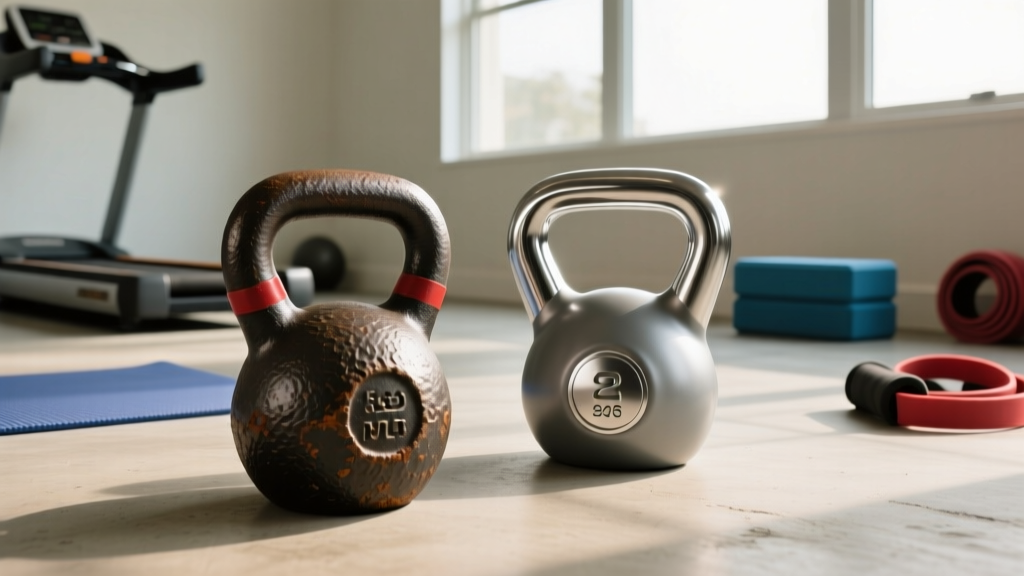
Cast Iron vs Competition Kettlebells: Best Dumbbell Workouts for Women

Maintaining Loadable Dumbbells for the Perfect Lat Dumbbell Pull

Gear Guide: Full Body Circuit Workout With Dumbbells (2026)

Troubleshooting Your Press: What Muscles Does Dumbbell Bench Press Work vs. Barbell Knurling
