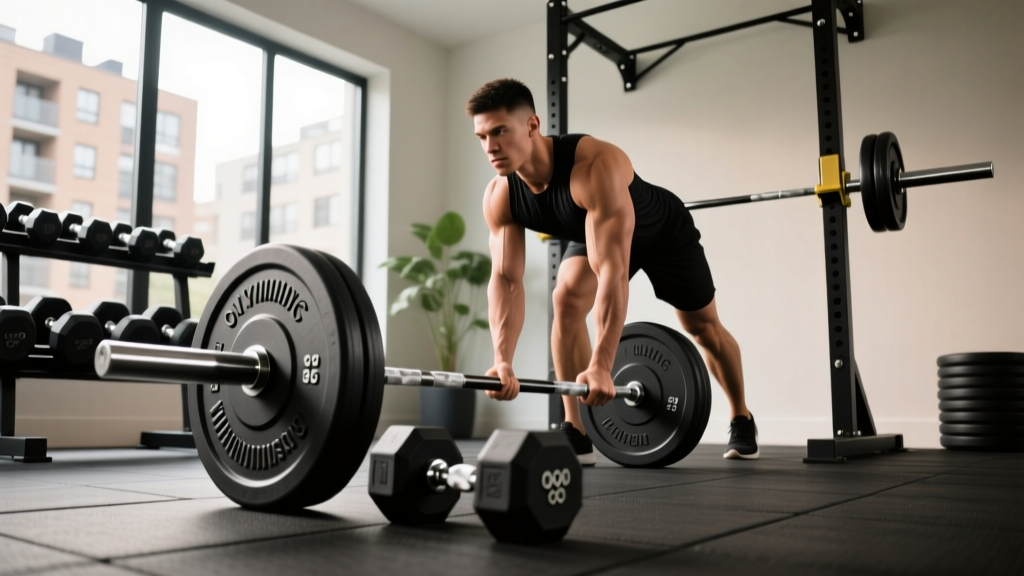
Olympic Barbell Buying Guide: Knurling & Dumbbell Pullover Exercise
Master our beginner step-by-step Olympic barbell buying guide covering weight, knurling, and why the dumbbell pullover exercise is the perfect accessory.

The Foundation of Your Home Gym: Choosing the Right Olympic Barbell
Walking into the world of free weights can feel overwhelming, especially when faced with the sheer variety of Olympic barbells on the market in 2026. As a beginner, your first barbell is a milestone purchase. It will dictate the safety, comfort, and progression of your lifts for years to come. This step-by-step guide strips away the marketing jargon and focuses on the two most critical factors: weight specifications and knurling patterns. We will also cover how to properly integrate your new barbell into a well-rounded routine, including why certain accessory movements—like the dumbbell pullover exercise—are better left to dumbbells.
Beginner Tip: Never buy a barbell based solely on price. A cheap bar with low tensile strength (under 165,000 PSI) will permanently bend under heavy loads, becoming a safety hazard. Always look for a minimum of 190,000 PSI tensile strength.Step 1: Demystifying Barbell Weight and Shaft Dimensions
Olympic barbells are not one-size-fits-all. The weight and shaft diameter directly impact your grip comfort and the bar's 'whip' (elastic deformation during dynamic lifts). Understanding these classes is your first step to making an informed purchase.
| Bar Type | Weight | Shaft Diameter | Best For |
|---|---|---|---|
| Men's Standard | 20 kg (44 lbs) | 28.5mm - 29mm | Powerlifting, General Strength |
| Women's Standard | 15 kg (33 lbs) | 25mm | Olympic Weightlifting, Smaller Hands |
| Technique Bar | 10 kg (22 lbs) | 25mm - 28mm | Form Practice, Youth Lifters |
If you are focusing on the 'Big Three' powerlifts (squat, bench press, deadlift), a 20kg men's bar with a 29mm shaft provides the stiffness required to prevent uncomfortable wobbling during heavy bench presses. Conversely, if you plan to perform explosive Olympic lifts like the snatch or clean and jerk, a 15kg or 20kg bar with a thinner 25mm-28mm shaft offers better grip security and necessary whip.
Step 2: The Knurling Matrix – Finding Your Grip
Knurling is the cross-hatched pattern machined into the steel shaft of the barbell. It creates friction between your hands and the bar. For beginners, the type of knurling is just as important as the weight of the bar, as aggressive knurling can tear calluses and discourage consistent training.
The Three Primary Knurl Profiles
- Volcano Knurling: Popularized by high-end manufacturers, this pattern features peaks with a small 'crater' machined into the top. It provides excellent grip without feeling like a cheese grater. It is the gold standard for multi-purpose bars.
- Mountain Knurling: Sharp, aggressive peaks that dig deeply into the skin. This is ideal for heavy, chalked deadlifts but can be highly uncomfortable for high-rep hypertrophy work or front squats resting on the clavicle.
- Hill Knurling: The peaks are flattened off, creating a smoother, more passive feel. This is highly recommended for beginners or those with sensitive hands who still need a secure grip.
Step 3: Program Integration and the Dumbbell Pullover Exercise
You might wonder why a comprehensive barbell buying guide mentions the dumbbell pullover exercise. When building a complete hypertrophy and strength program around your new Olympic bar, you will quickly discover that barbells are suboptimal for certain isolation movements. The dumbbell pullover exercise is a staple for latissimus dorsi, teres major, and serratus anterior development.
According to biomechanical data cataloged by ExRx, attempting this movement with a straight Olympic barbell restricts the natural converging path of the arms and places excessive shear force on the wrist joints, especially at the bottom of the stretch where the lever arm is longest. By utilizing the dumbbell pullover exercise as your primary upper-body accessory, you allow your wrists to rotate naturally, maintaining a neutral grip and achieving a deeper, safer lat stretch.
Your new Olympic barbell is designed to handle heavy, bilateral axial loading (squats, deadlifts, overhead presses). However, for sagittal plane expansion of the ribcage and targeted lat isolation, the dumbbell pullover exercise remains the superior, joint-friendly tool. A well-rounded 2026 home gym requires both the heavy steel of an Olympic bar and the versatile ergonomics of adjustable dumbbells.
Step 4: 2026 Barbell Market Recommendations
Based on current 2026 market pricing, steel tariffs, and manufacturing standards, here are three exceptional entry-to-mid-level Olympic barbells that balance durability, knurl quality, and cost.
| Brand & Model | Knurl Type | Tensile Strength | 2026 Est. Price |
|---|---|---|---|
| Rogue Ohio Bar | Volcano (Dual) | 190,000 PSI | $295.00 |
| Rep Fitness Colorado Bar | Hill (Multi-purpose) | 190,000 PSI | $249.00 |
| Eleiko Sport Training Bar | Refined Mountain | 215,000 PSI | $865.00 |
Our Verdict for Beginners: The Rep Fitness Colorado Bar offers the most forgiving knurl for beginners learning high-volume movements, while the Rogue Ohio Bar remains the undisputed king of the 'do-it-all' volcano knurl category. The Eleiko is a premium investment reserved for those exclusively pursuing competitive Olympic weightlifting.
Frequently Asked Questions
How do I maintain the knurling on my new barbell?
Sweat and chalk will eventually clog the knurling peaks, reducing grip friction and promoting rust. Once a month, use a stiff nylon brush (never wire, as it damages the zinc or cerakote coating) and a light application of 3-in-1 oil or mineral oil. Scrub the shaft, wipe it down with a microfiber cloth, and your knurl will feel brand new.
Can I use my 20kg Olympic barbell for the dumbbell pullover exercise?
As noted in Step 3, you can perform a barbell pullover, but it is highly discouraged for beginners. The fixed, wide grip of a 20kg barbell limits your range of motion and places the wrists in an unnatural, externally rotated position under load. Stick to the dumbbell pullover exercise to protect your joints and maximize lat engagement.
What is the difference between bushings and bearings?
Bushings (usually bronze) provide a slow, controlled spin and are ideal for powerlifting and general strength. Bearings (needle or ball) allow the sleeves to spin rapidly, which is necessary for Olympic weightlifting to prevent the bar from tearing the skin off your palms during the turnover phase of a clean. For 90% of beginners, a high-quality bronze bushing bar is the most cost-effective and durable choice.
More gear to consider
All reviews
Are Dumbbells Enough? Top Neoprene Sets for Home Use (2026)
Cast Iron vs Competition Kettlebell Care (Beyond a Dumbbell Biceps Curl GIF)

Neoprene Dumbbell Setup & Dumbbell Shoulder Press for Women

Olympic Barbell Buying Guide: Weight, Knurling & Alternating Dumbbell Chest Press Upgrades

Beyond the 15 Minute Dumbbell Workout: 2026 Kettlebell Market Guide
