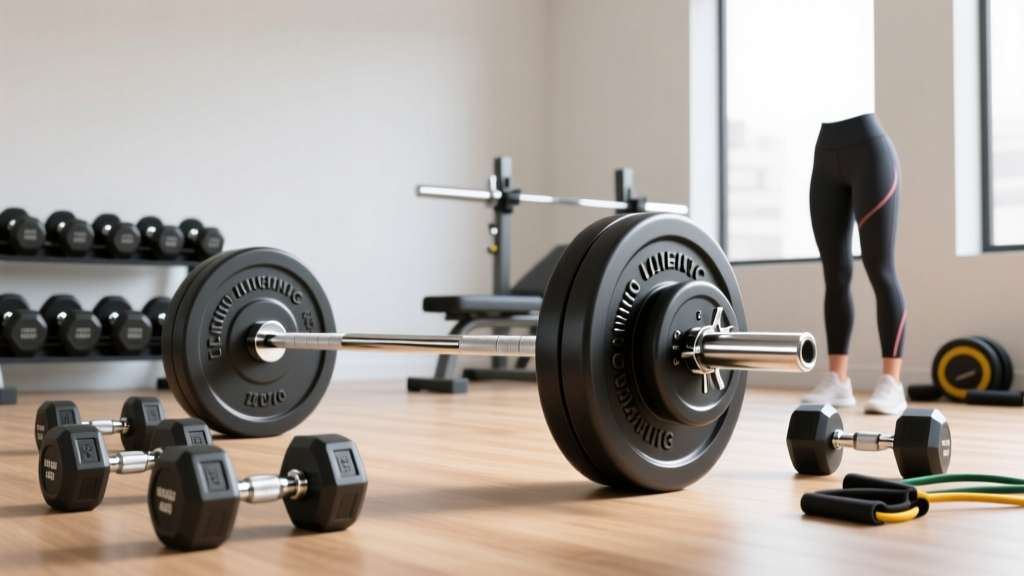
Olympic Barbell Buying Guide & Quad Workouts with Dumbbells
Master your leg day with our beginner step-by-step Olympic barbell buying guide covering weight and knurling, plus effective quad workouts with dumbbells.

The Ultimate Beginner's Blueprint for Leg Day: Barbells and Dumbbells
Building a comprehensive lower-body arsenal requires understanding two fundamental pieces of equipment: the Olympic barbell for heavy, bilateral loading, and dumbbells for targeted, unilateral accessory work. If you are stepping into a home gym build or designing your first serious strength program in 2026, navigating the specs of lifting gear can feel overwhelming. This beginner-friendly, step-by-step guide will walk you through a detailed Olympic barbell buying guide—focusing specifically on weight tolerances and knurling patterns—before transitioning into highly effective quad workouts with dumbbells to bulletproof your legs and fix muscular imbalances.
Why Combine Barbells and Dumbbells?While barbell back squats are the king of central nervous system (CNS) adaptation and raw strength, relying solely on bilateral movements often masks left-to-right strength asymmetries. Integrating unilateral dumbbell work ensures your quadriceps develop symmetrically, reducing injury risk and improving overall squat mechanics.
Step 1: Demystifying Olympic Barbell Weights and Dimensions
Before you load up your first squat, you need to know exactly what you are lifting. The International Powerlifting Federation (IPF) and the International Weightlifting Federation (IWF) dictate strict standards for Olympic barbells, but the commercial market is flooded with non-compliant, low-quality imitations. According to the Rogue Fitness Barbell Catalog and IPF technical guidelines, a true Olympic barbell must meet precise weight and dimensional tolerances.
Standard Barbell Weight Classes
- Men's Olympic Bar: Weighs exactly 20kg (44.09 lbs). The shaft diameter is typically 28mm to 29mm, providing a sturdy grip for heavy squats and deadlifts.
- Women's Olympic Bar: Weighs exactly 15kg (33.06 lbs). The shaft diameter is narrower at 25mm, accommodating smaller hand sizes and optimizing the hook grip for Olympic lifts.
- Multi-Purpose Bars: Usually 20kg with a 28.5mm shaft, designed to bridge the gap between powerlifting stiffness and Olympic lifting whip.
| Barbell Type | Standard Weight | Shaft Diameter | Tensile Strength | 2026 Avg. Price |
|---|---|---|---|---|
| Men's Power Bar | 20kg (44 lbs) | 29mm | 205k+ PSI | $220 - $350 |
| Women's Olympic Bar | 15kg (33 lbs) | 25mm | 190k+ PSI | $180 - $290 |
| Multi-Purpose | 20kg (44 lbs) | 28.5mm | 190k PSI | $150 - $220 |
Never buy a barbell with a tensile strength below 165,000 PSI. Budget bars found on generic marketplaces often use low-grade steel that will permanently bend (take a 'set') if you drop a heavy deadlift or fail a back squat. Always look for a minimum of 190,000 PSI for general fitness, and 205,000+ PSI for dedicated powerlifting.
Step 2: Choosing the Right Knurling for Your Grip
Knurling is the cross-hatched pattern machined into the steel shaft of the barbell. It dictates how the bar feels in your hands and against your back during squats. As detailed in BarBend's comprehensive guide to barbell knurling, there are three primary profiles you must understand before purchasing.
1. Hill Knurling (Multi-Purpose)
Hill knurling features a flatter, less aggressive peak. It provides enough grip for high-rep CrossFit workouts or light squats without tearing the calluses on your hands. Best for: Beginners, high-volume conditioning, and home gyms where multiple users share the same bar.
2. Mountain Knurling (Powerlifting)
Mountain knurling is sharp, deep, and aggressive. The peaks are pointed like tiny mountains, digging into your skin to prevent the bar from slipping during maximal effort deadlifts or heavy low-bar back squats. Best for: Serious strength athletes. Note: It can be painful for high-rep Olympic lifts.
3. Volcano Knurling (Olympic Weightlifting)
Volcano knurling is the gold standard for premium barbells (like the Eleiko Olympic WL Bar). The peaks are 'rimmed'—meaning the center of the knurl is slightly indented, creating a rim that grips the skin like a suction cup without piercing it. Best for: Lifters who want maximum grip security without shredded hands.
"A good volcano knurl should feel like 100-grit sandpaper that grips you back, rather than a cheese grater that tears your skin. If you are buying one bar for your home gym in 2026, a moderate volcano or refined mountain knurl offers the best versatility."
Step 3: Supplementing with Quad Workouts with Dumbbells
Once you have selected your barbell and mastered the foundational back squat, it is time to isolate the quadriceps and address imbalances. This is where targeted quad workouts with dumbbells become essential. According to biomechanics data cataloged by the ExRx Quadriceps Exercise Directory, unilateral loading forces the vastus medialis oblique (VMO) to stabilize the knee joint independently, a stimulus you cannot get from a bilateral barbell squat.
The 'Big Three' Dumbbell Quad Builders
- The Bulgarian Split Squat: The undisputed king of unilateral quad development. By elevating your rear foot on a bench (12-18 inches high), you shift up to 85% of the load onto the front leg's quadriceps and glutes.
- The Dumbbell Goblet Squat: Holding a single heavy dumbbell vertically against your chest forces an upright torso. This upright posture increases knee flexion (forward knee travel), which heavily targets the quads while sparing the lower back.
- Dumbbell Step-Ups (Deficit): Standing on a 4-inch plate or step while holding dumbbells increases the range of motion at the bottom of the movement, placing the quads under a deep, loaded stretch.
Step 4: Your Beginner Step-by-Step Leg Day Routine
Combine your new barbell knowledge with dumbbell isolation for this complete, beginner-friendly leg day protocol. Rest 2-3 minutes between barbell sets, and 60-90 seconds between dumbbell sets.
| Exercise | Sets | Reps | RIR (Reps in Reserve) | Equipment |
|---|---|---|---|---|
| High-Bar Back Squat | 4 | 6 - 8 | 2 RIR | 20kg Olympic Barbell |
| Bulgarian Split Squat | 3 | 8 - 10 / leg | 1 RIR | 15-25 lb Hex Dumbbells |
| Goblet Squat (Heels Elevated) | 3 | 12 - 15 | 0 RIR (Failure) | Single 35-50 lb Dumbbell |
| Dumbbell Deficit Step-Ups | 2 | 10 / leg | 1 RIR | 20 lb Dumbbells + Plate |
When performing Goblet Squats or Split Squats, place a small 2.5lb or 5lb weight plate under your heels. This artificial elevation increases ankle dorsiflexion, allowing your knees to travel further over your toes. This mechanical tweak shifts the tension almost entirely off the glutes and hamstrings, placing a massive, targeted stretch on the quadriceps.
Frequently Asked Questions (FAQ)
Do I need a center knurl on my barbell?
Yes, if your primary goal includes back squatting. A center knurl (the rough patch in the exact middle of the bar) grips your shirt or skin, preventing the bar from sliding down your back during heavy squats. Olympic weightlifting bars often omit the center knurl to prevent chest abrasion during cleans, so ensure you buy a power bar or multi-purpose bar with a center knurl for leg day.
What type of dumbbells are best for leg workouts?
For lower body work, rubber-coated hex dumbbells are the most practical choice for beginners in 2026. The hexagonal shape prevents them from rolling away when you set them on the floor between heavy split squat sets, and the rubber coating protects your home gym flooring. Urethane is more durable and odorless but comes at a 40% price premium.
How often should I run this leg day routine?
As a beginner, run this barbell and dumbbell combination once every 5 to 7 days. Your central nervous system and muscle tissues require 72 to 96 hours to fully recover from heavy bilateral barbell loading combined with high-volume unilateral dumbbell damage.
More gear to consider
All reviews
Cast Iron vs Competition Kettlebell & Dumbbell Chest Press Weight Care

Olympic vs Standard Weight Plates & Tricep Pushdown Dumbbell Guide
T Bar Rows With Dumbbells: Olympic vs Standard Plates
Mastering Glute Bridges With Dumbbells: Best Loadable Picks 2026
Best Adjustable Dumbbells for the Dumbbell Shoulder Raise (2026)
