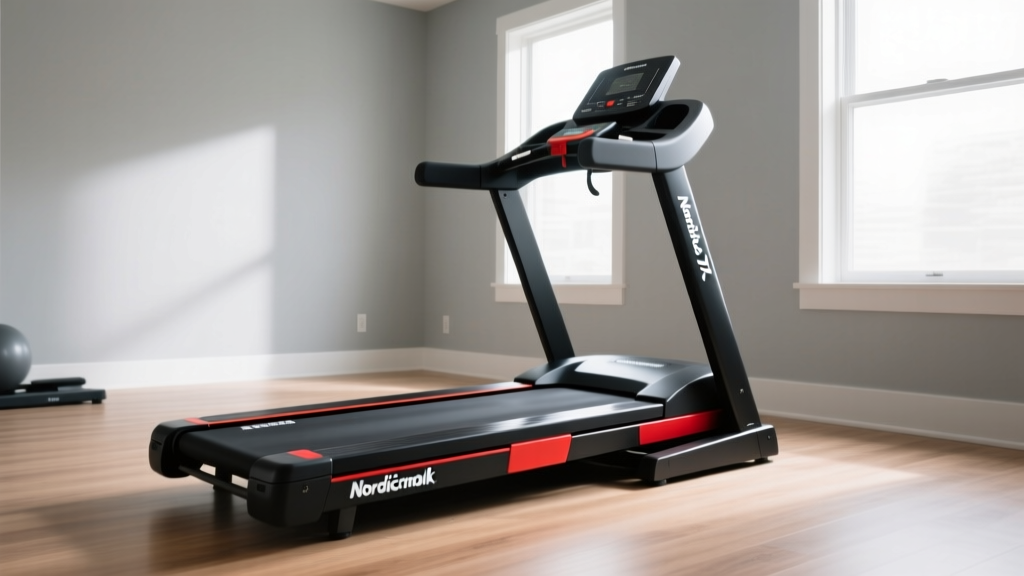
NordicTrack T5 Zi Treadmill: Motor HP & Troubleshooting Guide
Master treadmill motor sizes with our horsepower guide. We troubleshoot common NordicTrack T5 Zi treadmill motor failures, amp draws, and repair costs.

The Heartbeat of Your Workout: Understanding Treadmill Horsepower
When evaluating cardio equipment, the motor is the single most critical component dictating longevity, performance, and noise levels. Yet, the fitness industry is rife with misleading horsepower (HP) claims that leave consumers confused and ultimately disappointed. To understand how motor sizing impacts real-world performance, we are using the popular NordicTrack T5 Zi treadmill as our primary case study. By examining its specific motor architecture, we can build a comprehensive troubleshooting and sizing guide applicable to almost any home fitness machine.
The Golden Rule of Treadmill Motors
Always look for Continuous Horsepower (CHP), not Peak HP. Peak HP measures the absolute maximum output the motor can hit for a fraction of a second before failing. CHP measures the power the motor can sustain continuously throughout an entire workout without overheating. As noted in the Wirecutter treadmill buying guide, a 2.0 CHP motor will consistently outperform a 3.5 Peak HP motor in daily use.
NordicTrack T5 Zi Treadmill Motor Specs: A Real-World Baseline
The NordicTrack T5 Zi treadmill is typically equipped with a 2.25 CHP motor. This places it firmly in the mid-tier category, designed primarily for walking, power walking, and light jogging. It utilizes a Direct Current (DC) motor paired with a Pulse Width Modulation (PWM) control board, which is the industry standard for residential treadmills due to its quieter operation and smoother speed transitions compared to Alternating Current (AC) motors found in commercial gym equipment.
However, a 2.25 CHP motor has strict physical limitations. When users exceed the recommended weight capacity or attempt high-incline sprint intervals, the motor must draw excessive amperage to maintain belt speed, leading to premature thermal shutdown or permanent winding damage.
Motor Sizing vs. User Weight Matrix
Use this data table to understand how your body weight impacts the required CHP for a treadmill, using the T5 Zi's 2.25 CHP motor as the benchmark.
| User Weight | Recommended CHP | T5 Zi (2.25 CHP) Performance | Thermal Risk Level |
|---|---|---|---|
| Under 150 lbs | 2.0 - 2.25 CHP | Excellent for jogging | Low |
| 150 - 200 lbs | 2.5 - 2.75 CHP | Good for walking, struggles at high inclines | Moderate |
| 200 - 250 lbs | 3.0+ CHP | Frequent thermal shutoffs during runs | High |
| Over 250 lbs | 3.5 - 4.0 CHP | Not recommended; high failure rate | Critical |
Common Mistakes That Destroy Treadmill Motors
According to Consumer Reports, improper maintenance is the leading cause of treadmill motor failure, far outpacing manufacturing defects. Here are the most common mistakes owners make with mid-tier machines like the NordicTrack T5 Zi.
Mistake 1: Over-Tightening the Running Belt
Many users notice the belt slipping during a heavy stride and immediately reach for an Allen wrench to tighten the rear roller bolts. This is a fatal error. An over-tightened belt creates massive friction against the deck. The motor must then work twice as hard to pull the belt, spiking the amp draw and burning out the motor windings or blowing the PWM control board. The Fix: The belt should lift exactly 2 to 3 inches off the deck in the center when the machine is off. If it lifts less than 2 inches, it is too tight.
Mistake 2: Using the Wrong Lubricant
Applying WD-40, petroleum jelly, or generic silicone sprays containing propellants will destroy the PVC backing of your running belt and create a gummy residue that strains the motor. You must use 100% pure liquid silicone treadmill lubricant. Apply exactly 15ml (half an ounce) under the belt every 150 miles or every 3 months, whichever comes first.
Mistake 3: Plugging into a Power Strip
Treadmills draw significant surge current upon startup. Plugging your T5 Zi into a standard household power strip or a cheap surge protector restricts the voltage flow, causing the motor to run hot and the control board to experience voltage sags. Always plug your treadmill directly into a dedicated 120V, 15-amp wall outlet.
Expert Warning: If your treadmill is on a shared circuit with a refrigerator, microwave, or space heater, the voltage drops when those appliances cycle on. This starves the treadmill motor of power, forcing it to draw higher amperage to compensate, which accelerates wear.
Step-by-Step Troubleshooting: Is Your Motor Failing?
Before ordering a $400 replacement motor, you must accurately diagnose the issue. Follow this professional diagnostic sequence to isolate the failure point on your NordicTrack T5 Zi treadmill.
- The Amp Draw Test (The Gold Standard): Purchase or borrow a clamp multimeter. Open the motor hood and clamp the meter around the hot wire (usually black or red) leading from the control board to the motor. Turn the treadmill on to 3 MPH with no one on it. A healthy 2.25 CHP motor should draw between 2 to 4 amps unloaded. Next, walk on it at 3 MPH. The draw should rise to 4 to 7 amps. If your walking amp draw exceeds 12 amps, your belt/deck friction is too high, or the motor windings are shorting out.
- The Spin Test: Unplug the machine. Remove the motor hood and manually spin the motor flywheel by hand. It should spin freely with slight magnetic resistance. If you feel grinding, catching, or severe stiffness, the internal bearings or the front roller bearings have seized.
- The Ozone Smell Test: Run the treadmill at 5 MPH for five minutes. Get close to the motor hood. If you smell a sharp, metallic 'ozone' odor or burning dust, the motor's internal carbon brushes are worn down and arcing against the commutator. This is a definitive sign that the motor requires immediate replacement.
- Inspect the PWM Board: Look at the motor control board. If you see bulging cylindrical capacitors, black scorch marks near the MOSFET transistors, or a blown glass fuse, the board has failed. Often, a failing motor will take the control board out with it due to back-EMF voltage spikes.
When to Repair vs. Replace: The 2026 Cost Breakdown
Troubleshooting is only half the battle; making the right financial decision is the other. As of 2026, the supply chain for fitness parts has stabilized, but labor and component costs have shifted. Here is a realistic cost framework to help you decide whether to fix your T5 Zi or upgrade.
- Replacement 2.25 CHP DC Motor: $250 to $350 (Parts only). Installation takes about 45 minutes for a DIYer.
- PWM Motor Control Board: $150 to $225. Often required if the old motor shorted out.
- Combined Motor & Board Kit: $400 to $550. Highly recommended if the machine is over 7 years old, as a new motor will easily fry an aging, degraded control board.
- New Deck and Belt Kit: $120 to $180. If your amp draw test failed due to friction, replacing the motor without replacing a worn-out deck will simply destroy your new motor within six months.
The Decision Framework: If the total repair cost (Motor + Board + Belt) exceeds $650, and your treadmill is out of warranty, it is generally more financially sound to put that money toward a new machine with a larger 3.0+ CHP motor and a modernized warranty. However, if you only need a belt lubrication and a $180 control board, repairing the NordicTrack T5 Zi treadmill remains a highly cost-effective way to extend its lifespan for another three to five years.
Final Thoughts on Motor Longevity
Understanding the limitations and requirements of your treadmill's motor is the key to a frustration-free fitness journey. By respecting the 2.25 CHP ceiling of the NordicTrack T5 Zi, maintaining proper belt tension, and utilizing the amp draw test for proactive troubleshooting, you can maximize your equipment's ROI and keep your cardio routine uninterrupted.
More gear to consider
All reviews
What Is a Good Treadmill for Seniors vs Stationary Bikes? Care Guide

Life Cycle Treadmill Maintenance: 2026 Belt Lubrication Trends

NOHRD Treadmill or Rower? Buying Guide, Technique & Mistakes
Do Treadmills Build Muscle? Compact Cardio Budget Guide

NordicTrack Ultra 1 Treadmill vs Under Desk Office Models
