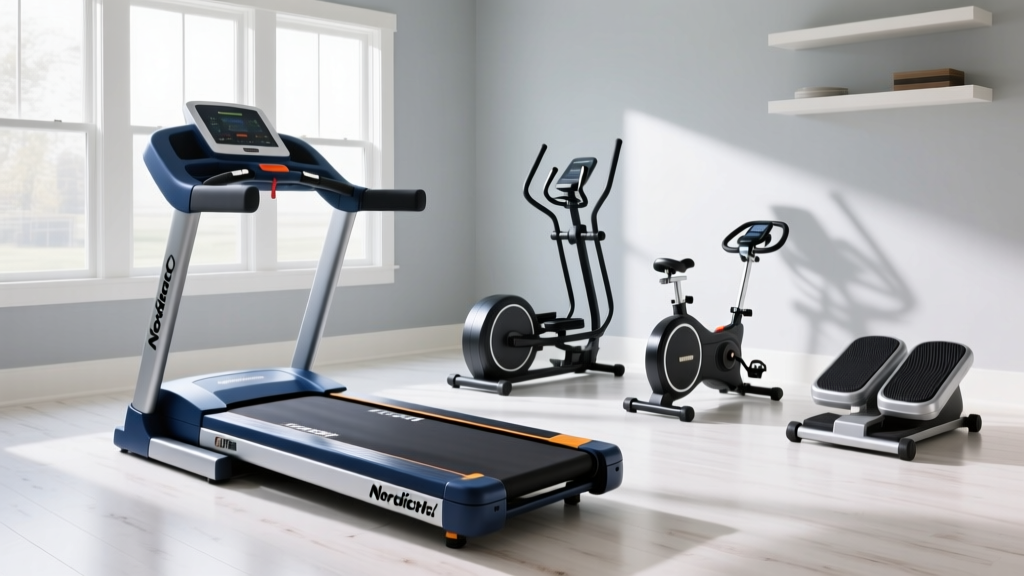
NordicTrack Commercial 1750 Folding Treadmill vs Compact Cardio
Compare the NordicTrack Commercial 1750 folding treadmill footprint with true compact portable cardio options for optimal 2026 home gym space layouts.

The 'Folding' Illusion: Spatial Realities of Heavy-Duty Treadmills
When designing a multi-use living space or dedicated home gym in 2026, spatial optimization is the ultimate priority. Many buyers search for a premium machine and land on the NordicTrack Commercial 1750 folding treadmill, assuming that the word 'folding' equates to 'compact' or 'portable.' As fitness equipment layout specialists, we must address a critical industry misconception: stowable does not mean portable.
The NordicTrack Commercial 1750 is a flagship, heavy-duty performance machine. It boasts a 3.5 CHP motor, a 20x60-inch commercial-grade belt, and a 14-inch pivoting HD touchscreen. However, its physical footprint demands serious architectural consideration. Unfolded, it measures approximately 76.5 inches long by 35.5 inches wide. When folded, the dimensions shift to roughly 39 inches long, 35.5 inches wide, and a towering 76 inches high. Weighing in at 340 pounds, moving this unit on its transport wheels over carpet thresholds or door jams is strictly a two-person job. It is designed to be tucked against a wall when not in use, but it remains a permanent fixture in the room.
The 24-Inch Rule: Safety Clearances Often Ignored
The physical dimensions of the machine are only half of the spatial equation. According to safety guidelines emphasized by the U.S. Consumer Product Safety Commission (CPSC), treadmills require strict operational clearances to prevent entrapment, friction burns, and catastrophic falls.
⚠️ Critical Layout Warning: You must allocate a minimum of 24 inches (2 feet) of unobstructed clearance behind the treadmill, and at least 18 inches on both lateral sides.When you factor in this mandatory safety zone, the NordicTrack Commercial 1750 folding treadmill actually consumes an operational footprint of nearly 35 square feet. In a standard 10x10 bedroom, this single machine and its safety perimeter will dominate 35% of the total floor space, leaving little room for ancillary equipment like free weights or yoga mats.
True Compact Portable Cardio Equipment Options
If your 2026 layout requires equipment that can be genuinely hidden away, moved by a single person, or stored under furniture, you must pivot from heavy-duty folding treadmills to true compact portable cardio equipment options. Below are the top-tier alternatives that deliver high cardiovascular ROI without monopolizing your floor plan.
1. Ultra-Compact Walking Pads (KingSmith WalkingPad X21)
For low-impact, steady-state cardio, double-fold walking pads are the undisputed kings of space optimization. The KingSmith WalkingPad X21 features an innovative 180-degree double-fold mechanism. When folded, it measures just 38 x 21 x 8 inches and weighs roughly 60 pounds. It can easily slide under a standard sofa (which typically has a 9-inch clearance) or stand vertically in a closet. While it lacks the 15% incline and 12 MPH top speed of the 1750, it perfectly supports the World Health Organization's physical activity recommendations for daily moderate-intensity movement.
2. Wall-Hugging Foldable Rowers (Hydrow Wave)
Rowing machines engage 86% of the body's musculature, offering a superior calorie-burn-to-footprint ratio. The Hydrow Wave was engineered specifically for spatial constraints. Unlike traditional rail-based rowers that require 8 feet of length, the Wave folds down to a 24 x 33-inch footprint. More importantly, it is designed to stand vertically and mount flush against a wall, protruding only 24 inches into the room. Weighing 102 pounds, it is manageable for one person to pivot and store, making it a vastly more portable option than any folding treadmill.
3. Vertical Storage Climbers (Bowflex Max Trainer M9)
For high-intensity interval training (HIIT), elliptical cross-trainers and stair climbers are traditional space hogs. The Bowflex Max Trainer M9 solves this by utilizing a steep, vertical stepping motion rather than a long, horizontal stride. Its operational footprint is a mere 30 x 49 inches. Because the user's momentum is directed upward rather than outward, the rear safety clearance requirement is drastically reduced compared to a treadmill belt.
Spatial Footprint & Dynamic Load Matrix
When planning your room layout, use this comparison matrix to understand the true spatial and structural demands of these machines.
| Equipment Model | Unfolded L x W | Folded / Stored Footprint | Weight | Min. Ceiling Req. |
|---|---|---|---|---|
| NordicTrack 1750 | 76.5' x 35.5' | 39' x 35.5' (76' H) | 340 lbs | 96' (8 ft) |
| WalkingPad X21 | 61' x 22' | 38' x 21' (8' H) | 60 lbs | 84' (7 ft) |
| Hydrow Wave | 84' x 24' | 24' x 33' (Vertical) | 102 lbs | 84' (7 ft) |
| Bowflex Max M9 | 49' x 30' | 49' x 30' (Non-folding) | 148 lbs | 96' (8 ft) |
Layout Design: Ceiling Height & Incline Geometry
One of the most frequent edge-case failures in home gym design involves ceiling height. The NordicTrack Commercial 1750 features a powerful motor capable of a 15% incline. When the front of the deck elevates to a 15% grade, the running surface rises by approximately 10 to 12 inches.
Consider a user who is 6 feet tall (72 inches). Add the standard 9-inch deck height, plus the 11-inch incline lift, and the user's head is now at 92 inches. If your room has a standard 8-foot ceiling (96 inches), you are left with a mere 4 inches of headroom. This creates a claustrophobic environment and poses a severe strike hazard if the user bounces slightly during a sprint interval. For any heavy-duty incline treadmill, we strictly recommend installing the unit in a room with 9-foot (108-inch) or vaulted ceilings.
Flooring, Acoustics, and Dynamic Load Physics
Space optimization is not just about visual clutter; it is also about acoustic and structural footprint. A 340-pound treadmill supporting a 200-pound runner generates a static load of 540 pounds. However, the dynamic strike force of a runner's footfall can momentarily exceed 1,200 pounds of localized pressure.
- Avoid EVA Foam: Cheap interlocking foam tiles will compress and bottom out under the 1750's transport wheels and leveling feet, causing the machine to wobble during high-speed runs.
- Use Vulcanized Rubber: Invest in a 3/8-inch thick, high-density vulcanized rubber horse-stall mat (typically 4x6 feet). This dampens low-frequency acoustic vibrations, preventing structural resonance from traveling through floor joists into multi-story homes.
- Moisture Barriers: If placing portable cardio options like the WalkingPad in a basement or garage, ensure a 6-mil polyethylene vapor barrier is placed beneath the rubber mat to prevent sweat and ambient moisture from warping the subfloor.
More gear to consider
All reviews
ProForm Pro 5000 Treadmill vs Rowing: Beginner Step-by-Step Guide
Curved vs Motorized: Treadmill Walking Workouts to Lose Weight
Curved vs Motorized: Top Brands of Treadmills for Beginners

20 mph Treadmill vs Stationary Bike Types: Upright, Recumbent & Spin
Wahoo KICKR RUN Treadmill Belt Maintenance & 2026 Market Trends
