
Searching for a Nike Dumbbell Rack? Small Space Storage Guide
Searching for a Nike dumbbell rack? Discover the truth about apparel-brand gear and explore the best space-saving storage solutions for small home gyms.

If you are outfitting a home gym in a compact apartment or spare bedroom, you already know the struggle of balancing functionality with aesthetics. You have the sleek sneakers, the matching athletic apparel, and a curated set of weights. Naturally, you might find yourself searching for a Nike dumbbell rack to complete that cohesive, minimalist look.
But here is the industry truth that big apparel brands do not advertise: Nike does not manufacture structural steel dumbbell racks. While they produce fantastic neoprene-coated light dumbbells, resistance bands, and training mats, heavy-duty storage solutions are left to specialized fitness engineering companies.
Do not worry—you can still achieve that high-end, sneakerhead-approved aesthetic without sacrificing safety or square footage. This beginner-friendly, step-by-step guide will walk you through the best small space equipment storage solutions available in 2026, helping you build a sleek, ultra-functional home gym that fits your lifestyle and your floor plan.
The 'Sneakerhead Aesthetic' vs. Structural Reality
When fitness enthusiasts search for a Nike dumbbell rack, they are usually looking for a specific design language: matte black finishes, clean geometric lines, and a minimalist footprint. To achieve this, you need to pivot from apparel brands to premium fitness manufacturers that specialize in space-saving engineering.
💡 The Design Pivot: To match your favorite athletic gear, look for racks featuring 'matte black' or 'ghost grey' powder-coated finishes. Avoid chrome or bright colored racks, as they tend to visually clutter small spaces and clash with modern minimalist decor.Step 1: Audit Your Small Space Footprint (The 36-Inch Rule)
Before buying any storage solution, you must map your biomechanical clearance. A common beginner mistake is buying a rack that fits the room but leaves no room to actually use the equipment.
According to guidelines referenced by the National Strength and Conditioning Association (NSCA), proper equipment spacing is critical for safety and joint health. In a small space, you must account for your wingspan during lateral movements.
- The Lateral Raise Test: Stand where you plan to work out. Extend your arms fully to the sides holding a broomstick. You need a minimum of 36 inches of clearance on both sides of your centerline (72 inches total) to perform dumbbell flyes or lateral raises without striking a wall or rack.
- The Overhead Clearance: Ensure your ceiling height allows for a full overhead press plus 12 inches of buffer. Standard 8-foot ceilings are usually sufficient, but watch out for low-hanging light fixtures or ceiling fans.
- The Drop Zone: Never place your rack on the edge of your rubber matting. If a dumbbell slips, it needs to hit the mat, not your hardwood floor or drywall.
Step 2: Choose Your Rack Profile (Comparison Matrix)
Small space equipment storage solutions generally fall into three categories. Here is how they compare for compact home gyms in 2026:
| Rack Type | Floor Footprint | Max Capacity | 2026 Price Range | Best For |
|---|---|---|---|---|
| Vertical Tower | ~24" x 24" | 500 - 800 lbs | $225 - $350 | Corners, multiple pairs |
| Adjustable Stand | ~28" x 21" | 120 - 240 lbs | $150 - $250 | Micro-apartments, 1 pair |
| Wall-Mounted | 0" (Floor space) | 200 - 400 lbs | $80 - $180 | Studio apartments, rentals |
Step 3: Top 3 Space-Saving Racks for the Minimalist Gym
To get that premium, apparel-matching aesthetic without the structural compromises, here are the top three specific models that dominate the small-space market.
1. The Vertical Corner Solution: Rogue Fitness Vertical Dumbbell Rack
If you want the matte-black, industrial-chic look that pairs perfectly with high-end athletic wear, Rogue Fitness sets the gold standard. Their 3-Tier or 5-Tier Vertical Dumbbell Racks are constructed from 11-gauge steel and feature a footprint of just 24 by 24 inches.
- Why it works for small spaces: It builds up, not out. You can tuck this into a tight bedroom corner, utilizing dead vertical space.
- Aesthetic Match: The matte black powder coat and laser-cut logo offer a sleek, premium finish that rivals any designer brand.
- Pricing: Expect to pay around $295 for the 3-tier model, which comfortably holds 5 pairs of hex dumbbells.
2. The Adjustable Hack: BOWFLEX SelectTech Stand
The ultimate small space equipment storage solution is not storing multiple dumbbells at all—it is storing one adjustable pair. The BOWFLEX SelectTech 552 stand is engineered specifically to hold their adjustable dumbbells and the included catch-tray.
- Why it works for small spaces: It replaces an entire 10-dumbbell rack with a single 28" x 21" footprint.
- Edge Case Warning: Do not attempt to place standard hex dumbbells on this stand. The tray is molded specifically for the SelectTech dial mechanism. Using it for standard cast-iron weights is a major failure mode that leads to scratched floors and rolled weights.
3. The Budget A-Frame: CAP Barbell Coated A-Frame Rack
For beginners who are just starting with 3 pairs of light neoprene or rubber dumbbells (perhaps the very ones Nike or similar brands sell), the CAP Barbell A-Frame is a budget-friendly, low-profile option. It costs roughly $55, takes up about 2 square feet, and keeps your weights off the floor without dominating the visual space of the room.
Step 4: Integrate Your Brand-Matched Accessories
Since you will be buying your heavy steel rack from a dedicated fitness manufacturer, you can satisfy your brand loyalty and aesthetic desires by organizing your accessories with the gear Nike does produce.
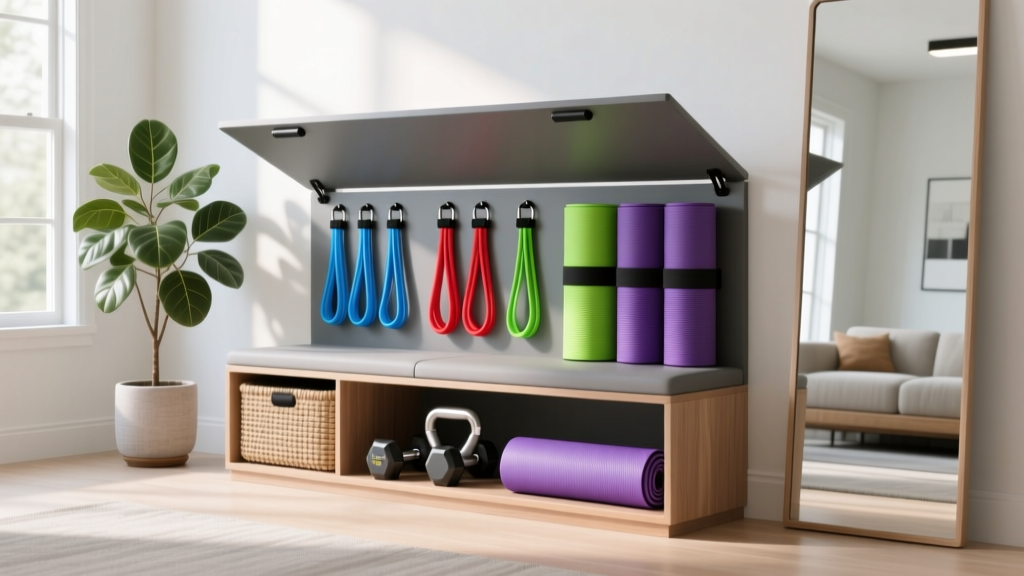
Pro-Tip for Visual Cohesion: Use a sleek, monochromatic Nike training mat as your designated 'drop zone' and workout area. Mount a minimalist wooden or matte-black pegboard on the wall above your rack to hang your Nike resistance bands, jump ropes, and lifting straps. This keeps the floor entirely clear, making a 100-square-foot room feel twice as large.
Step 5: Installation Safety & Edge Cases
When dealing with small spaces, wall-mounted racks or tall vertical towers present unique safety hazards that beginners often overlook.
The Drywall Failure Mode
If you opt for a wall-mounted dumbbell shelf to save floor space, you must anchor it correctly. A pair of 30-pound dumbbells exerts massive dynamic torque on a wall bracket when being lifted or set down. Never use standard drywall toggle bolts for a dumbbell rack. Over time, the repetitive vibration and weight will cause the drywall to crumble, resulting in a catastrophic failure that will destroy your baseboards and potentially injure you.
The Fix: You must use a stud finder to locate the 16-inch-on-center wooden studs in your wall and secure the bracket using 3-inch structural lag screws. If you are renting and cannot drill into studs, you must abandon wall-mounted shelves and opt for a freestanding vertical tower instead.
Stabilizing Vertical Towers
Even freestanding racks can become top-heavy if loaded incorrectly. Always follow the 'Heavy on the Bottom' rule. Store your 40lb and 50lb dumbbells on the bottom tier, and your 10lb and 15lb pairs on the top tier. This lowers the center of gravity and prevents the rack from tipping if you accidentally bump it while navigating your small space.
Final Thoughts on Small Space Organization
While a literal Nike dumbbell rack does not exist on the market, the spirit of that search—finding a sleek, minimalist, and highly functional storage solution for a compact room—is entirely achievable. By auditing your wingspan clearance, investing in a premium matte-black vertical tower or adjustable stand, and utilizing wall space for brand-matched accessories, you can build a home gym in 2026 that looks like a high-end boutique studio and performs flawlessly. Measure twice, anchor securely, and enjoy your newly optimized training space.
More gear to consider
All reviews
Small Dumbbell Rack for Home: The Complete Setup Guide

How To Repair Normatec: A Practical, Step-by-Step Guide for Home Gym Owners

Titan Fitness Dumbbell Stand & Resistance Band Storage 2026
Space Optimization: Resistance Bands & The Home Gym Storage Bench

Beyond the Two Tier Dumbbell Rack: Resistance Band Storage Trends 2026
