
Best Home Gym Storage Cabinet vs Dumbbell Rack: 2026 Guide
Compare top open dumbbell racks and enclosed home gym storage cabinet options for 2026. Find the best organizer for your space, budget, and weight capacity.

As home fitness spaces evolve from cluttered garage corners into integrated, multi-purpose living areas in 2026, the debate over equipment organization has never been more relevant. Specifically, the choice between a heavy-duty open dumbbell storage rack and an enclosed home gym storage cabinet dictates both the aesthetics and the structural safety of your workout environment. While an enclosed cabinet hides visual clutter and protects gear from dust, traditional open racks offer superior weight capacities and ergonomic access. In this head-to-head comparison, we break down the physics, pricing, and practical realities of the best dumbbell organizer solutions on the market.
The Core Dilemma: Open Rack vs. Enclosed Cabinet
When outfitting a dedicated workout space, lifters generally fall into two camps: those who prioritize raw functionality and those who prioritize interior design. A traditional 3-tier dumbbell rack is engineered for one thing—holding massive amounts of iron safely. Conversely, a home gym storage cabinet (often featuring doors, drawers, and mixed-material shelving) appeals to those who want to conceal their equipment when not in use. However, this aesthetic choice comes with severe structural trade-offs that many buyers overlook until a shelf bows or breaks.
Head-to-Head Product Comparison Matrix
To understand the landscape, we must compare the industry-leading open racks against the standard enclosed cabinet options. Below is a 2026 data matrix comparing the Rogue 3-Tier Rack, the Titan Fitness 3-Tier Rack, and a standard Enclosed MDF/Metal Hybrid Cabinet (representative of popular consumer brands like Sunny Health & Fitness or Fitness Reality).
| Feature | Rogue 3-Tier Dumbbell Rack | Titan Fitness 3-Tier Rack | Standard Enclosed Home Gym Storage Cabinet |
|---|---|---|---|
| Approximate Price | $395.00 + Shipping | $149.99 (Free Shipping) | $180.00 - $250.00 |
| Steel Gauge | 7-Gauge & 11-Gauge | 11-Gauge & 14-Gauge | 22-Gauge (Sheet Metal) / MDF Wood |
| Weight Capacity | 1,500+ lbs (Distributed) | 1,000+ lbs (Distributed) | 150 - 200 lbs per shelf |
| Footprint (W x D) | 35" W x 22.5" D | 34" W x 22" D | 36" W x 18" D |
| Shelf Protection | UHMW Plastic Liners | Rubber Mats / Bare Steel | Painted MDF / Thin Carpet |
| Dust & Pet Protection | None (Open Air) | None (Open Air) | Excellent (Enclosed Doors) |
Deep Dive: Premium Open Dumbbell Racks
Open racks remain the gold standard for serious lifters. According to Garage Gym Reviews, the primary failure mode in budget dumbbell racks is the front lip bending outward under the sheer force of heavy hex dumbbells, creating a dangerous roll-off hazard. Let us examine how the top two contenders solve this.
Rogue Fitness 3-Tier Dumbbell Rack
The Rogue 3-Tier Rack is the undisputed heavyweight champion of dumbbell organization. Built from 7-gauge and 11-gauge steel, it is practically indestructible in a residential setting. The standout feature is the inclusion of UHMW (Ultra-High Molecular Weight) plastic liners on the shelves. Unlike rubber mats that degrade, tear, or emit odors over time, UHMW protects the knurling and coating of your dumbbells while providing a slick, durable surface that makes sliding heavy 100lb+ dumbbells into place significantly easier. As noted in the Rogue Fitness Official Specs, the angled shelf design naturally cradles hex dumbbells, preventing them from walking off the edge during aggressive loading.
Titan Fitness 3-Tier Dumbbell Rack
For those on a stricter budget, the Titan Fitness 3-Tier Rack offers 80% of the performance at less than half the cost. It utilizes a similar angled-tier design but relies on thinner 14-gauge steel for the shelf lips and standard rubber matting for protection. While it easily holds a standard 5-50lb rubber hex set (totaling 825 lbs), users loading massive 120lb+ pro-grade dumbbells on the top tier may notice slight flexing in the front lip over several years. It is an exceptional value, but it lacks the refined finishing and UHMW protection of its premium rival.
The Enclosed Home Gym Storage Cabinet Reality
The allure of a home gym storage cabinet is undeniable: you finish your workout, close the doors, and your living space looks pristine. However, you must understand the physics of particle board and thin sheet metal.
⚠️ The 800-Pound Warning: A standard full set of 5-50lb hex dumbbells weighs exactly 825 lbs. Most enclosed home gym storage cabinets on the market feature MDF or particle board shelving rated for a maximum of 150 lbs per shelf. If you attempt to store a full dumbbell set inside a standard enclosed cabinet, the shelves will inevitably bow, snap, and collapse, potentially damaging your floor and equipment. If you demand an enclosed look, you must invest in custom 11-gauge steel locker-style cabinetry, which often costs upwards of $1,500."The greatest mistake home gym owners make is treating a residential storage cabinet like a commercial weight rack. MDF (Medium-Density Fiberboard) shelves are designed for towels, resistance bands, and yoga blocks—not 800 pounds of cast iron."
The Hybrid Solution
The most practical approach for 2026 is the hybrid method. Use a heavy-duty open rack (like the Titan or Rogue) specifically for your dumbbells and kettlebells, and utilize an enclosed home gym storage cabinet for lighter, high-clutter items. Bands, massage guns, chalk, lifting straps, and yoga mats belong in the cabinet. This keeps the visual noise hidden while ensuring the heavy iron is stored on structurally sound steel.
Step-by-Step: Safely Loading and Organizing Your Dumbbells
Regardless of whether you choose an open rack or a custom steel cabinet, proper loading technique is vital for safety and equipment longevity.
- Bottom-Heavy Distribution: Always store your heaviest dumbbells (70lbs and above) on the bottom tier. This lowers the center of gravity, preventing the rack from tipping forward if accidentally bumped.
- Middle Tier for Mid-Range: Place your most frequently used dumbbells (30lbs - 65lbs) on the middle tier. This minimizes spinal flexion and extension when picking up and racking the weights, saving your lower back.
- Top Tier for Light Weights: Reserve the top tier for lighter dumbbells (5lbs - 25lbs) and accessories. Reaching overhead with a 90lb dumbbell is a prime mechanism for rotator cuff impingement.
- Check the Welds Annually: Inspect the corner gussets and welds where the shelf meets the vertical uprights. Hairline fractures in the powder coat are the first indicator of metal fatigue.
Expert Verdict and Decision Framework
Choosing the right dumbbell organizer comes down to your specific environmental and training needs. Use this framework to make your final decision:
- Choose the Rogue 3-Tier Rack if: You are buying a lifetime piece of equipment, you own premium urethane or rubber hex dumbbells that you want to protect with UHMW plastic, and budget is a secondary concern.
- Choose the Titan Fitness 3-Tier Rack if: You want commercial-grade organization on a residential budget, and you are willing to accept minor aesthetic compromises like visible weld spatter or standard rubber mats.
- Choose an Enclosed Home Gym Storage Cabinet if: You are strictly storing bands, accessories, and light adjustable dumbbells (like a single pair of Nuobells or PowerBlocks), and your primary goal is hiding equipment from guests or protecting it from pets and dust.
Frequently Asked Questions
Can I put an open dumbbell rack on carpet?
Yes, but it is not ideal. Thick carpet compresses under the concentrated weight of a loaded rack, which can cause the rack to lean forward slightly over time. If your gym is carpeted, place a 3/4-inch thick horse stall mat or a custom-cut plywood base under the rack to distribute the footprint and maintain a level plane.
Do I need a rack with a horizontal shelf or an angled shelf?
For hex dumbbells, angled shelves are vastly superior. The 15-to-20-degree backward tilt uses gravity to keep the dumbbells seated firmly against the backstop. Flat shelves require a front lip to prevent roll-offs, which makes sliding the dumbbells on and off much more difficult and increases the risk of tearing the rubber coating on your weights.
How much clearance do I need around a dumbbell rack?
You should maintain a minimum of 24 inches of clearance in front of the rack to allow for safe bending and lifting mechanics. Additionally, leave 6 inches of clearance on either side so you can easily grip the outer edges of the dumbbells without scraping your knuckles against walls or adjacent equipment.
More gear to consider
All reviews
DIY Wooden Dumbbell Rack & Band Storage: Budget Breakdown

Beyond the Nike Dumbbell Tree: Weight Plate Storage Guide

Black Widow Dumbbell Stand: 2026 Garage Gym Storage Review

Router and Cupping Compared: Functional Differences, Applications, and Practical Selection Criteria for Home Gym Storage Projects
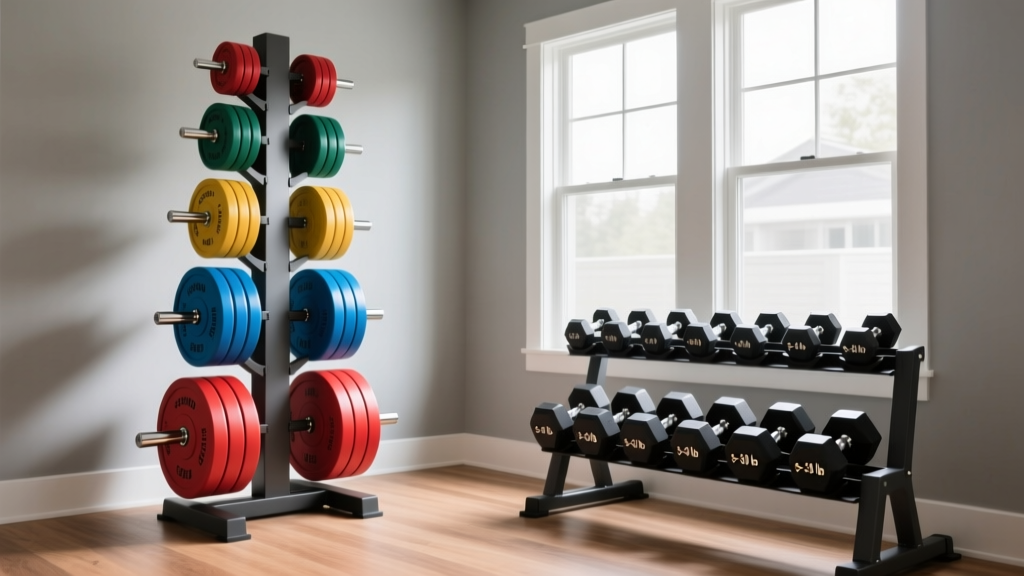
Best Weight Plate Storage Trees & Dumbbell Rack 5-50 Setups
