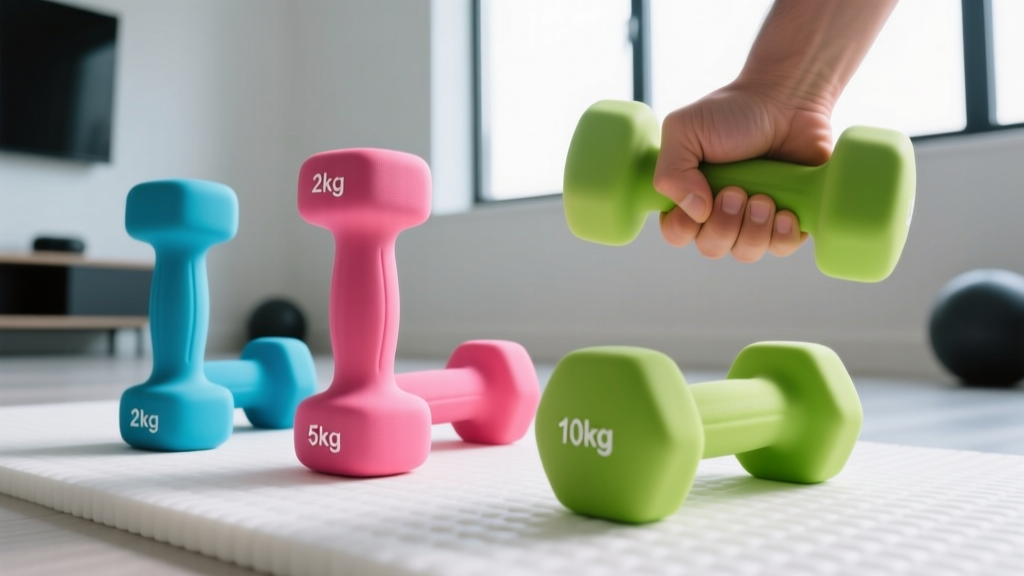
Neoprene Dumbbells for Weight Loss: A Beginner's Guide
Discover how to use neoprene dumbbells for weight loss at home. This beginner guide covers routines, weight selection, and top gear picks.

When building a home gym focused on fat loss, the equipment you choose dictates your consistency, safety, and results. While adjustable dumbbells and heavy barbells often dominate the conversation, neoprene dumbbells for weight loss remain an unsung hero for beginners. Their tactile grip, floor-friendly coating, and accessible price points make them the perfect tool for high-repetition metabolic conditioning.
This step-by-step guide will walk you through the material science of neoprene, how to select the right weight for caloric burn, and a complete 20-minute metabolic circuit designed specifically for home use.
The Material Science: Why Neoprene for Home Workouts?
Neoprene (polychloroprene) is a synthetic rubber that offers a soft, slightly porous exterior over a cast-iron core. Unlike bare iron or hard urethane, neoprene provides a tactile, friction-heavy grip that is highly forgiving for beginners performing high-rep circuits where sweaty palms are a guarantee.
💡 Pro Tip: The Hex AdvantageAlways opt for hex-shaped neoprene dumbbells rather than round ones. The flat edges prevent the weights from rolling away during floor-based exercises like renegade rows or push-up variations, which are critical for full-body caloric expenditure.
Neoprene vs. Other Coatings for Beginners
| Material | Grip Feel | Floor Safety | Average Cost (per lb) | Best For |
|---|---|---|---|---|
| Neoprene | Soft, high-friction | Excellent (protects hardwood) | $1.20 - $1.80 | High-rep circuits, beginners |
| Rubber | Firm, can be slippery | Very Good | $1.50 - $2.50 | General strength training |
| Urethane | Hard, durable | Good (can dent soft wood) | $3.00 - $5.00+ | Commercial gyms, heavy lifting |
Step 1: Selecting Your Starting Weights for Fat Burn
According to the Mayo Clinic, strength training is a vital component of weight loss because it increases muscle mass, which in turn elevates your resting metabolic rate. However, metabolic circuits require a different weight selection strategy than traditional powerlifting.
For weight loss, you want to target muscular endurance and cardiovascular strain. This means selecting a weight that allows you to complete 12 to 15 repetitions with the last 3 reps feeling challenging, but without breaking your form.
Beginner Weight Selection Matrix
- Lower Body (Goblet Squats, Lunges): 15 lbs to 25 lbs per dumbbell. The legs are large muscle groups that require heavier loads to trigger an metabolic response.
- Upper Body Push (Floor Press, Overhead Press): 8 lbs to 15 lbs per dumbbell. The shoulders and triceps fatigue quickly during high-rep sets.
- Upper Body Pull (Renegade Rows, Bent-Over Rows): 10 lbs to 20 lbs per dumbbell. The back muscles can handle moderate loads, but grip strength is often the limiting factor.
"Building muscle through resistance training helps you burn more calories at rest. As you gain muscle, your body requires more energy to maintain that tissue, making strength training a long-term investment in your metabolic health." — Harvard Health Publishing
Step 2: The 20-Minute Neoprene Metabolic Circuit
This routine leverages Excess Post-exercise Oxygen Consumption (EPOC). By keeping rest periods short and alternating between upper and lower body movements, your heart rate stays elevated, maximizing caloric burn during and after the workout.
Protocol: Perform each exercise for 45 seconds, followed by 15 seconds of transition/rest. Complete 4 full rounds. Rest 90 seconds between rounds.
-
1. Dumbbell Goblet Squat to Calf Raise
Hold one heavier neoprene dumbbell vertically against your chest. Squat deeply, keeping your chest up. As you drive through your heels to stand, explode upward onto your toes for a calf raise. This compound movement recruits the quads, glutes, and calves simultaneously.
-
2. Renegade Rows (Hex Dumbbells Required)
Assume a push-up position gripping a hex neoprene dumbbell in each hand. Keep your core braced to prevent your hips from rotating. Row the right dumbbell to your hip, lower it, and repeat on the left. The neoprene coating ensures a secure grip even when your hands are sweaty, while the hex shape stops the weights from rolling.
-
3. Thrusters (Squat to Overhead Press)
Hold a pair of lighter neoprene dumbbells at shoulder height. Perform a front squat, and use the momentum from your hips to drive the weights overhead. This is a high-calorie-burn movement that spikes the heart rate rapidly.
-
4. Dumbbell Romanian Deadlift (RDL)
Hold a pair of medium-weight dumbbells in front of your thighs. Hinge at the hips, pushing your glutes back while keeping a slight bend in your knees. Lower the weights until you feel a deep stretch in your hamstrings, then squeeze your glutes to return to standing.
Step 3: Top Neoprene Dumbbells to Buy Right Now
Not all neoprene is created equal. Cheaper imports often use a thin 1mm coating that peels after a few months of friction and sweat. Look for a minimum 2.5mm to 3mm neoprene thickness and a solid cast-iron core.
1. Yes4All Neoprene Coated Hex Dumbbell Pair
Best For: Budget-conscious beginners building their first rack.
Price Range: $35 - $65 (for pairs ranging from 10 lbs to 25 lbs).
The Details: Yes4All dominates the entry-level market. Their neoprene is color-coded by weight, making it easy to grab the right pair mid-circuit. The handles feature a contoured, textured chrome grip that contrasts nicely with the soft neoprene heads.
2. CAP Barbell Neoprene Hex Dumbbell
Best For: Durability and odor-free home environments.
Price Range: $1.40 - $1.80 per pound.
The Details: CAP Barbell uses a higher-grade polychloroprene blend that significantly reduces the "new rubber" off-gassing smell that plagues cheaper sets. The hex heads are slightly wider, providing a more stable base for renegade rows and push-ups.
3. Amazon Basics Neoprene Dumbbell Set (3-Pair Bundle)
Best For: Outfitting a complete home gym in one purchase.
Price Range: $90 - $130 (typically includes 10lb, 15lb, and 20lb pairs).
The Details: Buying bundled sets saves roughly 15% compared to purchasing individually. The Amazon Basics line features a 2.5mm neoprene coating and a hex design. The handles are slightly thinner (approx. 32mm diameter), which is excellent for beginners with smaller hands.
Common Beginner Mistakes and Maintenance Tips
To get the most out of your neoprene dumbbells for weight loss, avoid these common pitfalls:
- The UV Degradation Error: Neoprene is highly sensitive to ultraviolet light and ozone. Never store your dumbbells outside or in direct sunlight. UV exposure will cause the coating to dry out, crack, and eventually peel off in chunks.
- The Chemical Cleaner Mistake: Do not wipe down neoprene with bleach or harsh alcohol-based sanitizers. These chemicals break down the synthetic rubber bonds. Instead, use a simple mixture of warm water and mild dish soap on a microfiber cloth after your sweat-heavy circuits.
- Ignoring Progressive Overload: While high-rep circuits are excellent for initial weight loss, your body will adapt. Once you can easily complete 15 reps of an exercise with your current neoprene weights, you must either increase the weight, decrease the rest period, or slow down the tempo (e.g., 3 seconds down, 1 second up) to continue forcing metabolic adaptation.
Frequently Asked Questions
Can I build muscle with light neoprene dumbbells?
Yes, but with a caveat. Light weights (5-15 lbs) can build muscle in beginners through metabolic stress, provided you train close to muscular failure (the point where you cannot complete another rep with good form). However, for long-term hypertrophy, you will eventually need to transition to heavier adjustable dumbbells or barbells.
Why do my neoprene dumbbells smell?
The "new dumbbell" odor is caused by volatile organic compounds (VOCs) off-gassing from the manufacturing process. To eliminate the smell, wipe the weights down with a mild soapy cloth and leave them in a well-ventilated, shaded area (like a garage or open window room) for 48 to 72 hours before bringing them into your living space.
Are neoprene dumbbells safe for vinyl plank flooring?
Neoprene is much safer for vinyl and hardwood than bare iron, but it is not entirely impact-proof. Dropping a 25 lb neoprene dumbbell from shoulder height can still crack vinyl planks or dent hardwood. Always lower the weights with control, and consider placing a 3/4-inch thick rubber horse stall mat under your workout area for ultimate protection.
More gear to consider
All reviews
Best Neoprene Dumbbells for the Single Arm Tricep Kickback (2026)

Tested and Step Compared: Real-World Performance Data for Industrial Weighing Systems
Bumper Plate vs Iron Plate: Budgeting for Incline Dumbbell Chest Flys

Barbell Knurling Guide: Plank Dumbbell Pull Through Muscles Worked
Loadable Dumbbells for a Budget Dumbbell Workout Routine (2026)
