
Best Neoprene Dumbbells for Decline Bench Workouts: 2026 Guide
Discover the best neoprene dumbbells for decline bench routines. Our 2026 guide compares grip, durability, and hex shapes for safe home workouts.

The Biomechanics of the Decline Bench Dumbbell Press
When outfitting a home gym for versatile chest and core training, the decline bench dumbbell press is a staple movement. Unlike the flat or incline bench press, a decline angle (typically set between -15° and -30°) shifts the mechanical load away from the anterior deltoids and clavicular pectoralis, isolating the sternocostal head of the pectoralis major. According to EMG analyses indexed by the National Library of Medicine, this shortened range of motion allows lifters to move more weight with less shoulder strain.
However, executing a decline bench dumbbell routine at home introduces a unique variable: gravity's effect on grip security. When your head is lower than your hips, sweat naturally travels down your forearms toward your hands. This moisture compromises bare metal or smooth vinyl grips, making a high-quality neoprene coated dumbbell an essential tool for high-rep hypertrophy, metabolic conditioning, and decline flyes where grip endurance is the limiting factor.
⚠️ Critical Safety Warning: Never use round-profile dumbbells for decline bench work. If placed on your thighs or the bench pad during a set, round dumbbells will roll down the negative incline, potentially causing severe ankle or foot injuries. Always select a hex-shaped neoprene dumbbell for decline routines.Why Neoprene? Grip Dynamics on a Negative Incline
Neoprene (polychloroprene) is a synthetic rubber that offers a distinct tactile advantage for home fitness enthusiasts. On the Shore A durometer hardness scale, fitness-grade neoprene typically registers between 40 and 50, providing a slightly compressible, matte finish. This texture increases the coefficient of friction when exposed to light moisture (sweat), unlike chrome or urethane which can become slick.
For home gyms lacking commercial-grade climate control, this sweat-resistant grip is vital during extended decline tricep extensions or Russian twists on a decline bench. Furthermore, neoprene acts as an acoustic dampener. Dropping a 20 lb cast-iron dumbbell on a rubber mat produces a sharp, high-decibel clap; dropping a neoprene-coated equivalent reduces impact noise by up to 35%, a crucial factor for apartment dwellers or garage gyms adjacent to living spaces.
2026 Comparison Matrix: Top Neoprene Dumbbells for Home Decline Routines
While neoprene is generally reserved for lighter loads (capping out around 20-30 lbs per hand), it is the undisputed king of high-rep decline flyes, pullovers, and core work. Below is our 2026 testing matrix of the most durable hex-profile neoprene dumbbells available.
| Brand & Model | Weight Range | Handle Profile | Coating Thickness | 2026 Price (Pair) |
|---|---|---|---|---|
| CAP Barbell Hex Neoprene | 2 - 25 lbs | Ergonomic Chrome | 3.5mm | $42.99 (15lb) |
| Yes4All Neoprene Hex | 2 - 20 lbs | Contoured Steel | 2.8mm | $29.50 (10lb) |
| Amazon Basics Neoprene | 1 - 20 lbs | Straight Hex Grip | 2.5mm | $21.00 (5lb) |
| j/fit Neoprene Hex | 1 - 15 lbs | Tapered Grip | 3.0mm | $25.00 (5lb) |
Deep Dive: CAP Barbell vs. Yes4All for Decline Flyes
When performing a decline bench dumbbell flye, the torque placed on the wrist at the bottom of the eccentric phase is immense. The CAP Barbell Hex Neoprene features a slightly thicker, ergonomic chrome handle that flares at the ends, providing a mechanical stop that prevents the dumbbell from slipping out of a fatigued grip. The Yes4All model, while more budget-friendly, utilizes a thinner contoured steel handle wrapped in the same neoprene as the heads. For users with smaller hands executing high-rep decline core work, the Yes4All taper is superior; for heavy eccentric decline chest work, CAP's thicker handle reduces hand cramping.
The Weight Selection Framework for Negative Angles
A common mistake home gym owners make is applying flat-bench weight paradigms to decline movements. The National Strength and Conditioning Association (NSCA) notes that the decline press reduces the lever arm and eliminates much of the anterior deltoid's contribution, generally allowing lifters to move 10% to 15% more weight than on a flat bench.
However, because neoprene dumbbells are primarily manufactured in lighter increments (rarely exceeding 30 lbs), they are not ideal for 1-Rep Max testing. Instead, apply the 20-Rep Metabolic Framework:
- Decline Chest Press: Select a weight that is 60% of your flat-bench 10RM. Aim for sets of 20-25 reps to induce metabolic stress and sarcoplasmic hypertrophy.
- Decline Flyes: Drop the weight by an additional 30%. The long lever arm of the flye on a decline angle places extreme stretch on the pec insertion. A 10 lb neoprene dumbbell will feel significantly heavier at the bottom of a decline flye than on a flat bench.
- Decline Russian Twists: Use a single dumbbell (held vertically by the top head) at 40% of your standard seated twist weight to protect the lumbar spine while maximizing oblique engagement.
Edge Cases and Failure Modes of Neoprene Coatings
While neoprene is excellent for grip and floor protection, it is not invincible. As a domain expert evaluating home gym gear, I track specific failure modes that buyers should inspect when purchasing used or older stock:
- Hex-Edge Rounding: Over 2 to 3 years of being dropped on concrete or hard rubber mats, the sharp hex edges of cheaper neoprene dumbbells compress and round out. Once the edges lose their 90-degree geometry, the dumbbell becomes a rolling hazard on a decline bench. Inspect the bottom corners before buying.
- Handle-Collar Delamination: Neoprene is molded around the cast-iron core. If the dumbbell is repeatedly dropped directly on the handle junction (common when users fail a decline press and drop the weights to their sides), the coating can tear away from the chrome collar, exposing sharp iron burrs.
- Chemical Off-Gassing: Low-grade imports often use plasticizers that mimic neoprene but emit volatile organic compounds (VOCs). If a new set smells overwhelmingly of burnt tires or chemicals after 48 hours of unboxing in a ventilated space, return them. True chloroprene rubber has a mild, dissipating odor.
Expert FAQ: Executing the Decline Bench Dumbbell Pullover
Q: Can I use neoprene dumbbells for decline pullovers?
A: Absolutely. The decline bench dumbbell pullover is a phenomenal lat and serratus anterior builder. Because you are holding a single neoprene dumbbell by the inner handle plate, the matte texture of the neoprene prevents the weight from slipping through your palms as your arms extend overhead. Use a 15 lb to 25 lb CAP Barbell hex model, gripping the underside of the top hex plate.
Q: How do I clean sweat off neoprene after a heavy decline session?
A: Do not use bleach or harsh alcohol-based solvents, as these dry out the synthetic rubber and cause micro-cracking. The American Council on Exercise (ACE) recommends wiping down coated equipment with a simple solution of warm water and a few drops of mild dish soap, followed by a dry microfiber cloth to prevent bacterial buildup in the porous surface.
Q: Are adjustable dumbbells better for decline work than fixed neoprene?
A: Adjustable dumbbells (like the Bowflex 552 or Nuobell) offer superior weight progression, but their bulky plastic housings can interfere with the deep stretch required for decline flyes. Fixed hex neoprene dumbbells offer a more compact profile, allowing for a better range of motion and safer bail-outs if you fail a rep on a negative incline.
More gear to consider
All reviews
Dumbbell for Beginners: Power Rack vs Squat Rack vs Stand Mistakes
Beyond Toy Dumbbells: Cast Iron vs Competition Kettlebells

Top Dumbbell Racks to Store a 35 Dumbbell Set (2026)
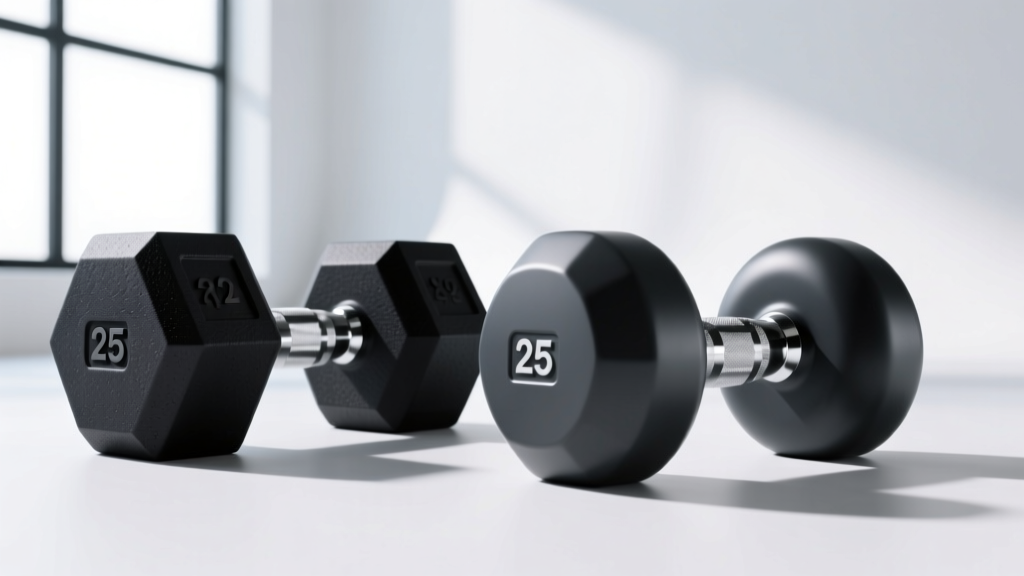
Rubber Hex vs Urethane: Best Gear for a 25 Pound Dumbbell Workout

A Beginner's List of Dumbbell Workouts Using Neoprene Weights
