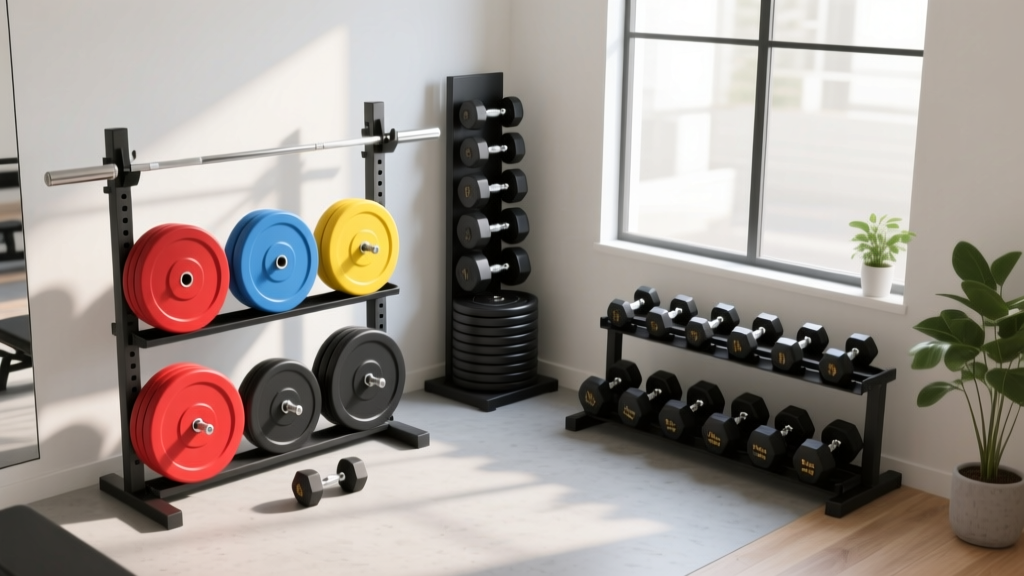
Gym Layouts: Bumper vs Iron Plates & Dumbbell Exercises for Seniors
Optimize your home gym layout with our bumper vs iron plate comparison and space-saving zones designed for safe dumbbell exercises for seniors.

The Multi-Generational Gym Challenge: Space, Safety, and Steel
As multi-generational households continue to rise in 2026, the modern home gym is no longer just a sanctuary for heavy lifters; it is a shared wellness space. Designing a layout that accommodates a 25-year-old powerlifter dropping heavy deadlifts while simultaneously providing a safe, accessible environment for a 70-year-old grandparent requires meticulous spatial planning. The core of this design challenge lies in equipment density and zoning. Specifically, the debate between stocking your gym with bumper plates versus traditional cast iron plates drastically alters your floor plan, storage footprint, and the remaining square footage available for specialized mobility work.
In this guide, we break down the spatial economics of bumper vs. iron plates and demonstrate how to reclaim enough square footage to build a dedicated, hazard-free zone optimized for dumbbell exercises for seniors.
Bumper Plates vs. Cast Iron: The Core Footprint Comparison
When evaluating free weights from a layout and space optimization perspective, density is everything. Cast iron and steel are incredibly dense, allowing for slim profiles. Bumper plates, constructed from virgin or crumb rubber, require significantly more volume to achieve the same mass. This physical reality dictates how you store them and how much of your garage or basement they will consume.
Space Optimization Insight: A standard 45lb cast iron plate is roughly 1.2 inches thick, while a 45lb competition bumper plate is 3.2 inches thick. When storing a full set of weights (10lb to 45lb pairs), iron plates take up approximately 60% less horizontal rack space than bumpers.Dimensional and Storage Matrix
| Metric | Cast Iron Plates (Machined) | Virgin Rubber Bumper Plates | Spatial Impact on Layout |
|---|---|---|---|
| 45lb Plate Diameter | 14.5 inches | 17.7 inches (450mm) | Bumpers require wider clearance on horizontal shelves. |
| 45lb Plate Thickness | 1.2 inches | 3.2 inches | Iron allows for high-density vertical tree racks. |
| Optimal Storage Rack | Vertical Plate Tree (e.g., Rogue 10-Pair) | Horizontal A-Frame or Wall Shelving | Vertical trees consume ~2.7 sq ft; A-Frames consume ~6.5 sq ft. |
| Average Cost (2026) | $1.50 - $2.00 / lb | $3.50 - $4.50 / lb | Budget savings on iron can be reallocated to senior safety flooring. |
| Floor Impact & Noise | High (Requires 3/4" rubber mats) | Low (Safe for standard subfloors) | Iron restricts lifting zones to reinforced ground-floor areas. |
Strategic Storage: Reclaiming Floor Space
If your primary goal is to maximize open floor space for functional movement and senior accessibility, cast iron plates paired with a vertical weight tree are the undisputed champions of spatial efficiency. A vertical tree rack has a footprint of just 20" x 20". By pushing this into a corner, you free up the center of the room. Conversely, if you opt for bumper plates because you plan to perform Olympic lifts, you must account for the sprawling footprint of an A-Frame rack or dedicate an entire wall to horizontal shelving, which can make a small room feel claustrophobic and impede wheelchair or walker navigation.
Carving Out the Safe Zone: Dumbbell Exercises for Seniors
By choosing high-density iron plates and utilizing vertical storage, you can easily reclaim a 5x5-foot or 6x6-foot section of your gym. This reclaimed space is critical for creating a low-impact, highly accessible zone specifically designed for dumbbell exercises for seniors. According to the National Institute on Aging, strength training is vital for older adults to maintain bone density, improve balance, and prevent falls, but the environment must be meticulously controlled to prevent accidents.
Senior Zone Layout Requirements:- Clearance: Minimum 60-inch turning radius to accommodate mobility aids (walkers/canes) as recommended by ADA guidelines.
- Flooring: Avoid interlocking EVA foam tiles, which can cause tripping hazards and lack stability. Use seamless 3/4" vulcanized rubber matting with a low-profile transition strip.
- Lighting: Minimum 500 lumens of shadow-free, overhead LED lighting to ensure depth perception is not compromised.
Top Space-Efficient Dumbbell Exercises for Seniors
When space is at a premium, the exercises selected for this zone must be highly effective while requiring minimal lateral movement. Here are the best dumbbell exercises for seniors that fit perfectly within a compact 5x5-foot layout:
- Seated Goblet Squats to a Bench: Placing a sturdy, 18-inch-high utility bench in the center of the zone allows for safe, depth-controlled squats holding a single light dumbbell (5-15 lbs). The bench acts as a physical safety stop.
- Supported Single-Arm Rows: Using the edge of the utility bench for three-point support, seniors can perform back-strengthening rows with dumbbells, improving posture without requiring the balance demands of a standing bent-over row.
- Seated Shoulder Presses: Performed seated on the bench with back support, using 3lb to 8lb hex dumbbells. Hexagonal dumbbells are mandatory here, as they will not roll off the bench or across the floor if dropped.
- Standing Dumbbell Farmer's Holds: A simple but highly effective grip and core stabilization exercise that requires zero lateral space, just a firm stance and two moderately weighted dumbbells.
The Centers for Disease Control and Prevention (CDC) emphasizes that older adults should engage in muscle-strengthening activities at least two days a week. By dedicating a permanent, uncluttered zone for these dumbbell exercises for seniors, you remove the friction of having to move heavy barbell equipment out of the way before a workout.
Layout Blueprint: Zoning a 150-Square-Foot Garage Gym
To visualize how bumper vs. iron plate decisions impact the integration of a senior fitness zone, consider a standard 10x15-foot (150 sq ft) garage gym layout.
Zone A: The Heavy Lifting Platform (60 sq ft)
Positioned in the rear corner against a reinforced wall. This area houses the power rack and barbell. If you use iron plates, a vertical tree rack sits flush against the side of the rack, leaving the walkways clear. If you use bumper plates, an A-frame must be positioned at the front of the platform, eating into the central walkway and creating a bottleneck.
Zone B: The Senior & Mobility Sanctuary (36 sq ft)
Located near the entry door to prevent the senior user from having to navigate around heavy steel equipment. This 6x6-foot area is floored with high-density rubber and houses a 3-tier neoprene dumbbell rack (ranging from 2lbs to 20lbs) and a folding utility bench. This zone is strictly reserved for dumbbell exercises for seniors, yoga, and balance work.
Zone C: Transitional Walkways (54 sq ft)
A minimum 36-inch wide clear path connecting the entrance to Zone B, and Zone B to Zone A. Keeping iron plates on vertical trees ensures these walkways remain entirely free of tripping hazards, a critical factor when designing a multi-generational space.
Frequently Asked Questions
Can I use bumper plates if I have a very small home gym?
You can, but it will severely limit your usable floor space. Bumper plates require wide, deep storage racks. If your gym is under 120 square feet, opt for machined cast iron plates and a vertical wall-mounted plate rack to maximize the open floor area needed for safe movement.
Are hex dumbbells better than round dumbbells for a senior workout zone?
Yes. Hex dumbbells do not roll. In a compact space optimized for dumbbell exercises for seniors, a dropped round dumbbell can roll under a bench or into a walkway, creating a severe tripping hazard. Hex dumbbells stay exactly where they are placed or dropped.
How much weight should a senior start with when doing dumbbell exercises?
Starting weights vary based on individual fitness levels, but generally, 2lb to 5lb dumbbells are recommended for upper body isolation movements, while 8lb to 15lb dumbbells are appropriate for lower body movements like goblet squats. Always prioritize controlled tempo and joint comfort over raw load.
More gear to consider
All reviews
EZ Curl Bar vs Straight Bar: Urethane Dumbbells vs Rubber Dumbbells

Rubber Hex vs Urethane: Best for Dumbbell Sumo Squats

Best Adjustable Dumbbells for a Total Body Dumbbell Routine (2026)
Home Gym Setup: Using Neoprene Dumbbells for Legs Effectively

Barbell Collar Types: Secure Loads Past Your Dumbbell Set Target
