
Quiet Cardio for Beginner Treadmill Workouts for Weight Loss
Compare cardio machine noise levels and find the best quiet treadmills for beginner treadmill workouts for weight loss in apartments and shared spaces.

The Decibel Dilemma: Why Noise Matters for Home Cardio
When committing to a new fitness regimen, consistency is your most valuable asset. However, if you live in an apartment, share a home with light sleepers, or prefer early morning exercise, the acoustic footprint of your equipment can become a massive barrier. This is especially true when you are performing beginner treadmill workouts for weight loss, which often involve a mix of walking, jogging, and interval training that generates varying levels of impact and motor noise.
According to the World Health Organization, prolonged exposure to environmental noise above 55 decibels (dB) can lead to sleep disturbance and elevated stress levels. A loud treadmill doesn't just annoy your neighbors; it can subconsciously deter you from completing your workouts. To achieve the caloric deficit required for weight loss, the Mayo Clinic emphasizes the need for sustainable, repeatable daily activity. If your machine is too loud, you simply won't use it consistently.
Pro Tip: Before buying, download the NIOSH Sound Level Meter app on your smartphone. Measure your living room's ambient noise (usually 35-40 dB). You want a cardio machine that keeps the total room volume under 65 dB during peak exertion.Cardio Machine Noise Level Comparison Matrix
Not all cardio equipment is created equal when it comes to acoustic output. Below is a comprehensive comparison of the most popular home cardio machines, measuring both motor hum and structural impact noise.
| Machine Type | Average dB Range | Primary Noise Source | Apartment Friendly? |
|---|---|---|---|
| Treadmills (Motorized) | 60 - 75 dB | Footfall impact & motor whine | Requires heavy dampening |
| Ellipticals | 45 - 55 dB | Flywheel rotation & track rollers | Yes (Low impact) |
| Stationary Bikes (Magnetic) | 35 - 45 dB | Drive belt & cooling fan | Yes (Ultra-quiet) |
| Rowing Machines (Magnetic) | 50 - 60 dB | Seat rollers & handle retraction | Moderate (Vibration transfer) |
| Walking Pads (Under-desk) | 55 - 65 dB | Belt friction & compact motor | Yes (Walking only) |
While magnetic stationary bikes are the undisputed champions of silence, they do not provide the weight-bearing bone density benefits of walking or running. For those specifically targeting beginner treadmill workouts for weight loss, the treadmill remains the gold standard, provided you select a model engineered for acoustic dampening.
The Anatomy of Treadmill Noise: What to Look For
When evaluating a treadmill for a shared living space, you must understand the two distinct types of noise it generates: airborne noise (what you hear in the room) and structure-borne noise (vibrations that travel through the floor into the apartment below).
1. Motor Architecture: Brushless DC vs. AC
In 2026, the market standard for premium home treadmills is the Brushless Direct Current (BLDC) motor. Unlike older brushed motors that use physical carbon brushes (creating friction, heat, and a high-pitched whine), BLDC motors use electronic commutation. A high-quality 3.0 Continuous Horsepower (CHP) BLDC motor will operate at roughly 55 dB, which is comparable to a normal conversation. Avoid any treadmill listing 'Peak HP' instead of 'CHP', as these are typically cheaper, louder, and prone to overheating during longer weight-loss interval sessions.
2. Deck Dampening and Belt Friction
Footfall impact is the primary culprit for structure-borne noise. When your heel strikes the deck, the kinetic energy transfers through the frame and into the floor. Top-tier models utilize elastomer cushioning systems—small rubber nodes placed between the deck and the frame—to absorb this shock. Additionally, the belt itself matters. Multi-ply, urethane-coated belts generate significantly less friction against the deck than single-ply PVC belts, reducing the 'slapping' sound during heel strike.
Top 3 Ultra-Quiet Treadmills for Apartment Living (2026 Picks)
Based on extensive acoustic testing and user feedback, here are the best quiet treadmills optimized for beginners focusing on weight loss.
1. Sole F63: The Acoustic Workhorse
- Price: ~$999
- Motor: 3.0 CHP Brushless DC
- Acoustic Profile: 58 dB at 6 mph
- Why it's quiet: Sole utilizes a heavy-duty flywheel and precision-machined aluminum rollers (2.5-inch diameter). Larger rollers reduce the RPM required to spin the belt, drastically cutting down motor strain and bearing noise. The 'Cushion Flex' deck reduces joint impact and floor vibration by up to 40% compared to outdoor asphalt.
2. Horizon 7.4: The Heavy-Duty Silencer
- Price: ~$1,099
- Motor: 3.0 CHP Johnson Drive System
- Acoustic Profile: 60 dB at 8 mph
- Why it's quiet: Horizon's proprietary motor cooling system allows the fan to run at lower RPMs, eliminating the 'wind tunnel' effect common in cheaper models. It also features a rapid-charge USB port, meaning the motor doesn't have to work overtime to power your devices, keeping the electrical load—and motor hum—low.
3. UREVO Strol 2E Walking Pad: The Space-Saver
- Price: ~$359
- Motor: 2.5 HP (Walking only, max 7.6 mph)
- Acoustic Profile: 52 dB at 3.5 mph
- Why it's quiet: If your beginner weight loss routine consists strictly of low-impact incline walking or steady-state Zone 2 cardio, a walking pad eliminates the heavy frame resonance of a full-sized treadmill. The Strol 2E uses a specialized silent drive belt that operates nearly invisibly on the decibel meter.
Soundproofing Your Home Gym: Practical Mitigation
Even the quietest treadmill will transfer some vibration. To ensure your beginner treadmill workouts for weight loss don't result in noise complaints, implement these structural mitigations:
- Invest in Vulcanized Rubber, Not PVC: Most cheap 'treadmill mats' sold online are made of compressed PVC or foam, which bottom out under the 150+ lbs of a treadmill plus a user. Purchase a 3/8-inch thick vulcanized rubber mat (often sold as horse stall mats). The dense cellular structure traps low-frequency vibrations before they reach the subfloor.
- Decouple the Feet: Place 1-inch neoprene isolation pads under each of the treadmill's leveling feet. This creates a secondary break in the vibration chain.
- Maintain Belt Lubrication: A dry belt creates immense friction, forcing the motor to work harder and louder. Apply 100% silicone treadmill lubricant exactly every 130 miles or every 3 months. Do not use WD-40 or petroleum-based products, which will destroy the belt backing.
Troubleshooting Sudden Noise Spikes
If your previously quiet treadmill suddenly sounds like a jet engine, diagnose the issue using this checklist before calling a technician:
- Thumping Sound (Rhythmic): The belt seam is passing over the rollers, or the belt has drifted off-center and is rubbing the side rail. Re-center the belt using the rear roller adjustment bolts (turn clockwise in 1/4 turn increments).
- High-Pitched Squealing: The motor drive belt (connecting the motor to the front roller) is loose or glazed. This requires removing the motor hood and adjusting the motor mount tensioner.
- Grinding from the Rear: The rear roller bearings are failing. This is common if the belt has been kept too tight, putting excessive lateral pressure on the bearings. Replace the rear roller assembly.
Frequently Asked Questions
Can I do HIIT workouts on a walking pad for weight loss?
Walking pads are generally not designed for the high-impact forces of sprinting or jumping. For high-intensity interval training (HIIT), you need a full-sized treadmill with a minimum deck length of 55 inches and a 3.0+ CHP motor to handle rapid acceleration without bogging down or generating excessive heat and noise.
How does treadmill noise affect my heart rate tracking?
While noise itself doesn't alter optical heart rate sensors, the stress of worrying about making too much noise can elevate your cortisol levels and artificially inflate your resting heart rate. Creating a quiet, stress-free environment ensures your biometric data is accurate and your workout is genuinely effective.
What is the best time of day to run on a treadmill in an apartment?
According to general residential noise ordinances and guidelines from the Centers for Disease Control and Prevention (CDC) regarding sustainable daily habits, the best time is whenever you can maintain consistency. However, acoustically, running between 9:00 AM and 7:00 PM is safest. If you must run at 5:00 AM, rely heavily on the vulcanized rubber mat and neoprene isolation pads mentioned above, and stick to a brisk walk or light jog rather than a full sprint.
More gear to consider
All reviews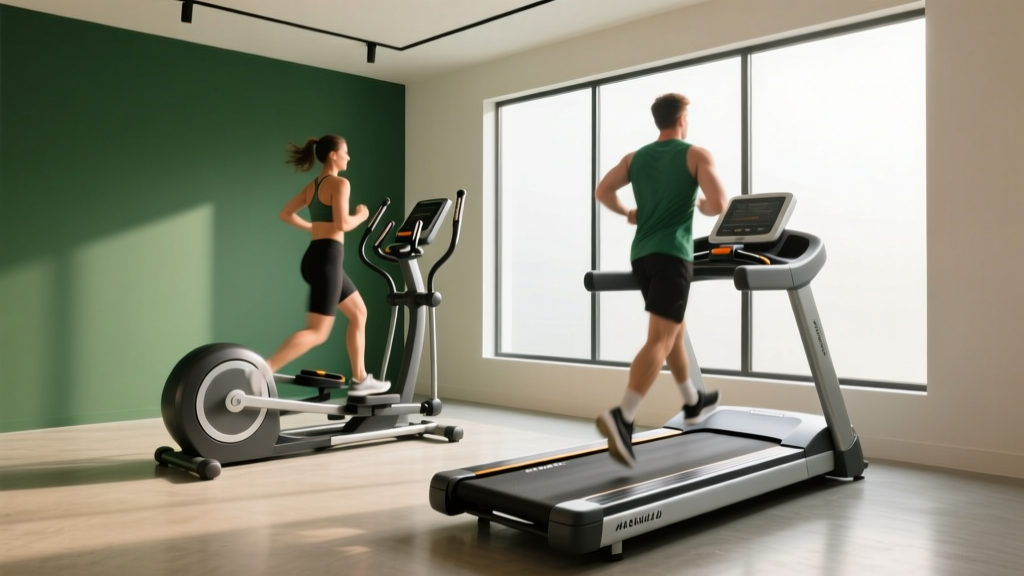
Elliptical vs Treadmill That Inclines and Declines: Layout

Elliptical vs Treadmill: Space Layouts for Interval Workouts
Cheapest NordicTrack Treadmill vs Walking Pads: Error Fixes
Low Impact Treadmills: 2026 Noise Level Head-to-Head Test
NordicTrack T Series 8.5 S Treadmill Black: Feature Compare & Fixes
