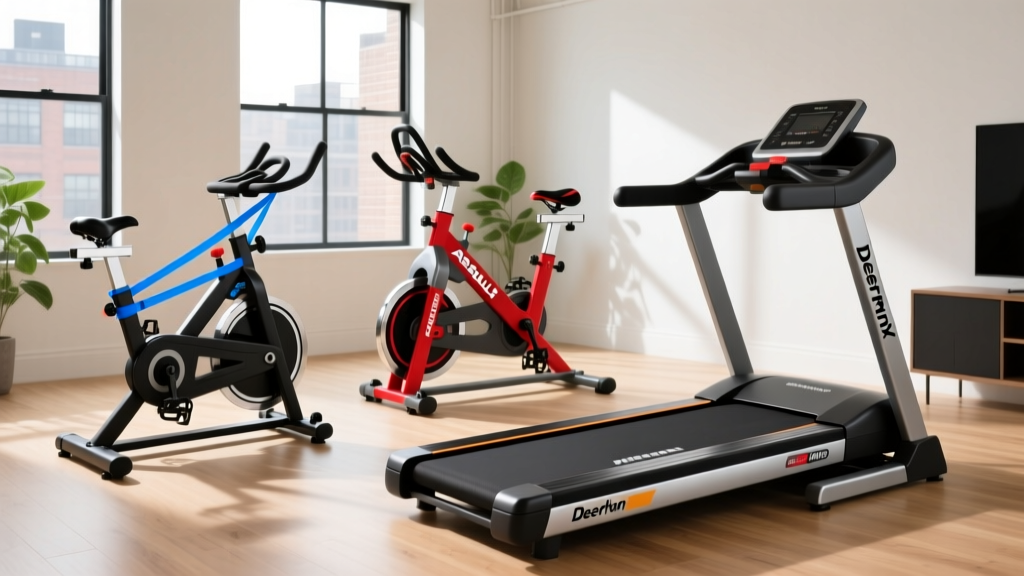
Matrix Treadmill Comparison: Features & Buyer Mistakes
Avoid costly Matrix treadmill buying mistakes. Compare T7xe, T5x, and TF50 features, troubleshoot common hardware glitches, and match specs to your stride.

The Matrix Treadmill Lineup: 2026 Feature Comparison Matrix
Matrix Fitness, the premium residential and light-commercial arm of Johnson Health Tech, dominates the high-end home gym market. However, navigating their feature sets can be deceptive. Buyers frequently over-index on touchscreen real estate while ignoring critical biomechanical and mechanical specifications. According to the Consumer Reports Exercise Equipment Buying Guide, mismatching treadmill motor capacity and belt geometry to user biomechanics is the leading cause of premature equipment failure and user injury.
Below is a technical comparison of the core 2026 Matrix residential lineup, focusing on the hardware metrics that actually dictate longevity and performance.
| Specification | Matrix TF50 (Folding) | Matrix T5x (Fixed) | Matrix T7xe (Premium) |
|---|---|---|---|
| Motor Type & Output | 3.25 CHP DC Motor | 3.25 CHP DC Motor | 4.0 CHP AC Motor |
| Belt Dimensions | 20" x 55" | 20" x 55" | 22" x 60" |
| Frame Weight | 285 lbs | 335 lbs | 420 lbs |
| Deck System | Variable Response Cushioning | Ultimate Deck System | Ultimate Deck System |
| 2026 Avg. Price | $3,899 - $4,199 | $5,299 - $5,599 | $7,899 - $8,499 |
3 Critical Buying Mistakes When Selecting a Matrix Treadmill
Mistake 1: The Continuous Horsepower (CHP) Illusion
The most common error buyers make is assuming a 3.25 CHP motor on the TF50 and T5x will handle high-mileage marathon training. Continuous Horsepower (CHP) measures the motor's output under a sustained load, but it does not account for thermal dissipation in DC (Direct Current) versus AC (Alternating Current) motors. The Matrix T7xe utilizes a 4.0 CHP AC motor, which is fundamentally designed for commercial gym environments where the machine runs for 12+ hours daily. If you weigh over 220 lbs and regularly run at speeds above 8.0 mph for longer than 45 minutes, a DC motor will experience thermal throttling. This manifests as micro-stutters in the belt speed, forcing your Achilles tendon to absorb the kinetic variance, which leads to severe tendinopathy over time.
Mistake 2: Ignoring Belt Geometry and Stride Biomechanics
Upgrading to the T7xe is often viewed as a luxury purchase for the 15-inch HD touchscreen, but the real value lies in the 22" x 60" running surface. According to research on treadmill biomechanics cited by Johns Hopkins Medicine, runners naturally alter their stride length and foot strike when confined to narrow or short belts. If you are taller than 5'10" and purchase the TF50 or T5x (both featuring 55-inch belts), you will subconsciously shorten your stride to avoid hitting the front motor hood. This over-striding compensation shifts impact forces from the midfoot to the heel, drastically increasing tibial shock and knee joint degradation.
Mistake 3: Overvaluing Touchscreens Over Structural Rigidity
The TF50 features a folding mechanism, which inherently compromises the structural rigidity of the frame. While the 285 lb frame is adequate for walking and light jogging, the folding hinge introduces lateral sway during sprint intervals. Buyers frequently prioritize the TF50's space-saving design and integrated tablet compatibility over the T5x's welded, fixed-steel frame. If your training includes High-Intensity Interval Training (HIIT) or lateral agility drills, the 50 lb weight deficit and folding hinge of the TF50 will result in console vibration and premature wear on the deck support brackets.
Feature Troubleshooting: Resolving Common Matrix Hardware Glitches
Even when you purchase the correct model, feature mismanagement and lack of preventative maintenance will trigger hardware faults. Below is a troubleshooting guide for the most frequent issues reported on Matrix residential consoles and drive systems.
⚠️ WARNING: Error Code Quick-ReferenceBefore attempting physical adjustments, check your console for the following error codes. Always remove the safety key and unplug the machine from the wall before inspecting the motor hood.
- E1 (Speed Sensor Error): The optical sensor has lost alignment with the drive motor magnet. Usually caused by belt vibration loosening the sensor bracket.
- E2 (Incline Motor Fault): The incline calibration is out of sync, or the potentiometer is failing. Often triggered by powering off the machine while it is at a 15% grade.
- E5 (Overcurrent Protection): The motor is drawing too much amperage. This is almost always caused by a dry, high-friction running belt rather than a failing motor.
Troubleshooting Belt Slippage and Friction (E5 Errors)
If your Matrix T5x or T7xe hesitates when your foot strikes the deck, the belt is either loose or dry. Matrix uses a proprietary wax-infused belt, but it still requires tension adjustments.
- The 3-Inch Lift Test: Turn off the machine. Reach under the center of the running belt and pull upward. You should achieve exactly 2.5 to 3 inches of lift. If it lifts higher, the belt is too loose.
- Adjusting the Rear Roller: Locate the two hex bolts at the very rear of the treadmill deck. Using the provided 6mm Allen wrench, turn both bolts clockwise by exactly one-quarter (1/4) turn.
- Test and Realign: Run the machine at 3.0 mph. If the belt tracks to the left, turn the left rear bolt clockwise by 1/8th of a turn. Never adjust tension by more than 1/4 turn at a time, or you will strip the roller bearings.
Fixing Incline Stutter and Calibration (E2 Errors)
If your treadmill struggles to reach the full 15% incline or stutters during automated workout programs, the incline motor needs recalibration. According to Matrix Fitness Official Support, you can force the machine into engineering calibration mode without specialized tools.
Calibration Sequence: With the machine powered on and the safety key inserted, press and hold the Speed Up and Incline Up buttons simultaneously for 5 seconds. The console will display 'CAL'. Press Start. The treadmill will automatically cycle from 0% to 15% and back down to establish the potentiometer limits. Do not step on the deck during this process.
The FitGearPulse Biomechanical Matching Framework
To eliminate buyer's remorse, stop comparing touchscreens and start matching the machine's physics to your body. Use this decision matrix to finalize your Matrix treadmill purchase in 2026:
- The TF50 is strictly for: Users under 200 lbs, under 5'10" in height, whose primary activity is walking (under 4.5 mph) or light jogging, and who require floor space reclamation. Do not buy this for sprint intervals.
- The T5x is the sweet spot for: Runners between 150-240 lbs who run up to 10K distances. The fixed frame provides the necessary lateral stability, and the 3.25 CHP DC motor can handle 5-7 hours of weekly running without thermal throttling.
- The T7xe is mandatory for: Marathoners, users over 250 lbs, or anyone taller than 6'0". The 60-inch belt accommodates natural over-ground stride lengths, and the 4.0 CHP AC motor ensures zero belt hesitation during heavy foot-strikes, protecting your lower-body joints from kinetic variance.
Warranty Realities and Service Expectations
Matrix offers some of the best warranties in the industry, but they are contingent on proper environmental setup. The T7xe and T5x feature lifetime warranties on the frame and motor, but the parts and labor coverage drops significantly after year one (typically 1-year labor, 3-to-5 years parts depending on the exact 2026 promotional tier). Crucially, Johnson Health Tech will void your motor warranty if the machine is plugged into an ungrounded outlet or a shared circuit. A 4.0 CHP AC motor requires a dedicated 15-amp or 20-amp circuit; running it on a shared bedroom circuit with an HVAC unit will cause voltage drops that degrade the motor controller board. Invest the $150 in a dedicated electrical line before your $8,000 T7xe arrives.
More gear to consider
All reviews
Rowing Machine Guide & Technique: Setup for 8.0 Incline on Treadmill

Under Desk Treadmill Review: Are the Calories Burned Accurate?
12 Degree Incline Treadmill Noise Test: 2026 Cardio Comparison

Compact Portable Pool Treadmill Trends: 2026 Market Report

MythBusters Plane on a Treadmill: Walking Pad Setup & Comparison