
Elliptical vs Treadmill: Space Layouts and 1 Incline on Treadmill
Optimize your home gym layout. Compare elliptical vs treadmill footprints, ceiling clearance, and how a 1 incline on treadmill affects spatial design.

The Spatial Showdown: Floor Footprint vs. Swing Zones
Designing a home cardio zone in 2026 requires more than just measuring the length and width of a machine; it demands a rigorous analysis of dynamic spatial requirements. When debating the elliptical vs treadmill for home cardio, the fundamental difference lies in how each machine interacts with the room's geometry during active use.
Let us look at two category leaders to establish a baseline. The Sole F80 Treadmill (retailing around $1,199) commands a static footprint of 37 inches wide by 82 inches long. However, according to safety guidelines endorsed by the American Council on Exercise (ACE), you must add a minimum 24-inch safety clearance zone behind the belt to prevent severe friction burns in the event of a fall. This pushes the true operational length to nearly 9 feet.
Conversely, the Bowflex Max Trainer M9 (priced near $2,299) features an ultra-compact footprint of just 30 inches wide by 49 inches long. Because the user's feet never leave the pedal axis, there is no rear ejection risk. The spatial penalty of the elliptical, however, is lateral and vertical: the swinging handlebars require an additional 4 to 6 inches of lateral clearance on both sides to avoid drywall scuffs.
⚠️ The 20-Inch Rear Clearance Rule:Never place a treadmill flush against a wall or a glass window. If the user loses balance and slides off the back of the belt, the machine will continue to run. A minimum 20-to-24-inch buffer zone behind the rear roller is a non-negotiable safety requirement for home layouts.
The Ceiling Clearance Conundrum: Step-Up Height and Incline Geometry
The most frequent layout failure in home gym design is ignoring vertical space. Both machines elevate the user, but they do so in fundamentally different ways, which drastically impacts rooms with standard 8-foot (96-inch) or lower basement ceilings.
The Treadmill: Step-Up and the Incline Factor
Treadmills elevate the user based on the deck's step-up height plus the user's height. The Sole F80 has a step-up height of roughly 8 inches. Therefore, a 6-foot (72-inch) tall user requires a minimum of 80 inches of ceiling height just to stand flat on the deck with a 2-inch safety buffer.
However, the geometry changes the moment you adjust the gradient. Many homeowners miscalculate ceiling height because they measure the deck while flat. However, activating a 1 incline on treadmill decks alters the front-end elevation, lifting the shroud and the front of the running belt by approximately 1.2 to 1.8 inches depending on the chassis length. While a 1 incline on treadmill units might seem negligible for calorie burn, spatially, it raises the user's apex. If you plan to use the treadmill's full 15% incline capability, the front deck can rise by an additional 10 to 12 inches, meaning a 6-foot user will need a ceiling height of at least 90 inches (7.5 feet) at the front of the machine to avoid head strikes during high-incline power walking.
The Elliptical: Pedal Arc and Stride Apex
Ellipticals do not incline the floor beneath you; instead, they elevate you onto a pedal arc. A machine like the NordicTrack SpaceSaver SE7i ($999) has a pedal height of about 12 inches at its lowest point, but the elliptical stride path pushes the user up to 15 inches off the ground at the apex of the pedal cycle. Add the user's height (72 inches) and a 3-inch buffer for overhead arm extensions, and you suddenly need 90 inches of vertical clearance regardless of where the machine is placed in the room.
Ceiling Height Requirement Matrix
| User Height | Machine Type & Model | Max Elevation (In Use) | Min. Ceiling Height Required |
|---|---|---|---|
| 5'6" (66") | Treadmill (Sole F80) - Flat | 74" | 76" (6'4") |
| 5'6" (66") | Treadmill (Sole F80) - Max Incline | 86" | 88" (7'4") |
| 5'6" (66") | Elliptical (Bowflex M9) | 81" | 84" (7'0") |
| 6'0" (72") | Treadmill (Sole F80) - Flat | 80" | 82" (6'10") |
| 6'0" (72") | Treadmill (Sole F80) - Max Incline | 92" | 94" (7'10") |
| 6'0" (72") | Elliptical (Bowflex M9) | 87" | 90" (7'6") |
Foldability, Storage, and 'Usable' Square Footage
When space is at a premium, the static footprint matters less than the stored footprint. Modern treadmills have heavily invested in hydraulic folding hinges. The NordicTrack T Series utilizes a SoftDrop folding system that allows the 82-inch deck to fold vertically, reducing the machine's length to roughly 35 inches. This reclaims nearly 40 square feet of floor space when the machine is not in use, allowing the room to function as a multi-purpose living area or home office.
Ellipticals, due to their complex flywheel and stride-linkage mechanics, rarely fold. The Bowflex Max Trainer series bypasses this by utilizing a compact, stair-stepper-like flywheel design that keeps the overall footprint small permanently, rather than relying on post-workout folding. If your layout requires the room to convert back into a guest bedroom or dining space daily, a folding treadmill is vastly superior. If the space is a dedicated, permanent gym zone, the fixed footprint of an elliptical offers superior long-term mechanical stability with fewer hinge failure points.
Multi-Story Homes: Vibration, Flooring, and Layout Placement
Space optimization is not just about the walls; it is about the floors, particularly if your home gym is located on a second story or above a finished basement.
"Impact forces generated by running on a treadmill can exceed 2.5 times the user's body weight. In a multi-story home, this translates to significant low-frequency structural vibration that will disturb occupants in the room directly below." — Consumer Reports Home Fitness Guide
Treadmill Layout Strategy: If you must place a treadmill on an upper floor, position the front motor housing directly over a load-bearing wall or a primary structural beam. Use a 3/8-inch thick vulcanized rubber mat (not cheap PVC or foam puzzle mats) to dampen the acoustic slap of the belt. Avoid placing the treadmill in the center of a floor joist span, as the rhythmic impact will cause ceiling fixtures in the room below to rattle.
Elliptical Layout Strategy: Because ellipticals are zero-impact machines, they do not generate the same vertical ground reaction forces. The vibration they produce is a low-level rotational hum from the flywheel. This makes ellipticals vastly superior for second-floor layouts, apartments, and shared living spaces where noise transfer is a primary spatial constraint.
3 Layout Configurations for Compact Home Gyms
To finalize your spatial design, match your room's dimensions to one of these three proven layout configurations:
- The Narrow Galley (e.g., 8' x 12' spare bedroom):
- Best Machine: Folding Treadmill.
- Placement: Center the treadmill on the longest wall, facing the door or a window. Leave the 24-inch rear clearance zone at the foot of the bed or against a solid wall. Do not place it facing a mirror, as the visual feedback of a wall rushing toward you can induce spatial vertigo during high-speed runs.
- The Square Den (e.g., 10' x 10' basement corner):
- Best Machine: Compact Elliptical (Bowflex Max Trainer or NordicTrack SpaceSaver).
- Placement: Tuck the elliptical into a corner at a 45-degree angle. This diagonal placement accommodates the lateral swing of the moving handlebars while keeping the center of the room open for yoga mats or free weights.
- The Shared Living Space (e.g., Open-concept apartment):
- Best Machine: Under-desk Elliptical or Ultra-compact Stepper.
- Placement: Standard treadmills and full-size ellipticals are visually and spatially dominant. In shared spaces, prioritize machines that can slide under a sofa or integrate into a workstation to maintain the aesthetic flow of the living area.
The Verdict: Let Your Architecture Decide
The debate between an elliptical and a treadmill should not be settled solely by your fitness goals; it must be dictated by your architectural constraints. If you have standard 8-foot ceilings, a low-impact requirement for upper-floor noise control, and a need for a permanent footprint, the elliptical is your optimal spatial choice. However, if you have the luxury of 9-foot ceilings, require the biomechanical specificity of outdoor running, and need a machine that can fold away to reclaim 40 square feet of living space daily, the treadmill remains the undisputed king of convertible home layouts. Just remember to account for the shroud lift—even a minimal gradient adjustment alters your vertical reality.
More gear to consider
All reviews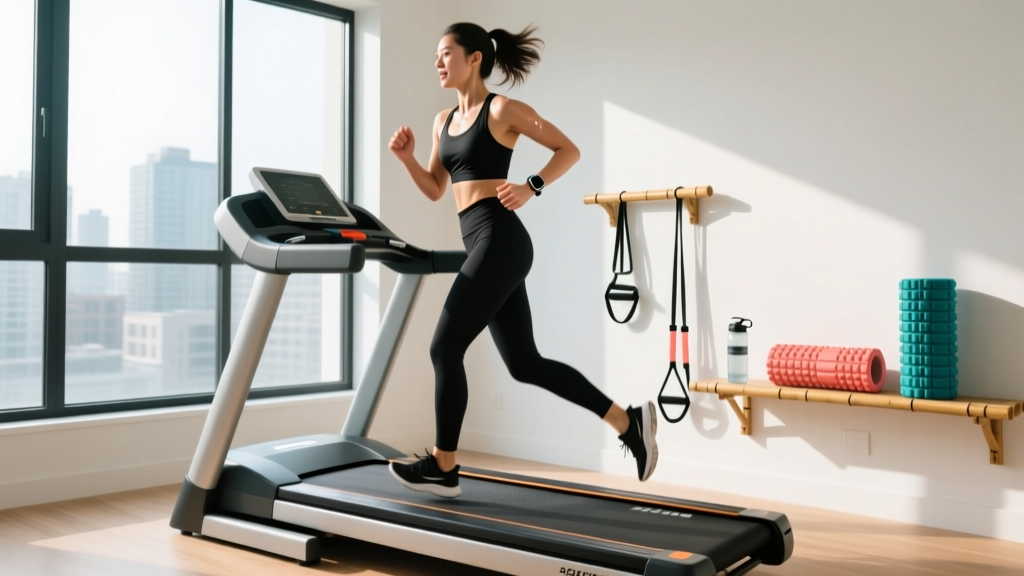
How to Start Running on a Treadmill: Buyer's Feature Guide

Are Treadmill Calories Accurate? Cardio Noise Levels Compared

How to Use a Manual Treadmill Properly: Layouts & Belt Maintenance

Woodway Treadmill 4Front vs. Home Stair Climber Guide

Air Bike vs Assault Bike: The Best Treadmill Outdoor Alternative for Compact Gyms
