
Manual vs Motorized Treadmills: How Do You Say Treadmill in Spanish?
Compare curved manual and motorized treadmills for your 2026 home gym. Plus, a bilingual buyer's guide answering: how do you say treadmill in Spanish?

The Bilingual Home Gym: Why Language and Location Matter
As remote work and global mobility continue to reshape where we live in 2026, fitness enthusiasts are increasingly building home gyms in international locations—from the mountains of Costa Rica to the urban centers of Madrid. When navigating local marketplaces, dealing with customs brokers, or simply communicating with local technicians, linguistic barriers can complicate major equipment purchases. A common question we receive from expats and bilingual household owners is: how do you say treadmill in spanish?
The answer is highly regional, and knowing the correct terminology is your first step in mastering the international fitness equipment market:
- Spain: Cinta de correr (Literally: running belt)
- Mexico & Central America: Caminadora (Literally: walking machine)
- South America (e.g., Argentina, Colombia): Máquina de correr or Cinta
Understanding these terms is crucial when searching local classifieds or negotiating import taxes. But beyond language, international buyers face a much larger physical hurdle: voltage compatibility and grid stability. This is where the debate between curved manual treadmills and traditional motorized treadmills becomes a critical financial and logistical decision.
Curved Manual Treadmills: The Biomechanical Powerhouse
Curved manual treadmills have surged in popularity, transitioning from elite sports science labs to high-end residential garages. Unlike flat beds, these machines feature a concave, slatted running surface that is entirely self-powered by the user's stride and gravity.
Top 2026 Models & Pricing
- Woodway Curve ($7,499): The gold standard. Features 115 individual vulcanized rubber slats and heavy-duty ball bearings. Weighs 345 lbs.
- TrueForm Runner ($5,895): Favored by CrossFit affiliates. Features a slightly tighter curve radius, encouraging a rapid forefoot strike.
- Assault AirRunner ($3,299): The budget-friendly entry point, though it sacrifices some of the premium belt fluidity of the Woodway.
Pros and Cons of Curved Manual Treadmills
- Pros: Burns up to 30% more calories at the same perceived exertion; promotes natural mid-foot/forefoot striking; zero electricity required; virtually zero motor maintenance.
- Cons: Exorbitant upfront cost; extremely heavy (300+ lbs) making relocation difficult; lacks automated incline/decline features; steep learning curve for beginners.
Motorized Treadmills: The Tech-Driven Standard
Motorized treadmills remain the undisputed kings of convenience and interactive training. Driven by continuous horsepower (CHP) motors and paired with massive HD touchscreens, they offer automated pacing, global route simulations, and structured coaching.
Top 2026 Models & Pricing
- NordicTrack Commercial 2450 ($2,799): Features a 4.0 CHP motor, a 14-inch pivoting touchscreen, and automatic incline/decline (-6% to 40%). Requires an active iFIT subscription ($396/year) for full functionality.
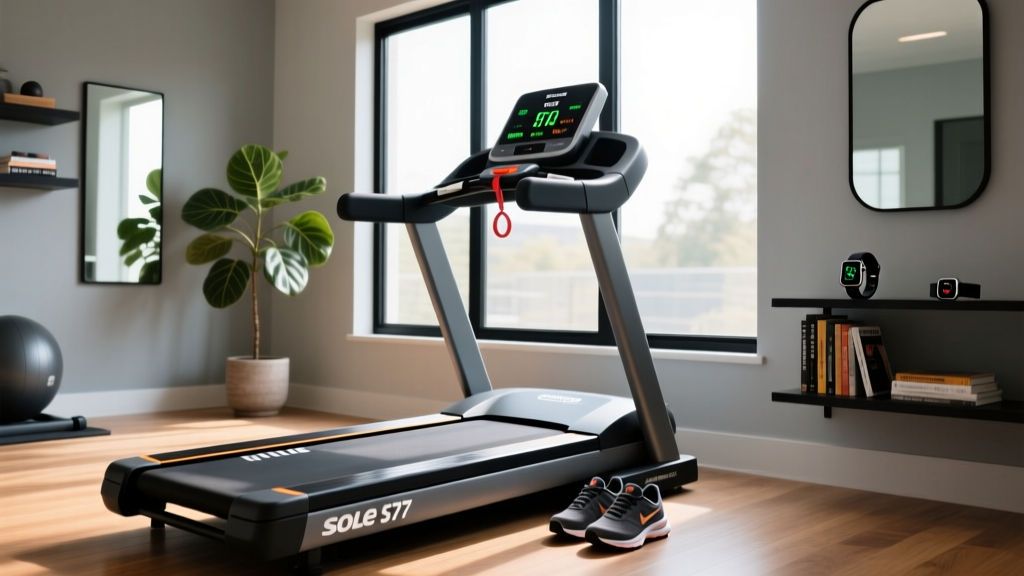
- Sole F80 ($1,199): A workhorse for pure runners. Features a 3.5 CHP motor, heavy-duty steel frame, and excellent Cushion Flex deck shock absorption without mandatory subscription paywalls.
Pros and Cons of Motorized Treadmills
- Pros: Automated pacing and incline control; integrated entertainment and coaching; lower upfront cost; easier to learn for walking and jogging.
- Cons: Requires dedicated 15-amp or 20-amp electrical circuits; motor and drive belt degradation over time; recurring monthly software subscription fees.
Head-to-Head Comparison Matrix
| Feature | Curved Manual (e.g., Woodway Curve) | Motorized (e.g., Sole F80) |
|---|---|---|
| Primary Power Source | User's kinetic energy & gravity | AC/DC Electric Motor (3.0 - 4.0 CHP) |
| Electrical Requirement | None (100% Global Compatible) | 110V (US/LatAm) or 220V (EU/Asia) |
| Average Weight | 320 - 350 lbs | 180 - 250 lbs |
| Caloric Expenditure | +20% to +30% vs. flat motorized | Baseline standard |
| Foot Strike Biomechanics | Encourages forefoot/midfoot strike | Encourages heel strike (due to belt pull) |
| Maintenance Needs | Bearing lubrication every 6 months | Belt alignment, deck waxing, motor dusting |
| Spanish Market Search Term | Cinta de correr manual / curvada | Caminadora eléctrica / Cinta motorizada |
The Caloric and Biomechanical Reality
The choice between manual and motorized isn't just about logistics; it fundamentally alters your biomechanics. According to research highlighted by the American Council on Exercise (ACE), curved treadmills elicit a significantly higher heart rate and oxygen consumption (VO2) at the exact same speed compared to a motorized counterpart. Because you must physically pull the heavy slat belt backward with your hamstrings and glutes, the posterior chain is engaged far more aggressively.
Furthermore, the World Health Organization (WHO) recommends at least 75 to 150 minutes of vigorous-intensity aerobic physical activity per week for substantial health benefits. A 20-minute sprint session on a TrueForm Runner easily qualifies as vigorous intensity, whereas achieving the same metabolic output on a motorized treadmill might require 30 minutes of high-incline walking.
'The curved geometry naturally shifts the runner's center of mass forward, forcing a shorter, quicker cadence and reducing the braking forces typically associated with over-striding on a flat, motorized belt.' — Biomechanics Analysis of Self-Powered Treadmills
However, this biomechanical shift is a double-edged sword. While knee joint impact is often reduced on a curved slat belt, the load on the Achilles tendon and calf muscles increases dramatically. Runners with a history of Achilles tendinopathy should transition to curved treadmills very slowly.
International Buying Considerations: Shipping & Setup
If you are importing fitness gear across borders, the physical footprint and weight of your machine will dictate your freight costs. The Centers for Disease Control and Prevention (CDC) consistently advocates for accessible home exercise environments, but accessibility is hindered if your equipment is stuck in customs.
The Freight Reality
- Crated Dimensions: A Woodway Curve ships in a crate roughly 75 x 35 x 65 inches. LTL (Less Than Truckload) freight from a US distributor to a residential address in Mexico can easily add $800 to $1,200 to your total cost.
- Customs Duties: Many countries classify motorized fitness equipment under specific HS Codes that attract luxury import tariffs (sometimes up to 20-30%). Manual, non-motorized equipment occasionally falls under different, less taxed mechanical categories.
- Local Sourcing: If you are based in Spain, searching for a cinta de correr motorizada on local European distribution hubs will save you thousands in trans-Atlantic shipping and VAT fees compared to importing a US-spec Sole F80.
Final Verdict: Which Should You Buy?
Your decision should be filtered through three lenses: budget, biomechanics, and geography.
Choose a Curved Manual Treadmill if: You are an advanced runner focused on HIIT and sprint mechanics, you live in an area with frequent power outages or unstable grids, or you are an international expat who wants a machine that requires zero voltage adapters or electrical rewiring. The $5,000+ investment pays off in zero motor replacements and unparalleled build quality.
Choose a Motorized Treadmill if: You are a walker, jogger, or marathoner who relies on automated pacing, long-duration zone-2 training, and interactive global routing. If you live in a region with stable 110V/220V infrastructure and have the space for a 20-amp dedicated circuit, the tech-integration and lower entry price of a Sole F80 or NordicTrack make it the superior daily driver.
More gear to consider
All reviews
NordicTrack T 5 S Treadmill Belt Care: Maintenance Cost Breakdown

What's Better: Treadmill or StairMaster? Small Space Budget Guide

What Does a Treadmill Do? Curved vs Motorized Guide
Stationary Bike Types Guide & How to Lube Horizon Treadmill Decks
Sole S77 Treadmill: Complete Setup & Feature Comparison
