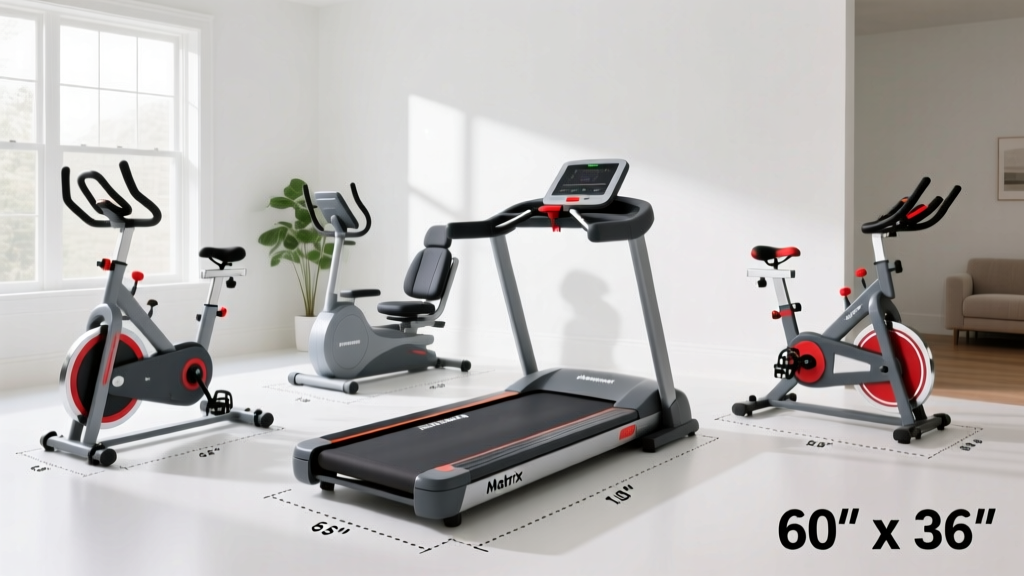
Elliptical vs Treadmill: How Distance in Treadmill Impacts Longevity
Compare elliptical vs treadmill maintenance. Learn how tracking distance in treadmill belts and elliptical joints maximizes home cardio machine longevity.

The True Cost of Home Cardio: Elliptical vs Treadmill Wear
As home gym setups mature in 2026, owners of legacy cardio machines purchased during the massive fitness boom are now facing critical maintenance milestones. When deciding between an elliptical and a treadmill for long-term home use, the conversation often stops at joint impact and calorie burn. However, from a mechanical engineering and longevity perspective, the two machines age in fundamentally different ways. Understanding how accumulated mileage affects internal components is the key to protecting your investment and avoiding catastrophic failure modes.
While both machines require routine care, the friction-based wear of a treadmill belt stands in stark contrast to the pivot-based stress of an elliptical. By analyzing the mechanical realities of both, we can establish a definitive maintenance framework that extends the lifespan of your equipment well past the manufacturer's warranty window.
Decoding the Metric: What "Distance in Treadmill" Actually Means for Wear
When evaluating the total distance in treadmill usage, we are not just looking at a digital readout; we are measuring continuous friction, heat generation, and motor strain. Unlike an elliptical, where the user's feet remain fixed to pedals, the distance in treadmill tracking directly correlates to the physical dragging of a rubber belt across a wooden or composite deck. This creates a high-friction environment that demands rigorous intervention.
Data Highlight: The Friction Coefficient
A standard 20-inch by 60-inch treadmill belt generates roughly 15 to 20 pounds of continuous lateral friction against the deck under a 180-pound user. Over 500 miles of logged distance, this equates to thousands of pounds of cumulative shear force. If the belt lacks proper lubrication, the drive motor's amp draw spikes from a normal 4–6 amps to over 12 amps, rapidly degrading the lower control board (LCB) and risking thermal shutdown.
Ellipticals, conversely, measure distance through crank revolutions and stride length. Because there is no belt-to-deck friction, the mechanical resistance is isolated to sealed bearings, bushings, and rail wheels. According to reliability data aggregated by Consumer Reports, treadmills consistently exhibit a 20% higher 5-year repair rate than ellipticals, largely due to the inevitable degradation of high-friction walking surfaces and the electrical components that manage them.
Treadmill Longevity: Combating Belt Friction and Motor Heat
To maximize the lifespan of a treadmill—whether it is a commercial-grade Life Fitness Club Series or a popular home model like the NordicTrack Commercial 1750—you must actively manage the belt-deck interface. Neglecting this interface is the number one cause of premature motor and electronics failure.
1. Precision Lubrication Protocols
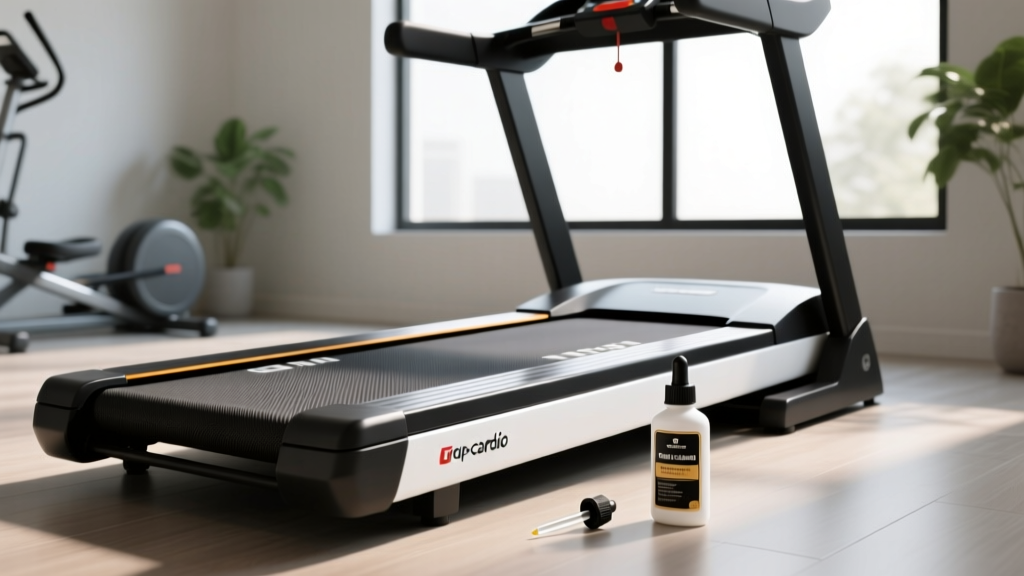
Treadmill manufacturers universally mandate the use of 100% pure silicone lubricant (such as Spot On or Godora brands). Never use WD-40, petroleum-based oils, or PTFE sprays, as these will break down the rubber compound of the belt and cause delamination.
- Interval: Apply 1 oz of silicone every 150 miles or every 3 months, whichever comes first.
- Application Method: Loosen the rear roller bolts with an Allen wrench, lift the belt, and apply the silicone in a zigzag pattern across the center third of the deck. Re-tension and run the machine at 3 MPH for 5 minutes to distribute the fluid.
2. Belt Tension and Alignment
A belt that is too tight places immense lateral stress on the roller bearings and the motor drive shaft. To test tension, the belt should lift exactly 2 to 3 inches off the center of the deck. If it lifts higher, it will slip during heavy foot strikes; if lower, it is choking the motor. Furthermore, if the belt drifts to the left or right, adjust the rear roller bolts in quarter-turn increments to re-center it, preventing edge fraying.
3. Deck Resurfacing and Replacement
Most mid-tier treadmills utilize a wax-coated MDF or phenolic resin deck. Once the factory wax wears through (typically around 4,000 to 6,000 miles), the raw wood creates immense friction. While some premium decks are reversible (allowing you to flip them for a fresh surface), standard decks must be replaced. Expect to pay between $150 and $350 for a replacement deck and belt kit.
Elliptical Endurance: Managing Pivot Stress and Rail Degradation
Ellipticals bypass belt friction entirely, but they introduce complex kinematic chains. Models like the Sole E35 or Bowflex Max Trainer rely on a series of pivot points, crank arms, and guide rails. The primary enemy of elliptical longevity is not heat, but particulate contamination and bushing degradation.
The Mayo Clinic frequently recommends ellipticals for users seeking low-impact cardiovascular exercise, but the mechanical joints of the machine absorb the repetitive stress that your knees do not. Over time, this stress manifests in specific failure modes.
Rail and Wheel Maintenance
For rear-drive ellipticals with exposed tracks (like the Horizon Fitness EX-59), the guide rails collect dust, pet hair, and microscopic skin cells. This debris mixes with factory grease to form an abrasive paste that flatspots the polyurethane guide wheels.
- Clean: Wipe the aluminum rails weekly with a microfiber cloth dampened with isopropyl alcohol to strip away old grease and debris.
- Lubricate: Apply a PTFE (Teflon) dry lubricant to the rails. Avoid wet greases or white lithium on exposed rails, as they act as magnets for household dust.
Pivot Point and Bushing Care
Lower-end ellipticals utilize open bronze or nylon bushings at the pedal arm joints, which are prone to developing a distinct "squeak" after 1,000 miles of use. These require periodic application of white lithium grease. Premium machines use sealed needle-bearing cartridges. While sealed bearings require zero routine maintenance, they cannot be lubricated once they fail; they must be pressed out and replaced (a $45 to $85 repair per joint).
5-Year Maintenance Cost & Failure Rate Matrix
Understanding the financial reality of home cardio ownership requires looking past the initial purchase price. Below is a comparative matrix detailing the expected maintenance costs and common failure points for mid-to-high-end home machines (e.g., $1,500–$2,500 price bracket) over a 5-year period assuming 150 miles of annual usage.
| Machine Type | Primary Wear Component | 5-Year Replacement Cost | Failure Trigger |
|---|---|---|---|
| Treadmill | Belt & Deck Assembly | $200 - $400 | Friction delamination, wax depletion |
| Treadmill | Lower Control Board (LCB) | $180 - $250 | Amp spikes from dry belt |
| Elliptical | Guide Wheels & Rails | $60 - $120 | Particulate abrasion, flat-spotting |
| Elliptical | Pivot Bearings / Bushings | $90 - $150 | Lateral shear stress, metal fatigue |
| Both | Console / Display Board | $300 - $600+ | Power surges, capacitive decay |
Expert Troubleshooting: Edge Cases and Mileage Lies
Maintenance schedules are only as reliable as the data feeding them. One of the most overlooked edge cases in home cardio maintenance is sensor drift, which leads to inaccurate distance tracking and delayed maintenance intervals.
Expert Warning: If your treadmill's incline motor frequently recalibrates or the speed feels inconsistent, do not immediately blame the drive motor. In 70% of cases involving legacy 2020-2022 smart treadmills, the optical speed sensor or the incline potentiometer has accumulated dust, causing the LCB to misread the actual RPM and distance. A simple blast of compressed air on the sensor eye near the front roller can resolve what appears to be a catastrophic electronic failure.
The Elliptical Drive Belt Stretch
On front-drive and center-drive ellipticals, the internal drive belt connects the crank to the magnetic resistance flywheel. Over 3 to 4 years, this ribbed belt stretches. When it does, the console will report distance and calorie burn based on crank RPM, but the physical resistance will slip, meaning your actual mechanical output no longer matches the digital readout. If your elliptical suddenly feels "too easy" at high resistance levels, the internal drive belt requires tensioning or replacement (a $35 part, but a labor-intensive repair requiring full shroud removal).
Summary: Which Machine Wins the Longevity Test?
When comparing the elliptical vs treadmill for home cardio from a strict maintenance and longevity perspective, the elliptical is the undisputed winner for mechanical endurance. Because it eliminates the high-friction belt-to-deck interface, an elliptical requires significantly less preventative maintenance and poses a lower risk of catastrophic electronic failure caused by amp spikes. However, the treadmill remains the gold standard for bone-density loading and natural gait training. If you choose a treadmill, you must commit to a strict, mileage-based lubrication protocol. By actively monitoring the distance in treadmill logging and treating the belt-deck interface as a consumable component rather than a permanent fixture, you can easily push a high-quality home treadmill past the 10-year mark, rivaling the lifespan of the most robust ellipticals on the market.
More gear to consider
All reviews
Best Free Treadmill Workout App to Track Belt Maintenance
Treadmill FSA Eligible Expenses: Expert Belt Maintenance Guide

Elliptical vs Treadmill: Urevos Strol Lite Treadmill Review

Rowing Machine Setup & Buying: Avoid NordicTrack Treadmill Issues

Walking Pad vs Treadmill: Setup & Beginner Treadmill Walking Workout