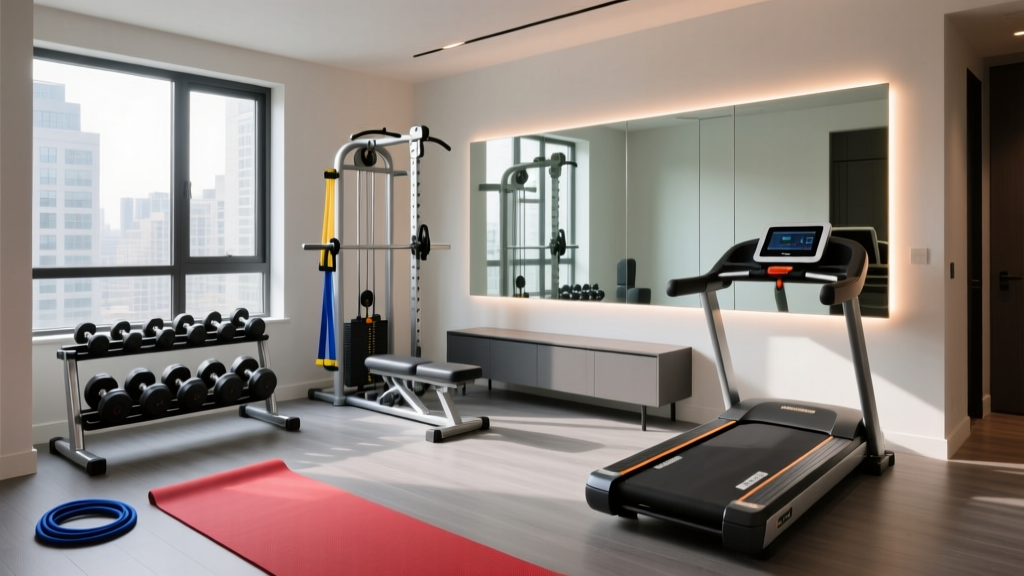
Luxury Home Gym Ideas for Small Spaces: Complete Setup Walkthrough
Transform your compact apartment with these luxury home gym ideas. A complete setup walkthrough covering acoustic flooring, smart gear, and spatial design.

Redefining Luxury in Micro-Footprints
When urban professionals and high-rise dwellers search for luxury home gym ideas, the results often default to sprawling basement conversions or multi-car garage overhauls. But true luxury is not defined by square footage; it is defined by intentionality, premium material finishes, and seamless technological integration. Designing a high-end fitness space in a compact apartment or condo requires a meticulous balance of acoustic mitigation, spatial geometry, and architectural cohesion.
This complete setup and installation walkthrough will guide you through transforming a 100 to 150-square-foot spare room, alcove, or den into a world-class training environment. We will cover everything from subfloor acoustic decoupling to routing dedicated electrical circuits for smart strength systems, ensuring your compact gym performs flawlessly without violating apartment noise ordinances or compromising your interior design.
Crucial Apartment Constraint: Before purchasing any heavy equipment or drilling into walls, review your HOA or lease agreement regarding structural modifications and Impact Insulation Class (IIC) requirements. Most luxury high-rises mandate an IIC rating of 50 or higher for any hard-surface flooring installations.Phase 1: Spatial Assessment and Acoustic Preparation
The most common failure point in apartment home gyms is noise transmission. Dropping a 40-pound dumbbell on standard luxury vinyl plank (LVP) flooring will generate low-frequency impact noise that travels through the concrete or wood subfloor, disturbing neighbors below. According to the Acoustical Society of America, mitigating structure-borne noise requires decoupling the impact surface from the subfloor.
The Floating Floor Protocol
For a premium, shock-absorbent, and acoustically viable foundation, we recommend a layered floating floor system rather than traditional rubber rolls, which can trap moisture and emit a strong volatile organic compound (VOC) odor in unventilated small spaces.
- Base Layer: 5mm acoustic underlayment (cork or high-density recycled polyurethane).
- Surface Layer: Ecore Athletic QuietDown tiles (8mm thickness). These feature a proprietary backing that achieves an STC (Sound Transmission Class) of 52 and an IIC of 55, specifically engineered for multi-family dwellings.
- Perimeter: Leave a 1/4-inch expansion gap around the room's perimeter, concealed by a matching premium wood baseboard, to prevent the floor from buckling against the walls during temperature fluctuations.
Phase 2: Curating the Premium Compact Equipment Roster
Space-saving does not mean compromising on resistance profiles or biomechanics. The following luxury home gym ideas prioritize equipment with micro-footprints, architectural aesthetics, and digital integration. Below is a comparison of the premier compact strength and conditioning systems available for high-end small spaces.
| Equipment Model | Footprint (W x D) | Max Resistance | Est. Price (2026) | Best For |
|---|---|---|---|---|
| Tonal 2 Smart Gym | 21.5' x 5.25' (Wall) | 200 lbs (Digital) | $4,495 | Hypertrophy & Strength |
| Technogym Kinesis Personal | 39' x 23' (Freestanding) | 220 lbs (Cable) | $15,500 | Functional Mobility & Aesthetics |
| WaterRower NOHrD (Walnut) | 22' x 84' (Stored: 22'x22') | Water Dynamic | $1,950 | Cardio & Sculptural Design |
| Peloton Guide + Row | 22' x 43' (Row) | Air/Magnetic | $3,200 (Bundle) | Interactive Cardio & Core |
For a 120-square-foot apartment gym, the optimal configuration is a wall-mounted Tonal 2 for primary resistance training, paired with a WaterRower NOHrD in solid walnut. The WaterRower can be stood upright in a corner when not in use, occupying just two square feet of floor space while serving as a striking piece of mid-century modern furniture.
Phase 3: Installation Walkthrough and Utility Routing
Installing heavy, dynamic equipment in an apartment requires precision. Drywall anchors are entirely insufficient for smart gyms that generate lateral and vertical sheer forces. Follow this step-by-step installation protocol for wall-mounted systems.
- Stud Mapping and Blocking: Use a high-density stud finder to locate 16-inch on-center (OC) wood or metal studs. If your wall features metal studs (common in luxury high-rises), you must open the drywall and install 3/4-inch plywood blocking secured with toggle bolts and self-drilling screws to distribute the 200+ lb dynamic load across multiple studs.
- Electrical Routing: Smart gyms require dedicated power to prevent micro-surges from corrupting the digital motor controllers. Hire a licensed electrician to run a dedicated 15-amp or 20-amp circuit. Per National Fire Protection Association guidelines, ensure the outlet is recessed (using a recessed electrical box) so the plug does not protrude and prevent the machine from sitting flush against the wall.
- Mounting the Bracket: Secure the mounting bracket using 3/8-inch lag screws driven at least 2.5 inches into the solid wood blocking or structural studs. Use a digital level to ensure the bracket is perfectly plumb; a 1-degree tilt will cause uneven cable wear on digital resistance motors.
- Screen and Arm Attachment: Once the bracket is verified, mount the main unit and attach the swivel arms. Calibrate the digital weight sensors according to the manufacturer's software prompts before attaching the handles.
Phase 4: Lighting, Mirrors, and Atmospheric Controls
The difference between a 'makeshift apartment workout corner' and a true luxury fitness suite lies in the atmospheric finishing touches. Visual expansion and circadian lighting are paramount in small spaces.
Low-Iron Mirror Installation
Standard mirrors have a greenish tint due to iron content in the glass. For a luxury aesthetic, specify Starphire low-iron glass mirrors. They provide true color reflection and make small rooms feel infinitely larger.
Installation Tip: Do not use mirror mastic directly on apartment drywall, as it will tear the paper face upon removal. Instead, install aluminum J-channel at the base, apply a polyurethane construction adhesive to the back, and secure the top with Z-clips. This allows for damage-free removal when your lease ends.
Circadian and Task Lighting
Overhead can lighting in apartments is often fixed and overly harsh. Integrate a smart lighting ecosystem like Lutron Caseta or Philips Hue to create dynamic scenes. The WELL Building Standard emphasizes the importance of circadian lighting for wellness; program your lights to emit cool, blue-enriched tones (5000K) during morning HIIT sessions to boost cortisol and alertness, and transition to warm, dim amber tones (2700K) for evening yoga and mobility recovery.
'In micro-apartments, your gym must double as a sanctuary. We hide adjustable dumbbells inside custom-built, ventilated walnut cabinetry that matches the living room millwork. When the doors are closed, it looks like a high-end credenza; when opened, it reveals a fully equipped luxury training zone.'
— Elena Rostova, Lead Interior Architect at Urban Wellness Design Studio
Budget Breakdown: The Compact Luxury Investment
Building a luxury apartment gym is a capital-intensive project, but it yields massive dividends in daily convenience and property value enhancement. Here is a realistic 2026 budget for a 120-square-foot high-end conversion.
- Acoustic Flooring (120 sq ft): $850 - $1,100
- Smart Strength System (Tonal 2 + Pro Installation): $4,995
- Premium Cardio (WaterRower NOHrD): $1,950
- Low-Iron Mirrors & Custom Millwork Storage: $2,500 - $4,000
- Smart Lighting & Electrical Routing: $800 - $1,200
- Total Estimated Investment: $11,095 - $13,245
Frequently Asked Questions
Can I install a pull-up rig in an apartment?
Traditional ceiling-mounted rigs are generally prohibited in apartments due to structural load limits and concrete post-tension cables. Instead, opt for freestanding functional trainers with integrated pull-up bars, or use door-mounted leverage systems that distribute weight across the door header without requiring screws.
How do I manage ventilation in a small, windowless gym?
In enclosed dens, CO2 buildup from heavy breathing will cause fatigue within 20 minutes. Install a smart air purifier with a high CADR (Clean Air Delivery Rate) rating, such as the Coway Airmega, and use a smart plug to trigger a compact wall-mounted exhaust fan or a Dyson Purifier Cool to cycle the air during workouts.
What is the best way to store kettlebells and accessories aesthetically?
Avoid wire racks. Commission a local woodworker to build a slatted walnut or white oak storage bench. The slats allow for airflow (preventing sweat-induced rust on cast iron), while the bench top provides seating for changing shoes, seamlessly blending fitness storage with luxury furniture.
More gear to consider
All reviews
Powering Your Hoist MI1 Home Gym: Electrical & Safety Trends
Budget Home Gym Designs Under $500: 2026 Value Guide

Space-Saving Body Craft Home Gym Setup for Apartments

Couples Gym: Upgrading the Men's Health Home Gym Awards 2021 Beginner Kettlebell

Bowflex Xtreme 2 SE Home Gym: Complete Setup & Installation Guide
