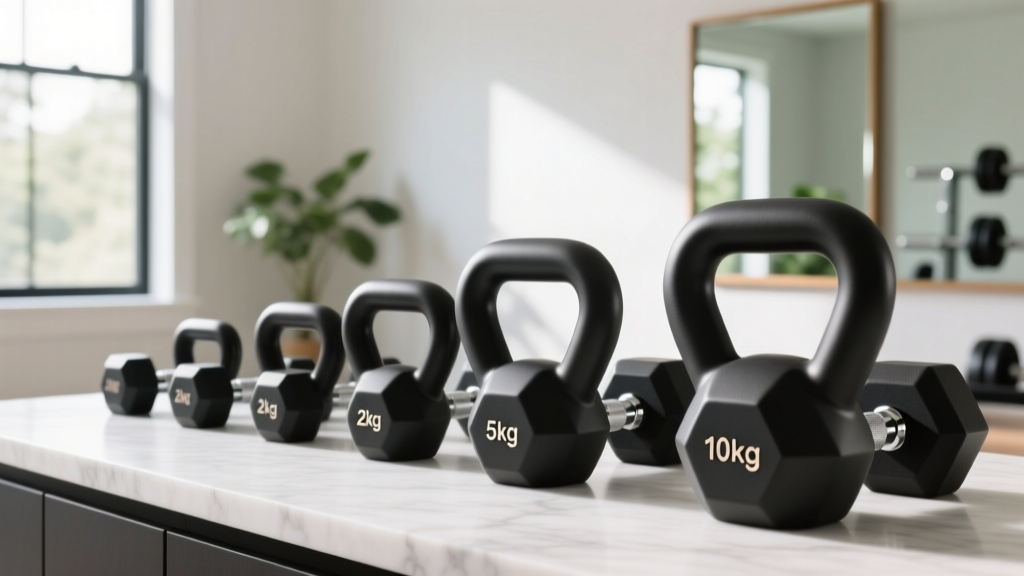
Lower Back Dumbbell Workout vs Kettlebells: Cast Iron or Competition?
Upgrading your lower back dumbbell workout with kettlebell swings? Our 2026 hands-on review compares cast iron vs competition bells for posterior chain gains.

If you have been relying on a standard lower back dumbbell workout to build your posterior chain, you are likely familiar with the limitations of dumbbells for explosive hip-hinge movements. While dumbbell Romanian deadlifts and bent-over rows are foundational, the biomechanics of the kettlebell swing offer unparalleled force production and spinal stabilization benefits. According to StrongFirst certification standards, the kettlebell's offset center of mass demands significantly higher core recruitment than a neutral dumbbell.
But once you decide to upgrade your home gym and transition away from the dumbbell rack, you face a critical purchasing decision: Cast Iron or Competition? In this 2026 hands-on buying guide, we break down the exact specifications, pricing, and edge cases of both styles to help you choose the right tool for your training.
The Biomechanical Shift: Why Leave the Dumbbells Behind?
A traditional lower back dumbbell workout often involves high-rep bent-over rows or static holds. The issue? Grip fatigue usually precedes lower back and hamstring failure. Kettlebells solve this by resting the bell's mass against the forearm during cleans and snatches, and allowing a loose, hook grip during high-rep swings. The offset load forces the erector spinae to work overtime to resist rotational torque, making it a superior tool for bulletproofing the lumbar region.
Cast Iron vs. Competition: The Core Differences
Before dropping $150 on a single piece of iron, you must understand the dimensional differences. Competition bells are standardized globally, while cast iron bells vary wildly between manufacturers.
| Feature | Cast Iron Kettlebells | Competition Kettlebells |
|---|---|---|
| Handle Diameter | Varies (28mm - 35mm+) | Standardized 33mm |
| Bell Dimensions | Grows with weight | Identical across all weights |
| Handle Window | Wider, accommodates two hands easily | Narrower, requires precise grip placement |
| Material | Solid cast iron (E-coat, powder, or raw) | Steel shell, hollow core (often filled) |
| Price per Pound | $1.20 - $2.50 / lb | $5.00 - $8.00 / lb |
Hands-On Review: Top Cast Iron Picks for 2026
Cast iron bells are the workhorses of the garage gym. They are ideal for two-handed swings, goblet squats, and traditional strength work. However, cheap cast iron bells often feature wide, uneven 'horns' (the sides of the handle) that tear calluses during high-rep ballistic movements.
1. Rogue E-Coat Kettlebells
Rogue's E-coat finish has dominated the market for years. The electrostatically applied coating is incredibly thin, preserving the machined feel of the iron while preventing rust. The handle diameter sits at a comfortable 33mm on heavier weights, but tapers down on lighter bells, making it a versatile choice. Expect to pay around $2.20 per pound. You can view their full lineup on the Rogue Fitness equipment page.
2. Rep Fitness Cast Iron Kettlebells
For budget-conscious lifters, Rep Fitness offers a powder-coated bell that punches above its weight class. The horn width is notably smoother than budget Amazon brands, reducing forearm bruising during cleans. Pricing hovers around $1.60 per pound, making it the best value for outfitting a full rack from 16kg to 32kg.
The Hidden Trap: Horn Width and Callus Tearing
When transitioning from a lower back dumbbell workout to kettlebell swings, hand care becomes paramount. Dumbbells have straight, uniform handles. Kettlebells feature 'horns' that curve into the main body of the bell. On low-quality cast iron bells, these horns are thick and poorly machined. During the drop phase of a swing or clean, the bell rotates in your hand; if the horns are too thick, they will pinch your skin and tear your calluses. Always inspect the horn profile in user reviews before buying. Both Rogue and Rep Fitness feature flattened, machined horn profiles that mitigate this exact failure mode.
Hands-On Review: Top Competition Bells for Technical Lifters
If your training involves kettlebell sport (GS), or you frequently practice one-arm snatches, jerks, and complex flows, competition bells are mandatory. Because the dimensions remain identical whether the bell is 8kg or 32kg, your technique and rack position never have to adapt to a changing bell size.
1. Kettlebell Kings Competition Series
Kettlebell Kings remains the gold standard for competition bells. Their 33mm handle is coated in a specialized chalk-friendly finish. The internal filling is meticulously calibrated to eliminate the 'rattle' found in cheaper hollow-core bells. A 16kg (35lb) bell costs roughly $115, while a 24kg jumps to $165. Check the specs on the Kettlebell Kings competition catalog.
2. Paradigma Pro Grade Steel
For elite athletes, Paradigma offers bare steel competition bells. The lack of paint or powder coat means you get direct metal-to-skin contact, which, when paired with chalk, provides unparalleled grip security for heavy snatches. The handle window is slightly more squared off, which locks the bell perfectly into the rack position on the forearm.
Maintenance Realities: E-Coat vs. Powder Coat vs. Bare Steel
- E-Coat (Rogue): Requires minimal maintenance. Wipe down with a dry cloth. If you live in a humid environment, apply a single drop of 3-in-1 oil to the handle once a month to maintain the grip texture.
- Powder Coat (Rep Fitness): Highly durable against drops, but if the coating chips down to the bare iron, rust will form quickly. Keep a wire brush and rust-oleum spray handy for touch-ups.
- Bare Steel (Paradigma): Requires regular brushing to remove oxidized metal and chalk buildup. Best suited for dedicated lifting spaces where chalk dust is acceptable.
Decision Framework: Which Bell Fits Your Training?
- Choose Cast Iron If: You primarily do two-handed swings, goblet squats, and are replacing a traditional lower back dumbbell workout with basic posterior chain strength work.
- Choose Competition If: You train one-arm ballistic lifts, kettlebell sport, or require exact dimensional consistency across varying weights for technical mastery.
Programming Your First Kettlebell Posterior Chain Routine
Ready to swap the dumbbells? Here is a 2026-tested posterior chain protocol designed to replace your old lower back dumbbell workout. Perform this twice a week, focusing on explosive hip extension and strict rest periods.
- Heavy Kettlebell Deadlifts: 4 sets of 8 reps (Use a 24kg-32kg Cast Iron bell, double kettlebell if available). Rest 90 seconds between sets.
- One-Arm Kettlebell Swings: 5 sets of 15 reps per arm (Use a 16kg-20kg Competition or Cast Iron bell). Rest 60 seconds. Focus on the hip snap, not the arm pull.
- Kettlebell Good Mornings: 3 sets of 12 reps (Use a light 12kg-16kg bell held in the goblet position behind the neck). Rest 60 seconds.
- Weighted Back Extensions: 3 sets to failure (Holding any bell against the chest). Tempo: 3 seconds down, 1 second up.
Final Verdict
Transitioning from a lower back dumbbell workout to kettlebell training is one of the most effective upgrades you can make for your posterior chain and grip strength. For 85% of home gym owners, a high-quality Cast Iron Kettlebell (like the Rogue E-Coat) is the correct investment. It is cost-effective, durable, and perfectly suited for heavy, two-handed hinge movements. However, if you are chasing technical proficiency in one-arm lifts or kettlebell sport, the standardized dimensions of a Competition Bell from Kettlebell Kings are non-negotiable. Choose your tool, master the hinge, and build a bulletproof lower back.
More gear to consider
All reviews
EZ Bar vs Straight Bar: 2026 Trends & Inverted Row with Dumbbells

Power Rack vs Squat Rack vs Squat Stand: Dumbbell Rows for Lats

Olympic Barbell Setup: Weight, Knurling & Dumbbells Movie Myths

Perfecting the Dumbbell Row for Lats: Rubber Hex vs Urethane

20 lb Adjustable Dumbbell Review & Troubleshooting Guide