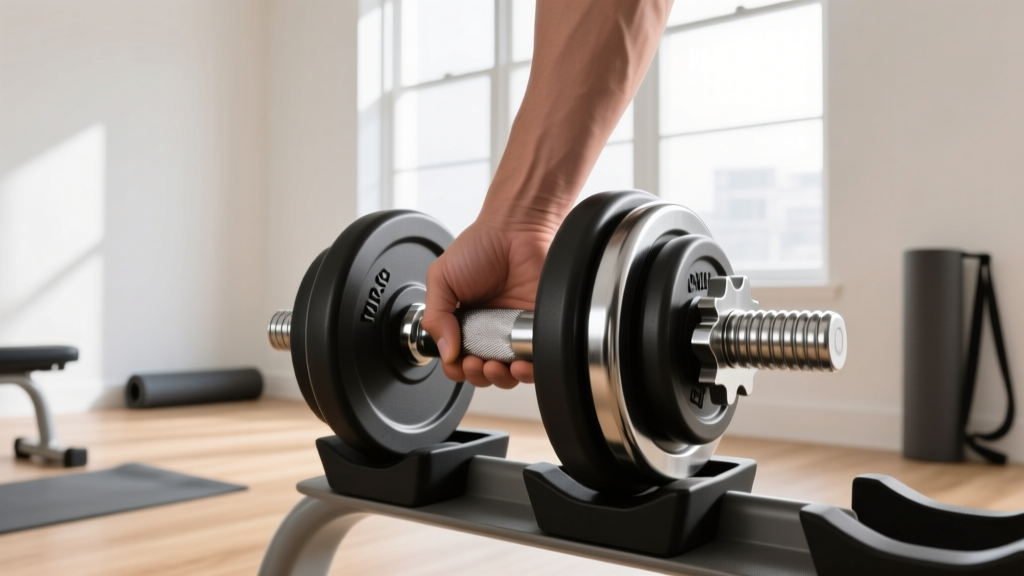
Maintaining Loadable Home Workout Dumbbells (No Bench Setup)
Master the care of loadable dumbbells for your home workout dumbbells no bench setup. Expert tips on knurling, sleeve lube, and preventing plate rust.

The No-Bench Paradigm: Why Loadable Dumbbells Rule the Floor
In the modern minimalist gym of 2026, space optimization is paramount. For athletes utilizing a home workout dumbbells no bench methodology, the floor becomes the primary work surface. Routines heavily feature floor presses, Bulgarian split squats, deficit reverse lunges, and heavy goblet RDLs. To support this, loadable dumbbell handles with interchangeable plates—such as the Rogue Fitness 20-inch Loadable Dumbbell Handles or the Titan Fitness 20-inch Olympic Dumbbells—have become the undisputed backbone of the space-conscious home gym.
Unlike fixed hex dumbbells that require massive storage racks, a pair of loadable handles and a set of bumper or urethane plates can yield a weight range from 15 lbs to over 150 lbs per hand, all while occupying less than four square feet of floor space. However, this versatility introduces unique mechanical wear patterns. When you eliminate the bench, your equipment interfaces directly with the floor, exposing sleeve caps, bushings, and collars to dust, moisture, and impact. Proper maintenance is not optional; it is the difference between a lifetime investment and a seized, unusable piece of metal.
The Anatomy of Wear: Where Loadable Dumbbells Fail
Before applying lubricants or wire brushes, you must understand the specific failure modes of loadable dumbbells. According to equipment maintenance guidelines from Rogue Fitness, the primary enemy of Olympic-grade handles is not heavy loading, but environmental contamination.
- Bushing Seizure: Most premium loadable dumbbells (like Rogue and Eleiko) utilize bronze bushings rather than needle bearings to handle the high-impact drops typical of dumbbell work. When chalk dust mixes with sweat and floor dirt, it infiltrates the sleeve gap, creating an abrasive paste that scores the inner steel shaft and seizes the sleeve.
- Knurling Micro-Pitting: Human sweat contains chlorides and urea. If left in the deep grooves of aggressive knurling, these salts trigger rapid oxidation (rust), blunting the grip and compromising the zinc or black oxide protective coating.
- Thread and Collar Degradation: Spin-lock collars rely on precise threading. Dropping a dumbbell on its collar during a fatigued floor press can warp the threads, causing the collar to slip during overhead movements—a severe safety hazard.
The 30-Day Maintenance Protocol
To maintain optimal performance and longevity, implement this cyclic maintenance routine. This protocol is specifically calibrated for high-use home gyms where floor-based exercises are the norm.
Weekly: Knurling Purge and Hydration
- Dry Brush: Use a stiff brass wire brush to scrub the knurling in multiple directions (diagonal, horizontal, vertical) to dislodge dead skin, chalk, and dust.
- Wipe Down: Use a microfiber cloth lightly dampened with a 50/50 mix of water and white vinegar to neutralize sweat salts. Do not soak the handle.
- Oil Application: Apply 3 to 4 drops of 3-IN-ONE Multi-Purpose Oil or food-grade mineral oil to the knurling. Brush it in deeply, then wipe off all excess with a dry cloth. The goal is to leave oil only inside the grooves, not on the surface where it will make your grip slippery.
Monthly: Sleeve and Bushing Lubrication
Sleeve rotation is critical for exercises like dumbbell snatches and cleans, preventing torque from transferring to your wrists. Garage Gym Reviews recommends a specific approach for bushing lubrication:
- Stand the dumbbell upright on its sleeve cap.
- Apply a generous ring of white lithium grease or a specialized barbell sleeve oil (like Rogue Barbell Oil) directly to the seam where the sleeve meets the shaft.
- Rotate the sleeve continuously for 60 seconds to work the lubricant into the bronze bushing via capillary action.
- Wipe away any black, dirty oil that seeps out, and reapply a clean drop.
Quarterly: Collar and Thread Inspection
For spin-lock handles, inspect the threads for micro-fractures or cross-threading. Apply a tiny amount of anti-seize compound to the threads to prevent the collar from locking permanently due to galvanic corrosion between dissimilar metals. If you use clamp collars (like Lock-Jaw Pro or Rogue HG 2.0 Collars), check the rubber pads for compression set and replace them if they slide under heavy load.
Maintenance Cost and Time Matrix
Below is a breakdown of the time and financial investment required to keep a premium set of loadable dumbbells (e.g., $150–$250 handle pairs) in factory-new condition for over a decade.
| Maintenance Task | Frequency | Tools / Materials Required | Estimated Cost | Time Investment |
|---|---|---|---|---|
| Knurling Cleaning | Weekly | Brass brush, microfiber cloth, white vinegar | $12 (lasts 2+ years) | 3 minutes |
| Knurling Oiling | Weekly / Bi-Weekly | 3-IN-ONE Oil or Mineral Oil | $6 (lasts 3+ years) | 2 minutes |
| Sleeve Lubrication | Monthly | White Lithium Grease or Barbell Oil | $9 (lasts 5+ years) | 5 minutes |
| Thread Anti-Seize | Quarterly | Copper Anti-Seize compound | $8 (lifetime supply) | 2 minutes |
| Deep Bushing Flush | Annually | 90% Isopropyl Alcohol, syringe | $10 | 15 minutes |
Total annualized maintenance cost: Under $15. Total annualized time: Less than 4 hours.
Troubleshooting Common No-Bench Setup Issues
When your primary workout surface is the floor, your equipment faces unique mechanical stresses. Here is how to troubleshoot the most common issues encountered in a no-bench loadable dumbbell environment.
Issue: Sleeve Cap Grinding on Floor PressesDuring heavy floor presses, the bottom of the dumbbell sleeve cap drags against the floor mat, causing friction that halts sleeve rotation and transfers torque to the wrist.
Solution: Upgrade to handles with recessed or beveled sleeve caps, such as the Yes4All Olympic Dumbbell Handles which feature a slightly tapered end. Alternatively, use a thicker, high-density EVA foam mat (minimum 3/4-inch thickness) to provide clearance and absorb the lateral drag.
Issue: Collars Loosening During Goblet Squats
High-repetition goblet squats and swings generate immense vertical vibration. Standard spin-lock collars often back off under this specific frequency of vibration.
Solution: Abandon spin-lock collars for floor-based dynamic movements. Invest in spring-loaded clamp collars. The Rogue HG 2.0 Collars ($45/pair) utilize a patented cambered design that actually tightens its grip on the sleeve as vibration increases, completely eliminating plate rattle and slippage.
Issue: Plates Rattling and Shifting
Interchangeable plates, particularly cast iron ones, have manufacturing tolerances that leave a 1mm to 2mm gap on the sleeve. During floor work, this gap allows plates to slam together, chipping the paint and creating noise.
Solution: Use sponge rubber bumper pads or O-ring rubber sleeves between the metal plates. For a more premium solution, switch to calibrated urethane or crumb-rubber bumper plates (like REP Fitness Urethane Bumpers), which feature precision-machined stainless steel inserts that eliminate sleeve play entirely.
Storing Interchangeable Plates to Prevent Corrosion
Your loadable handles are only half the equation; the interchangeable plates require equal attention, especially when stored in garages or basements where humidity fluctuates. According to metallurgical guidelines discussed by BarBend, cast iron plates are highly susceptible to galvanic corrosion when stacked directly against one another in humid environments.
- Cast Iron Plates: Wipe down bi-annually with a silicone-based protectant (like WD-40 Specialist Water Resistant Silicone). Never store them directly on concrete floors, as concrete wicks moisture. Use a rubber mat or a dedicated vertical plate tree.
- Urethane/Rubber Bumpers: Keep out of direct UV sunlight. UV degradation causes the polyurethane to chalk, crack, and eventually crumble. Store in a climate-controlled interior room if possible, or use UV-blocking window films in your garage gym.
- Steel Hub Maintenance: The inner steel hubs of bumper plates will rust, making them difficult to slide onto your dumbbell sleeves. Keep a piece of 400-grit sandpaper handy to lightly polish the inner hubs if you feel resistance when loading your dumbbells.
Final Thoughts on Longevity
A high-quality set of loadable dumbbell handles is a generational investment. By treating your equipment with the same respect you apply to your training programming, a $200 pair of handles and a $400 set of plates will easily outlast a $1,500 set of adjustable dial dumbbells, which are notorious for internal plastic gear failures. When you commit to the home workout dumbbells no bench lifestyle, your floor becomes your sanctuary. Keep your gear clean, keep your bushings lubricated, and your minimalist gym will serve you flawlessly for decades to come.
More gear to consider
All reviews
Barbell Knurling Setup & Space for a Belly Workout With Dumbbells

Top Adjustable Floor Press Dumbbells: 2026 Buying Guide

Bumper vs Iron Plates: What Dumbbell Exercise Is Good for Chest?

Cast Iron vs Competition Kettlebells & Pec Workout with Dumbbells

Best Neoprene Incline Chest Press Dumbbells for Home Use
